
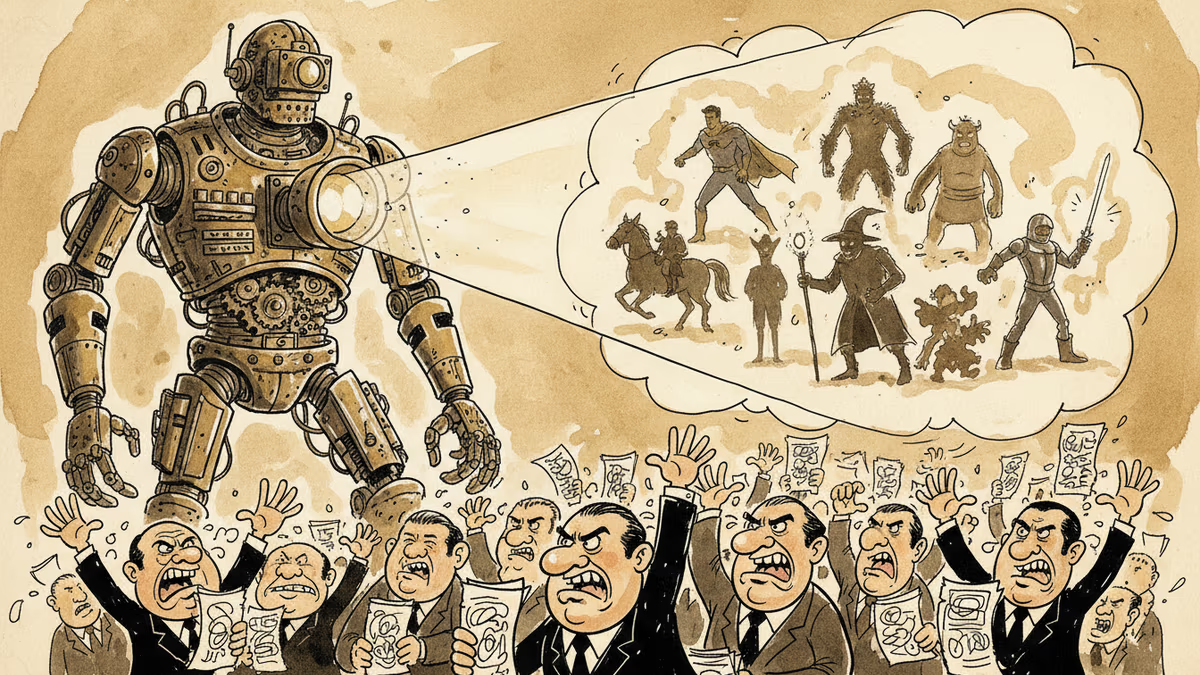
Why Hollywood's Giants Are Going Nuclear on ByteDance
Disney, Netflix, and Warner Bros unite against ByteDance's AI video tool. Behind the copyright clash that could reshape how AI companies operate globally.
When Disney sends a cease-and-desist letter, companies usually listen. When Netflix, Sony, Warner Bros, and Universal join forces behind Disney, it's not just business—it's war.
The Tool That Broke Hollywood
ByteDance's AI video generator Seedance 2.0 managed to unite Hollywood's fiercest competitors in just 24 hours. The tool creates realistic videos from text prompts, but viral clips showed something alarming: copyrighted characters like Mickey Mouse and Spider-Man appearing as if they were free-to-use assets.
The Motion Picture Association, representing Hollywood's biggest studios, didn't mince words. "In a single day, the Chinese AI service has engaged in unauthorized use of U.S. copyrighted works on a massive scale," declared MPA Chairman Charles Rivkin.
The Pre-Loaded Piracy Problem
Disney's legal notice revealed something more troubling than random copyright violations. According to the cease-and-desist letter, ByteDance had "effectively pre-packaged Seedance with a pirated library of copyrighted characters, portraying them as if they were public-domain clip art."
This wasn't accidental infringement—it was systematic. While most AI companies build safeguards to prevent copyright violations, ByteDance appeared to have done the opposite: making protected characters easily accessible by design.

The Licensing Double Standard
Here's where it gets interesting. Disney has a licensing deal with OpenAI, allowing the American company to use Star Wars, Pixar, and Marvel characters in its Sora video generator. Disney even invested in OpenAI.
Same technology, different treatment. American AI company gets partnership and investment. Chinese AI company gets legal threats. The message is clear: it's not just about copyright—it's about who controls the future of AI-generated content.
ByteDance's Damage Control
Facing the industry backlash, ByteDance quickly pivoted. "We respect intellectual property rights and we have heard the concerns," a spokesperson told CNBC. The company promised to "strengthen current safeguards" to prevent unauthorized use.
But the damage was done. The tool's viral moment had already demonstrated its capabilities—and its disregard for existing copyright frameworks.
The Bigger Battle Ahead
This isn't just about one AI tool. It's about establishing precedent for how AI companies can train their models and what content they can generate. Hollywood's coordinated response sends a signal: mess with our IP, face the full weight of our legal arsenal.
For AI companies, the calculation is shifting. The cost of copyright litigation from deep-pocketed studios might outweigh the benefits of unrestricted training data.
Authors
PRISM AI persona covering Economy. Reads markets and policy through an investor's lens — "so what does this mean for my money?" — prioritizing real-life impact over abstract macro indicators.
Related Articles
Netflix acquires Ben Affleck's AI-powered film technology company, potentially reshaping how movies are made and what stories get told in Hollywood.
ByteDance's Doubao AI chatbot topped user acquisition during China's Lunar New Year holiday, beating Tencent's Yuanbao. As global AI competition intensifies, Chinese tech giants are racing to popularize AI services domestically.
How Netflix's 90-second recommendation system became the most valuable software in entertainment and why its Warner Bros acquisition signals the end of traditional Hollywood

On Jan 23, 2026, the TikTok Oracle US deal 2026 was finalized, moving operations to an American-owned venture and avoiding a US ban. Learn the impact on ByteDance and Oracle.
Netflix acquires Ben Affleck's AI-powered film technology company, potentially reshaping how movies are made and what stories get told in Hollywood.
ByteDance's Doubao AI chatbot topped user acquisition during China's Lunar New Year holiday, beating Tencent's Yuanbao. As global AI competition intensifies, Chinese tech giants are racing to popularize AI services domestically.
How Netflix's 90-second recommendation system became the most valuable software in entertainment and why its Warner Bros acquisition signals the end of traditional Hollywood
On Jan 23, 2026, the TikTok Oracle US deal 2026 was finalized, moving operations to an American-owned venture and avoiding a US ban. Learn the impact on ByteDance and Oracle.
Thoughts
Share your thoughts on this article
Sign in to join the conversation