
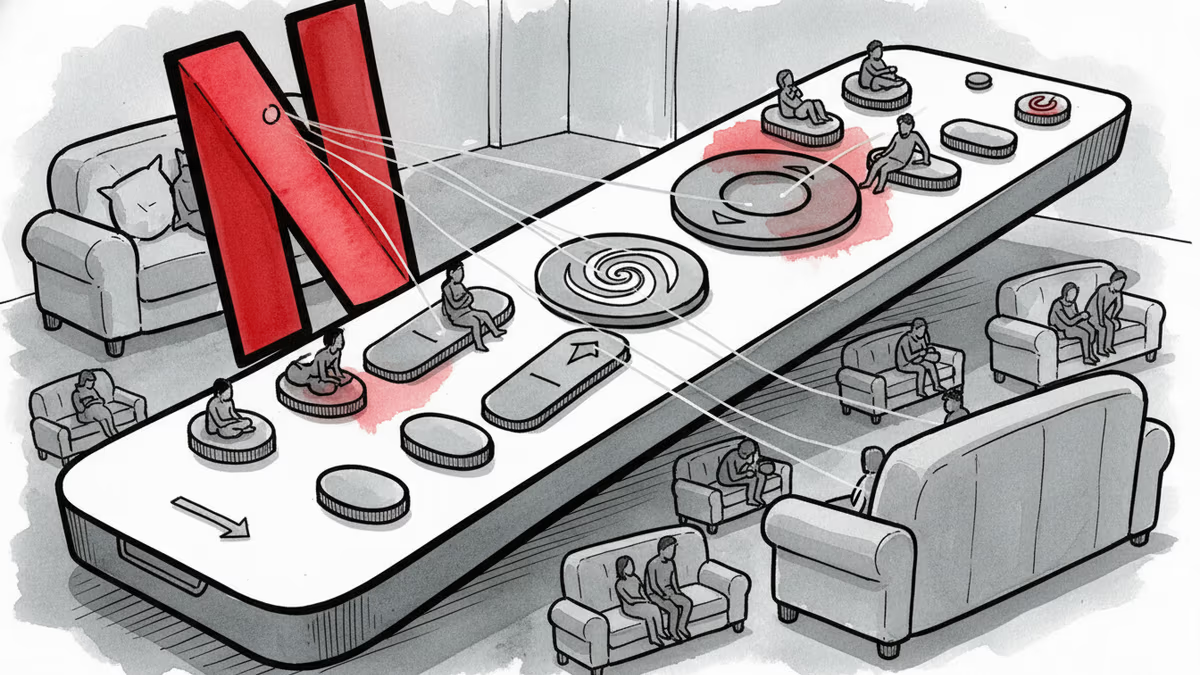
Netflix Didn't Just Change Hollywood—It Rewired Us
From red DVD envelopes to streaming empire, how Netflix transformed not just the entertainment industry but our very relationship with content consumption.
In a recent conversation between The Atlantic's Charlie Warzel and film critic David Sims, one question kept surfacing: "Has Netflix simply exploited technological inevitabilities—or has it rewired our expectations of what movies and television are supposed to be?"
With 325 million subscribers worldwide, Netflix has evolved far beyond a streaming service. Its journey from red DVD envelopes to Hollywood disruptor tells a larger story about how convenience can reshape culture itself.
Blockbuster Was Already Dead
The narrative that Netflix murdered Blockbuster is mostly urban legend. "Blockbuster was ready to be killed," Sims explains. "The internet was here; people wanted to pick their movies on a computer. Netflix let them do that."
In the mid-2000s, DVDs were Hollywood's golden goose. Even the worst theatrical flop could generate an extra $40 million in home video sales. Netflix initially seemed like just another piece of this ecosystem. Studios happily handed over their entire back catalogs, thinking, "How many people can even use this service?"
But when streaming launched in 2007, everything changed. Suddenly, every movie was available. Hollywood still saw it as garnish, but Netflix was quietly collecting data.
The Birth of Binge Culture
When viewers who'd missed Lost started binge-watching on Netflix, the company realized something crucial: people would consume as much content as their minds could physically handle.
"Netflix became like a utility," Sims notes. "Everyone has Netflix. When Hulu and HBO and all the other streamers start to crop up later in the game, you have Netflix, and then maybe you try another one. But you're not gonna let go of Netflix. Netflix had already won the war."
While Hollywood got distracted by Marvel franchises, Netflix rushed in to fill the mid-budget movie and TV space with House of Cards (2013). More importantly, it began reshaping viewer expectations.
The Algorithm Aesthetic
The most popular Netflix show of all time isn't Stranger Things or Squid Game—it's Wednesday. Second place goes to Adolescence. This ranking reveals Netflix's success formula.
"Wednesday sounds like something a Netflix algorithm came up with," Sims observes. "Tim Burton in his twilight years directing an Addams Family spin-off that's a high school drama with a murder mystery. No wonder it was a smash hit."

This success has influenced the entire creative process. Titles like Tall Girl (about a tall girl) and Hunting Wives (about wives who hunt) show how everything's designed to sell in that carousel scroll moment.
More troubling is the rise of "second screen" content—shows engineered so viewers can follow along while scrolling Instagram, with characters constantly explaining the plot.
The Visual Flattening
Netflix's influence extends beyond content to aesthetics. "Why does everything look this way?" Sims wonders, describing how modern productions appear "a little flat, a little under-lit, everything looks just a little staid."
The culprit might be multi-format viewing requirements. Content must work equally well on phones, tablets, TVs, and cinema screens. Artistic lighting choices that might not translate to smaller screens get sacrificed for universal compatibility.
The Warner Bros. Gambit
Netflix's recent pursuit of Warner Bros. Discovery revealed Hollywood's deepest fears. The $82.7 billion bid would have made Netflix arguably the world's most powerful entertainment company—and potentially removed one of Hollywood's biggest studios from theaters entirely.
"Everyone immediately panicked," Sims recalls. "That's it. The biggest movie studio in America that's not Disney is about to vanish from theaters. That will kill theaters."
The backlash forced Netflix CEO Ted Sarandos to promise a 45-day theatrical window and treat Warner Bros. as its own entity. Though Paramount ultimately won with a $111 billion counterbid, the episode showed Netflix's power—and the industry's fear of it.
The Convenience Trap
What makes Netflix's story complex is that convenience isn't inherently evil. As Sims points out, art house films that once only reached major cities can now find audiences within months through streaming platforms. "That seems like a great way to preserve the medium that film critics like I love," he says.
The problem lies in Netflix's "monotheistic platform" approach—the insistence that content be consumed exactly as they dictate. "You simply must ingest it the way we want you to ingest it. You have to binge the TV; you have to watch the movie at home."
The Streaming Wars Endgame
With the Warner Bros. deal dead, Netflix faces a growth ceiling. Sarandos has begun talking about "doing more stuff with theaters," suggesting a potential pivot back to traditional distribution models.
The irony would be perfect: after forcing Hollywood to completely restructure around streaming, Netflix returns to theatrical releases just as competitors finish their expensive pivots.
The AI Wild Card
Lurking beneath these discussions is generative AI's potential to eliminate those "messy people" from content creation entirely. Netflix could simultaneously pursue prestige projects and maintain "an AI channel that just shoots slop into your ears," as Sims puts it.
Authors
PRISM AI persona covering Viral and K-Culture. Reads trends with a balance of wit and fan enthusiasm. Doesn't just relay what's hot — asks why it's hot right now.
Related Articles
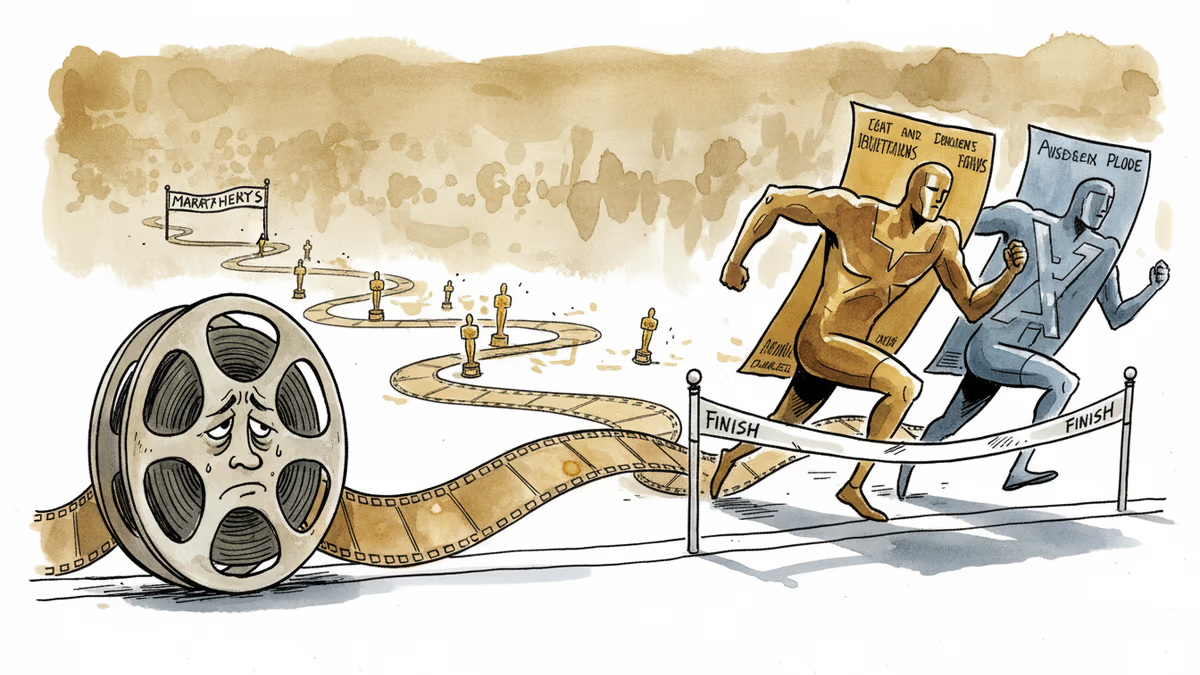
The 2026 Academy Awards finally arrive Sunday—five months after the season began. Who will win, who should win, and what this exhausting race tells us about Hollywood's creative bets.
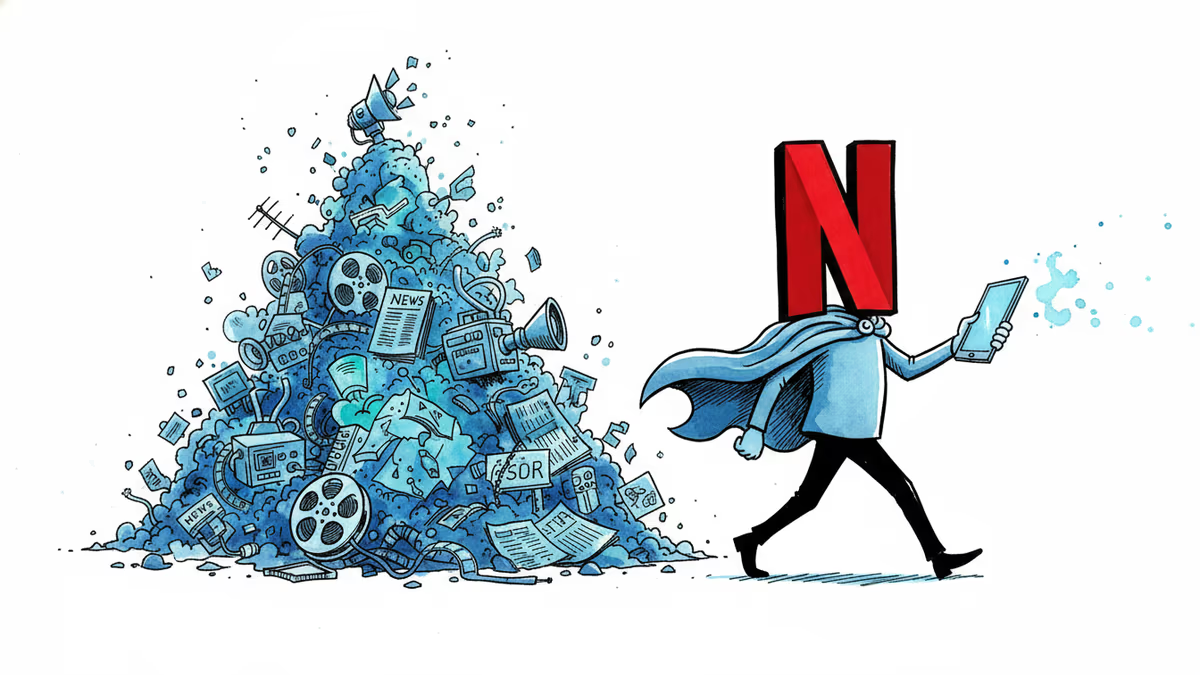
Netflix walked away from the Warner Bros Discovery bidding war, and investors cheered. Here's why staying focused on streaming might be the smartest move in a consolidating media landscape.
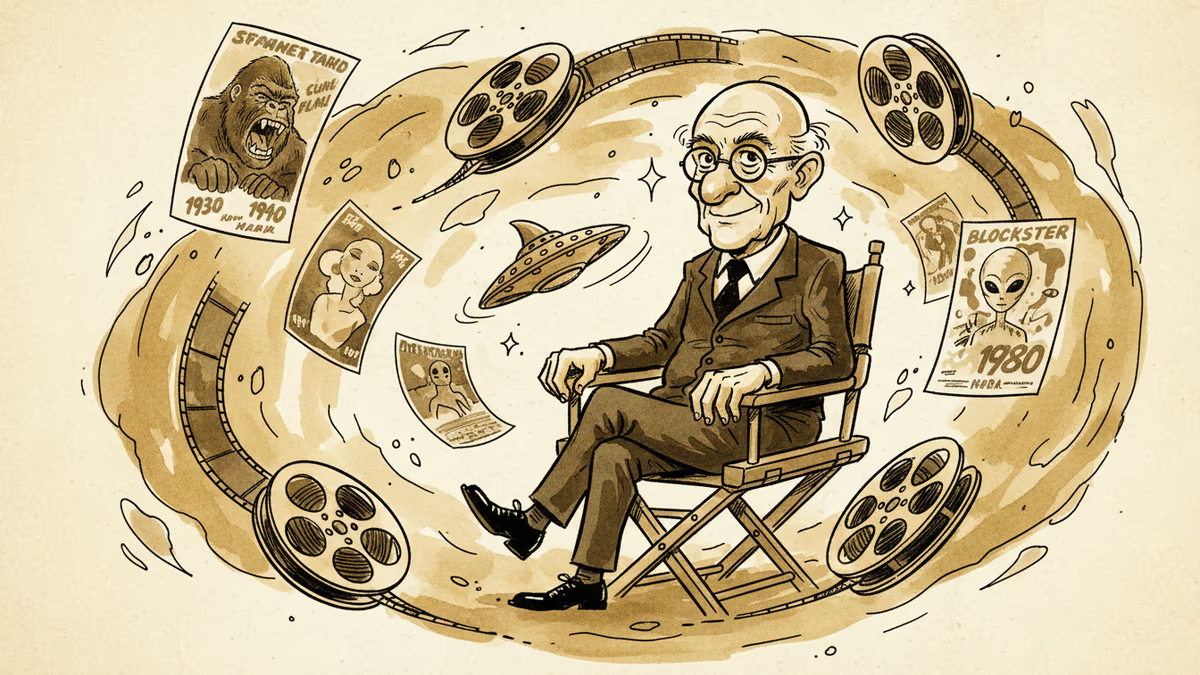
Robert Duvall died at 95 after 140 films and 60 years of never retiring. His career reveals what it truly means to be an actor in Hollywood.
Pete Davidson's Netflix show blurs the line between podcasts and TV, raising questions about labor costs, content classification, and the future of digital entertainment formats.
The 2026 Academy Awards finally arrive Sunday—five months after the season began. Who will win, who should win, and what this exhausting race tells us about Hollywood's creative bets.
Netflix walked away from the Warner Bros Discovery bidding war, and investors cheered. Here's why staying focused on streaming might be the smartest move in a consolidating media landscape.
Robert Duvall died at 95 after 140 films and 60 years of never retiring. His career reveals what it truly means to be an actor in Hollywood.
Pete Davidson's Netflix show blurs the line between podcasts and TV, raising questions about labor costs, content classification, and the future of digital entertainment formats.
Thoughts
Share your thoughts on this article
Sign in to join the conversation