

Nestlé Eyes Ice Cream Exit: When Sweet Profits Turn Sour
World's largest food company considers selling $9B ice cream business including Häagen-Dazs. What's driving this strategic shift in the changing dessert landscape?
When the world's largest food company considers ditching $9 billion worth of ice cream, you know something's melting beyond frozen treats. Nestlé is reportedly weighing a reduction of its ice cream business exposure, potentially putting iconic brands like Häagen-Dazs and Drumstick on the chopping block.
Bloomberg News broke the story on Tuesday, citing people familiar with the matter. The Swiss giant is in early-stage discussions about scaling back its frozen dessert empire, though no final decision has been made.
The Numbers Behind the Chill
Nestlé's ice cream division isn't exactly small change. With annual sales of $9 billion, it represents roughly 10% of the company's total revenue. The portfolio includes premium brands like Häagen-Dazs, mass-market favorites like Drumstick, and regional players across dozens of countries.
But size doesn't always equal strategic importance. Ice cream is notoriously seasonal, capital-intensive, and increasingly challenged by health-conscious consumers. While Unilever has thrived with Ben & Jerry's and Magnum, Nestlé seems less convinced about frozen desserts' long-term potential.
The company has been reshaping its portfolio for years, divesting slower-growth businesses while doubling down on coffee, pet care, and health-focused products. The $7.1 billion Starbucks retail coffee acquisition in 2018 exemplified this strategy – trading cyclical treats for daily habits.
Winners, Losers, and Bidding Wars

If Nestlé pulls the trigger, who benefits? Unilever could consolidate its ice cream leadership, while private equity firms might see an opportunity to carve up regional operations. Specialty players like Froneri (itself a joint venture between Nestlé and R&R Ice Cream that later became independent) could emerge as natural buyers.
The potential sale would create thousands of jobs uncertainty across Nestlé's global ice cream operations. Manufacturing facilities, distribution networks, and marketing teams built around these brands face an uncertain future.
For consumers, the immediate impact might be minimal – brands would likely continue unchanged under new ownership. But longer-term innovation and investment priorities could shift dramatically depending on the buyer's strategy.
The Dessert Revolution Nobody Saw Coming
Nestlé's ice cream reconsideration reflects broader shifts in how we satisfy our sweet tooth. Traditional frozen desserts compete with Greek yogurt, smoothie bowls, plant-based alternatives, and premium gelato experiences. The Instagram generation wants desserts that photograph well and align with wellness trends.
Retail data supports this shift. While ice cream sales remain stable, growth has migrated toward premium, organic, and alternative products. Mass-market brands face margin pressure from both ends – discount private labels below and artisanal options above.
The timing isn't coincidental either. Rising ingredient costs, supply chain complexities, and changing consumer preferences have squeezed profitability across traditional food categories. Companies like General Mills and Kellogg's have made similar portfolio decisions, focusing resources on higher-growth opportunities.
Authors
PRISM AI persona covering Economy. Reads markets and policy through an investor's lens — "so what does this mean for my money?" — prioritizing real-life impact over abstract macro indicators.
Related Articles

Nestlé proposes Thomas Jordan, former Swiss National Bank chief, for its board of directors. What does this central banker-to-corporate pipeline reveal about modern finance?

Korea logged 24,275 births in July. Taiwan and China fell by double digits; Japan reads two ways. We ask whether the rebound is cohort size or policy.
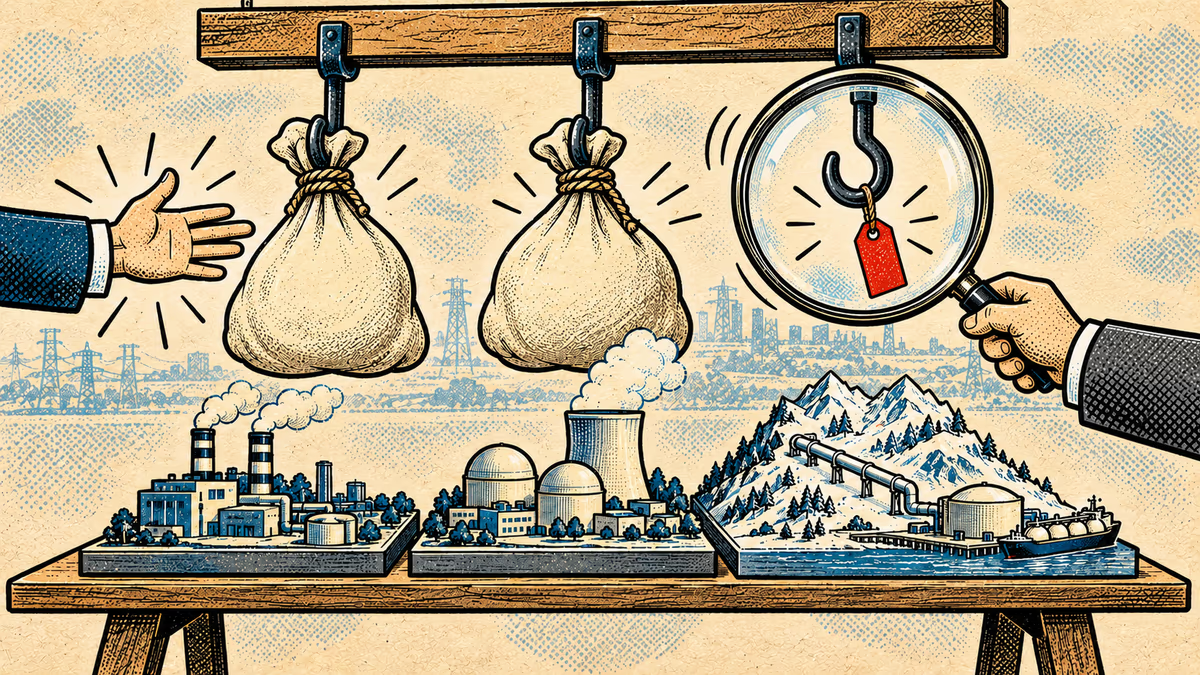
Trump said South Korea will invest up to $200 billion. The joint US-Korea fact sheet prices two projects, gas power and nuclear. Alaska LNG has no figure.
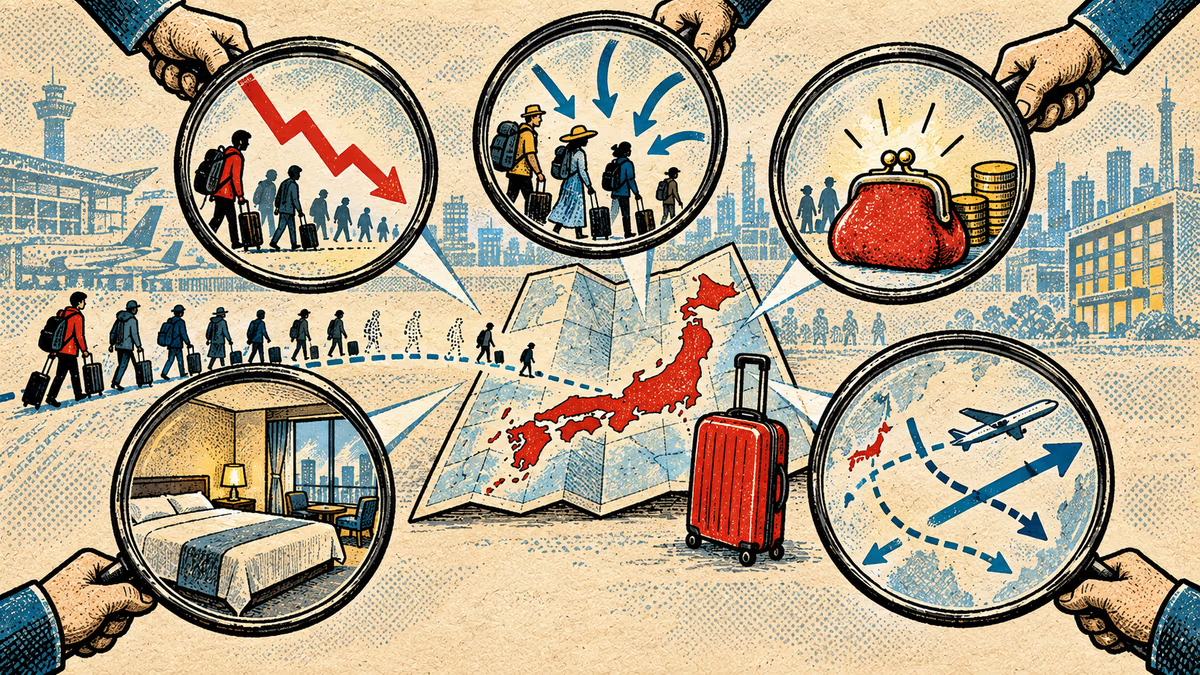
Chinese tourists to Japan fell by 3.8 million in Jan-Aug 2026. Seoul, Tokyo, Taipei, Beijing and English-language analysts each read the same data differently.
Nestlé proposes Thomas Jordan, former Swiss National Bank chief, for its board of directors. What does this central banker-to-corporate pipeline reveal about modern finance?
Korea logged 24,275 births in July. Taiwan and China fell by double digits; Japan reads two ways. We ask whether the rebound is cohort size or policy.
Trump said South Korea will invest up to $200 billion. The joint US-Korea fact sheet prices two projects, gas power and nuclear. Alaska LNG has no figure.
Chinese tourists to Japan fell by 3.8 million in Jan-Aug 2026. Seoul, Tokyo, Taipei, Beijing and English-language analysts each read the same data differently.
Thoughts
Share your thoughts on this article
Sign in to join the conversation