
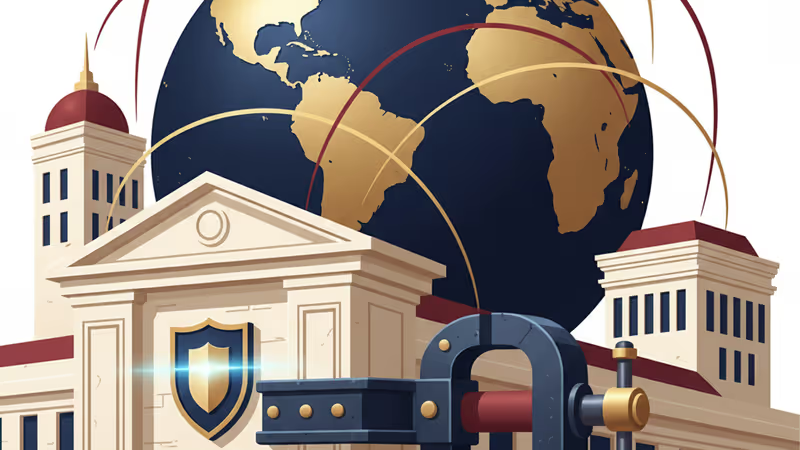
State Attorneys General Accuse Trump Administration of Blocking Funds for Consumer Watchdog
Several state attorneys general claim the Trump administration is refusing to accept funding for the Consumer Financial Protection Bureau (CFPB), a move they warn could leave consumers vulnerable.
A group of state attorneys general has accused the Trump administration of refusing to accept congressionally approved funding for the Consumer Financial Protection Bureau (CFPB), a move they warn could directly harm consumers in their states. According to the officials, this action threatens to cripple the federal government's primary watchdog against predatory financial practices.
"The CFPB is the frontline defense for Americans against predatory loans, illegal debt collection, and financial scams," the attorneys general said in a joint statement. "To choke off its funding is to effectively disarm the nation's financial cop on the beat." While the specific mechanism of the refusal wasn't detailed, the AGs claim the administration's stance puts the agency's core operations at risk.
This dispute appears to be the latest chapter in a long-running political battle over the CFPB's existence and authority. Since its inception, many conservatives and Republican leaders have criticized the agency as an unaccountable bureaucracy. They argue its independent structure, which is funded through the Federal Reserve rather than direct congressional appropriations, gives it too much power and allows it to stifle economic innovation with burdensome regulations.
The attorneys general are concerned that if the federal watchdog is weakened, the burden of consumer protection will fall heavily on state governments, which may lack the resources to combat large, multi-state financial fraud. A hobbled CFPB, they argue, would create a regulatory vacuum that bad actors could exploit at a national level, overwhelming state-level enforcement efforts.
This content is AI-generated based on source articles. While we strive for accuracy, errors may occur. We recommend verifying with the original source.
Related Articles
U.S. President Trump warns Venezuelan President Maduro that 'it would be smart to leave' power as the U.S. seizes oil tankers, sparking condemnation from Russia and China and raising geopolitical tensions.
A U.S. federal court has ruled that the Trump administration's use of the 1798 Alien Enemies Act to deport Venezuelan men to a prison in El Salvador violated their due process rights.
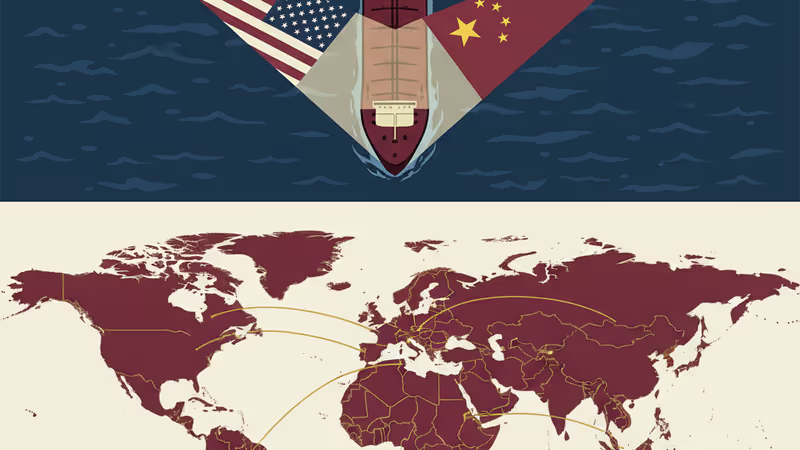
China condemned the US for seizing a Venezuelan oil tanker, calling it a 'serious violation of international law.' The US claims the vessel was part of a 'shadow fleet' trafficking stolen oil.
The U.S. Department of Justice is facing a bipartisan backlash and threats of contempt of Congress over its delayed release of Jeffrey Epstein files. Former President Bill Clinton has also demanded the release of all related documents.