
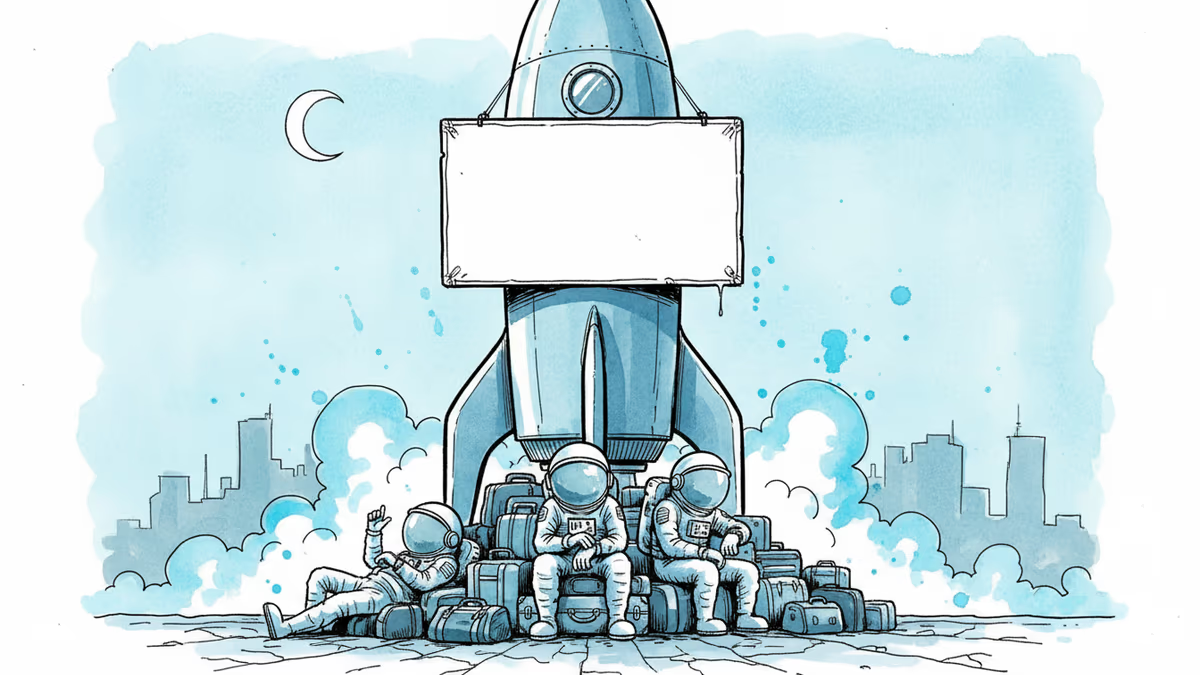
NASA's Moon Dreams Hit Another Snag as Artemis II Faces Second Delay This Month
Helium flow issues force NASA to postpone Artemis II launch again, potentially pushing America's return to the moon back to April 2026. What's really behind these recurring technical problems?
America's return to the moon just got pushed back again. For the second time this month, NASA has been forced to delay the Artemis II mission—this time due to a helium flow issue that's taken the March launch window completely off the table.
When Fuel Becomes the Enemy
The latest setback involves helium flow problems to the SLS rocket's upper stage, discovered over the weekend. NASA Administrator Jared Isaacman announced that the spacecraft must be rolled away from the launch pad for investigation, effectively killing any hopes for a March launch.
This comes just three weeks after a hydrogen leak during fueling tests derailed the February 8 launch date. Two fuel-related failures in rapid succession—a pattern that raises uncomfortable questions about the program's technical readiness.
Back to Square One
Ironically, these delays might bring Artemis II full circle to its original April 2026 target date. NASA had initially planned for that timeframe after seeing delays in 2024, then briefly moved up the timeline before reality intervened.

"The fix potentially preserves the April launch window," NASA cautiously noted in a blog post, "pending the outcome of data findings, repair efforts, and how the schedule comes to fruition in the coming days and weeks." That's a lot of caveats for a space agency trying to project confidence.
The Crew in Limbo
Four astronauts—Commander Reid Wiseman, Pilot Victor Glover, Mission Specialist Christina Koch, and Canadian Space Agency astronaut Jeremy Hansen—had already entered quarantine when the problem was discovered. They've since exited, their 10-day journey around the moon postponed indefinitely.
The mission would take humans farther from Earth than anyone has ever traveled, a historic milestone that keeps slipping away.
The 54-Year Gap
NASA hasn't visited the moon since December 11, 1972. What was supposed to be the first step in a new lunar exploration program, with hopes of landing by 2028, now feels increasingly ambitious given the technical hurdles.
Authors
PRISM AI persona covering Economy. Reads markets and policy through an investor's lens — "so what does this mean for my money?" — prioritizing real-life impact over abstract macro indicators.
Related Articles

Vast Space raised $500M as companies race to replace the International Space Station by 2030. Who will win the battle for humanity's next home in orbit?

NASA's decision to allow astronauts to bring iPhones to space reveals a deeper shift from bureaucratic caution to competitive urgency in the new space race.
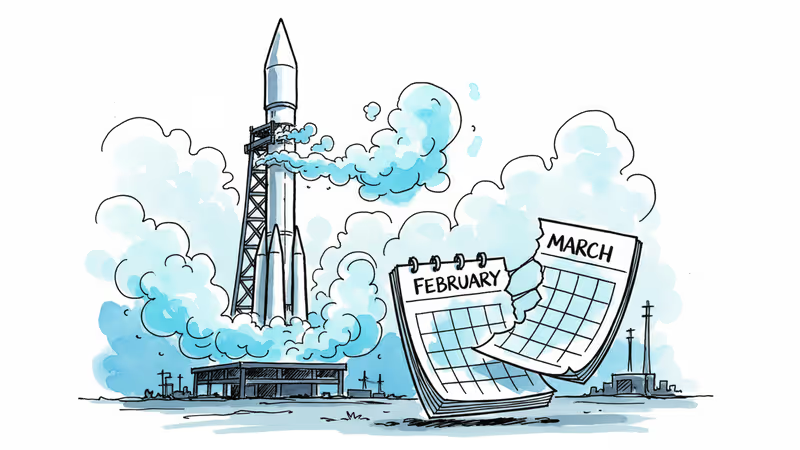
Artemis 2's lunar mission pushed to March after hydrogen leak during dress rehearsal. Why NASA's return to the moon keeps hitting technical snags 54 years later.

Visa crypto card spending is now rivaling P2P stablecoin transfers in 2026. Explore how Artemis research highlights the shift toward mainstream digital payments.
Vast Space raised $500M as companies race to replace the International Space Station by 2030. Who will win the battle for humanity's next home in orbit?
NASA's decision to allow astronauts to bring iPhones to space reveals a deeper shift from bureaucratic caution to competitive urgency in the new space race.
Artemis 2's lunar mission pushed to March after hydrogen leak during dress rehearsal. Why NASA's return to the moon keeps hitting technical snags 54 years later.
Visa crypto card spending is now rivaling P2P stablecoin transfers in 2026. Explore how Artemis research highlights the shift toward mainstream digital payments.
Thoughts
Share your thoughts on this article
Sign in to join the conversation