

Nandan Nilekani’s Next Act: Scaling India’s Digital Public Infrastructure to a Global Finternet
Nandan Nilekani, architect of India's Aadhaar, launches the Finternet and Energy Stack to globalize Digital Public Infrastructure (DPI) by 2026.
The man who put 1.4 billion people on the cloud isn't done yet. Nandan Nilekani, the mastermind behind Aadhaar—the world's largest digital identity system—is now setting his sights on the global stage. At 70, Nilekani is pushing to 'Aadhaarize' the world through a new universal financial backbone he calls the Finternet. His vision is to turn India's success with Digital Public Infrastructure (DPI) into a global standard for commerce and governance.
Aadhaar: The Bedrock of India's Digital Revolution
Since its inception in 2009, Aadhaar has provided unique identifiers to nearly 1.4 billion Indians. According to government data, the system has saved approximately 3.48 trillion rupees ($39.2 billion) by streamlining welfare payments and eliminating fraud. This foundation enabled the Unified Payments Interface (UPI), which recently surpassed Visa as the world’s largest real-time payment system. For millions of unbanked Indians, DPI has been a gateway to the modern economy.
Finternet and Energy Stacks: The New Frontiers

Nilekani’s latest project, the Finternet, aims to combine the efficiency of Aadhaar with blockchain technology. By tokenizing assets like stocks, bonds, and even real estate, the project seeks to allow poor populations to trade assets or use them as collateral with unprecedented ease. With 30 partners across four continents, it is slated for a 2027 launch. Simultaneously, Nilekani is mentoring the India Energy Stack (IES), an initiative to stabilize India's power grid by giving digital identities to every solar panel and electric vehicle.
Privacy Concerns and the Shadow of Surveillance
Success hasn't come without friction. In 2023, hackers allegedly leaked the data of over 800 million Indians, sparking a firestorm over privacy. Critics like the Internet Freedom Foundation argue that the system risks becoming a tool for mass surveillance and that technical glitches often exclude the most vulnerable from essential services. While Nilekani remains a techno-optimist, the challenge remains balancing efficiency with the protection of individual liberties.
Authors
Related Articles
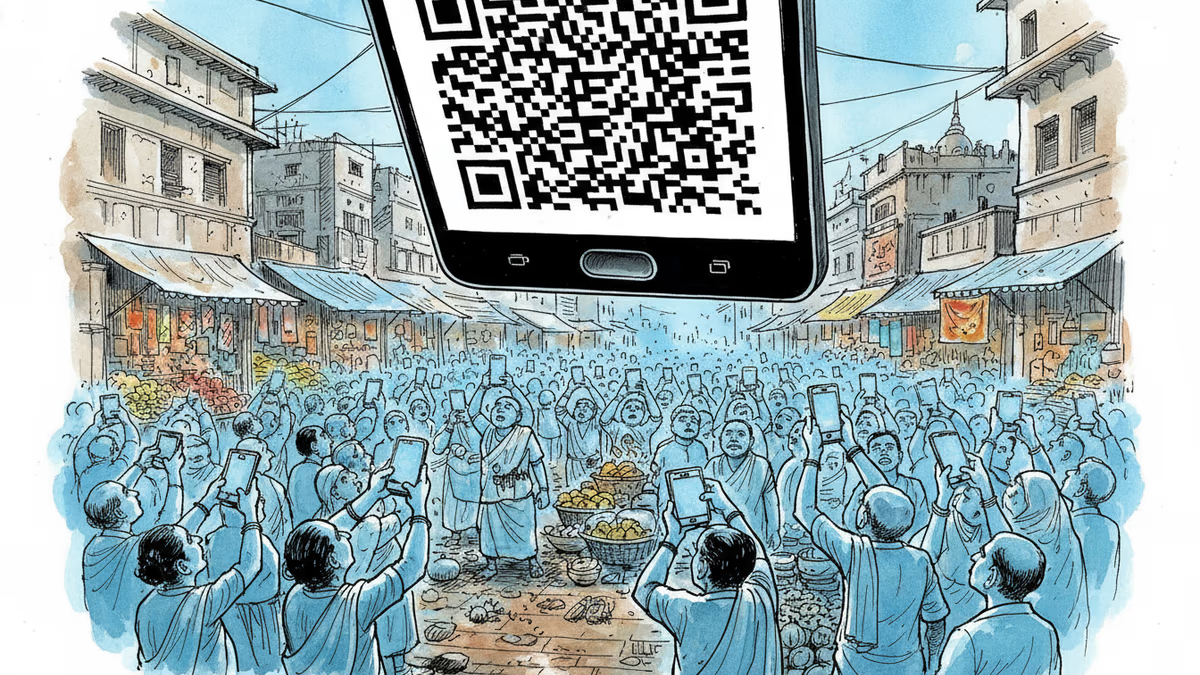
India's Aadhaar system expands with new app and offline verification, raising questions about privacy, consent, and the future of digital identity at scale.

Tiger Global and Microsoft are set to fully exit PhonePe in its upcoming $1.5 billion IPO. We analyze the exit strategy of global investors in the Indian fintech market.
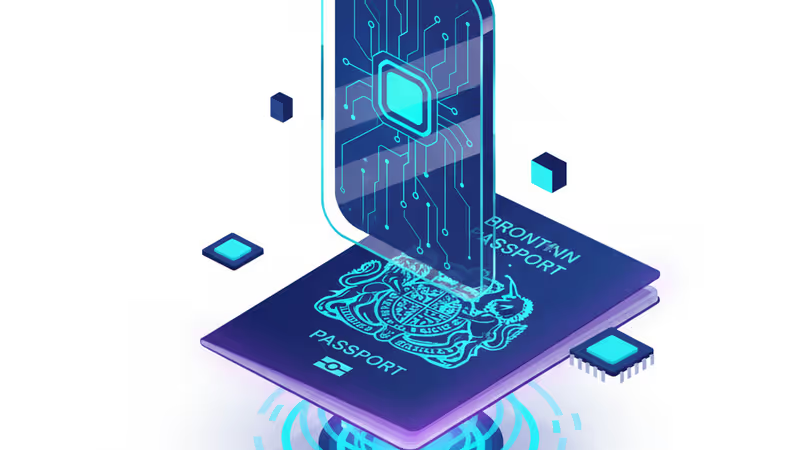
The UK government shifts its 2029 digital ID scheme from mandatory to optional. Explore the reasons behind PM Keir Starmer's policy backtrack and what it means for privacy.

Google is reportedly testing a feature that allows Gmail users to change their email addresses while keeping their old ones as aliases.
India's Aadhaar system expands with new app and offline verification, raising questions about privacy, consent, and the future of digital identity at scale.
Tiger Global and Microsoft are set to fully exit PhonePe in its upcoming $1.5 billion IPO. We analyze the exit strategy of global investors in the Indian fintech market.
The UK government shifts its 2029 digital ID scheme from mandatory to optional. Explore the reasons behind PM Keir Starmer's policy backtrack and what it means for privacy.
Google is reportedly testing a feature that allows Gmail users to change their email addresses while keeping their old ones as aliases.
Thoughts
Share your thoughts on this article
Sign in to join the conversation