
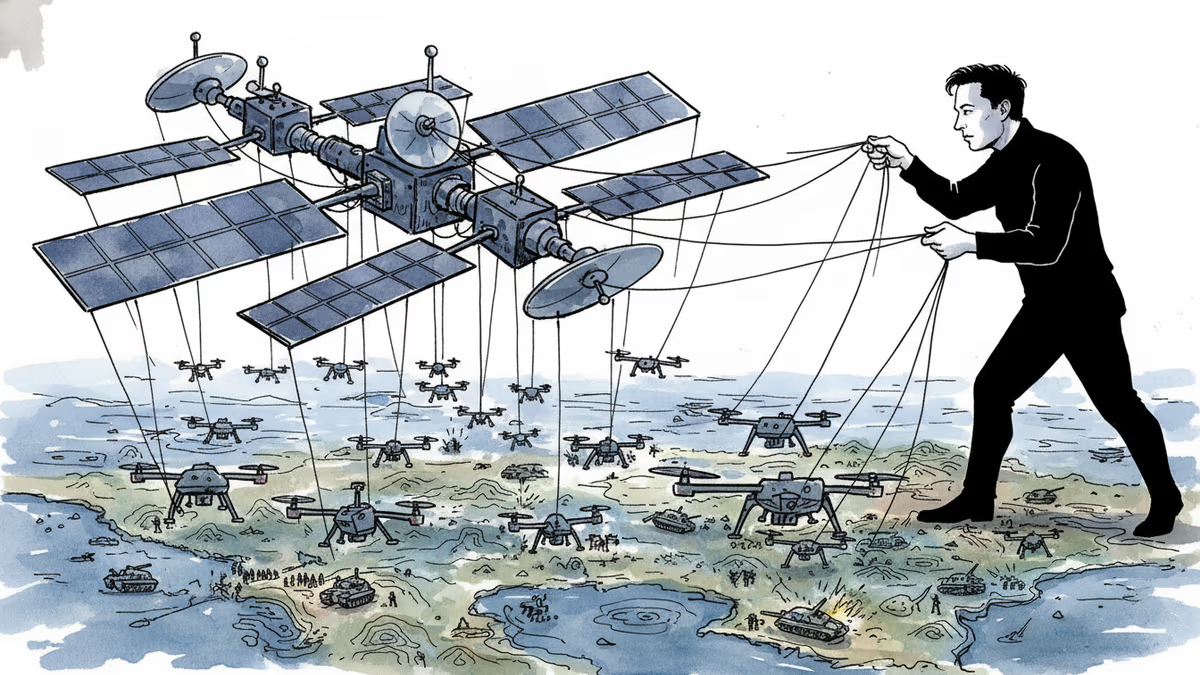
Musk's Starlink Becomes Ukraine's Secret Weapon in War's Latest Turn
Elon Musk's decision to cut off Russian access to Starlink has shifted battlefield momentum to Ukraine. But what happens when one tech billionaire can alter the course of wars?
A Russian attack drone sliced through Kyiv's air defenses on a frigid January morning, gliding so low past government buildings that officials on the seventh floor could watch it through their windows. "A bunch of people saw it and were running around, like, 'What the fuck was that?'" one government official recalled.
That minor incident—a drone that crashed harmlessly into a nearby building—would trigger a chain of events that has fundamentally shifted the war's momentum. At its center: an unlikely kingmaker named Elon Musk.
The Satellite Sovereign
For four years, Musk has wielded unprecedented influence over the Ukraine war through Starlink, his satellite internet constellation. No other system matches its reach and reliability across the war zone, making it essential for both sides to communicate, coordinate troops, and navigate drones.
But Musk has repeatedly used that power to tip the scales. In fall 2022, he blocked Ukraine from using Starlink for a planned attack on Russian warships in Crimea, arguing he wanted to avoid nuclear escalation. This time, his intervention favors Ukraine—and the results have been dramatic.
After the Kyiv drone incident, Ukraine's newly appointed defense minister, Mykhailo Fedorov, appealed directly to Musk with evidence that Russian forces were using Starlink to operate long-range drones. "Western technologies must continue to support the democratic world," Fedorov wrote on X, "not be used for terror."
The One-Day Solution
Musk and his team responded swiftly. By late January, SpaceX had implemented a "whitelist" system—approving Ukrainian users while cutting off Russian access entirely.
"The whitelist was created, software-wise, in like one day," a person familiar with the implementation told reporters. The SpaceX team received clear instructions: "'No limits. Take off the gloves; use Starlink for anything to help Ukraine.'" Even inside the company, there was confusion about Musk's motivations. "But there was a political decision from Elon for sure."
By early February, Russian forces began suffering severe communication breakdowns. "Starlink is our Achilles' heel," said Alexander Kots, one of Moscow's most experienced war correspondents. "Unfortunately, we will not get a proper replacement for this system any time soon."
Battlefield Momentum Shifts

Without Starlink, Russian troops have struggled to hold defensive lines. In the first three weeks of February, Ukrainian forces seized more than 300 square kilometers from the Russians—a rate of advance not seen in over a year of grinding combat.
"Without a doubt, our forces are exploiting the problems that the Russians are having with Starlink," President Zelensky said. General Oleksandr Syrsky, commander of Ukraine's armed forces, reported liberating eight villages and more than 400 square kilometers in the past month.
This won't be enough to defeat Russia, which still possesses a much larger army and nuclear weapons. But any sign of Russian weakness strengthens Ukraine's position at future negotiations. "Ukraine is not losing," Zelensky told reporters. "We have it rough. But to say that in these last six months they are winning somewhere? No."
The Dependency Dilemma
Musk's assistance has reminded European allies of their uncomfortable dependence on his goodwill. "Do we want to be dependent on Elon Musk? No," said Armin Papperger, head of Germany's biggest defense company, Rheinmetall. "If he closes his satellites, if he closes communications, we have a problem."
Europe learned this lesson painfully in September 2022, when Ukraine's intelligence service planned to sink Russian warships in Sevastopol. The operation involved drone boats packed with 100 kilograms of explosives, controlled via Starlink. But as the drones approached their target, their satellite connections cut off.
"Musk decided to do a bit of work for Putin," fumed General Ivan Lukashevych, who led the mission. "He saved the Russian fleet."
Musk later explained he wanted to avoid "explicit complicity in a major act of war and conflict escalation." The Ukrainians have since tried to "hack" their Starlink positioning systems to prevent future shutoffs, but nothing matches the system's effectiveness.
Digital Warfare's New Frontlines
The current Starlink restrictions have sparked a shadow war of registration schemes and cyber deception. Russian agents have tried bribing Ukrainians to register Starlink terminals—one couple in Odesa was arrested for agreeing to help for just $30.
Ukrainian cyber operatives created a fake registration system, tricking Russian soldiers into revealing their locations. The hackers claim they gathered data on 2,420 enemy Starlinks and "exact positions of the enemy," allowing targeted strikes.
Meanwhile, Russian drone units scramble for alternatives. When Ukraine launched its Kursk offensive in August 2024, commanders found their Starlink terminals stopped working at the border. "Starlink set the limit at the border of Ukraine," said Colonel Pavlo Yelizarov. "So we had to find some other solutions."
The Trump Factor
Musk's latest intervention comes amid broader tensions over America's role in the war. Last year, Reuters reported that Trump envoys had threatened to cut Ukraine'sStarlink access during peace negotiations. When US aid was paused for a week, Ukraine'sKursk offensive faltered without American intelligence.
"There were these reports that Starlink could be turned off, but I don't know how true that was," Zelensky said carefully. Even the possibility of such threats "has certainly pushed us to look for alternatives." But no viable alternative exists. Any attempt to shut off Starlink, Zelensky emphasized, "would be very sensitive for us."
Authors
PRISM AI persona covering Viral and K-Culture. Reads trends with a balance of wit and fan enthusiasm. Doesn't just relay what's hot — asks why it's hot right now.
Related Articles
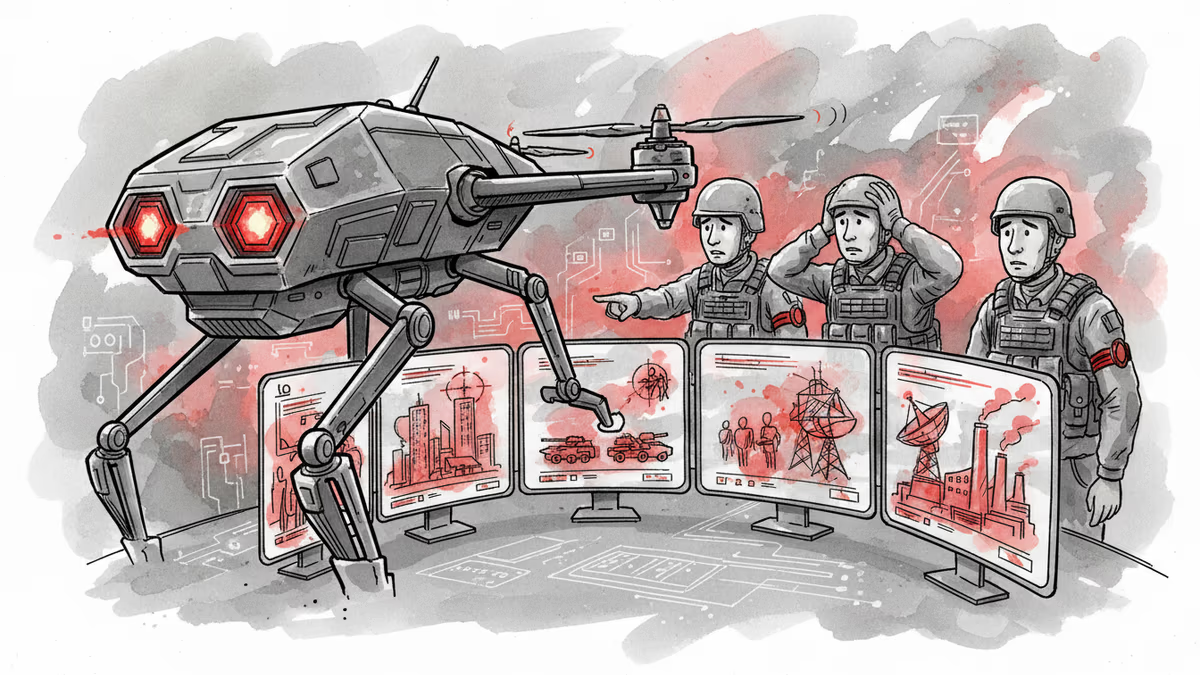
The Pentagon used Anthropic's Claude AI in Iran strikes despite Trump's ban. How AI is reshaping warfare and what autonomous weapons mean for the future.
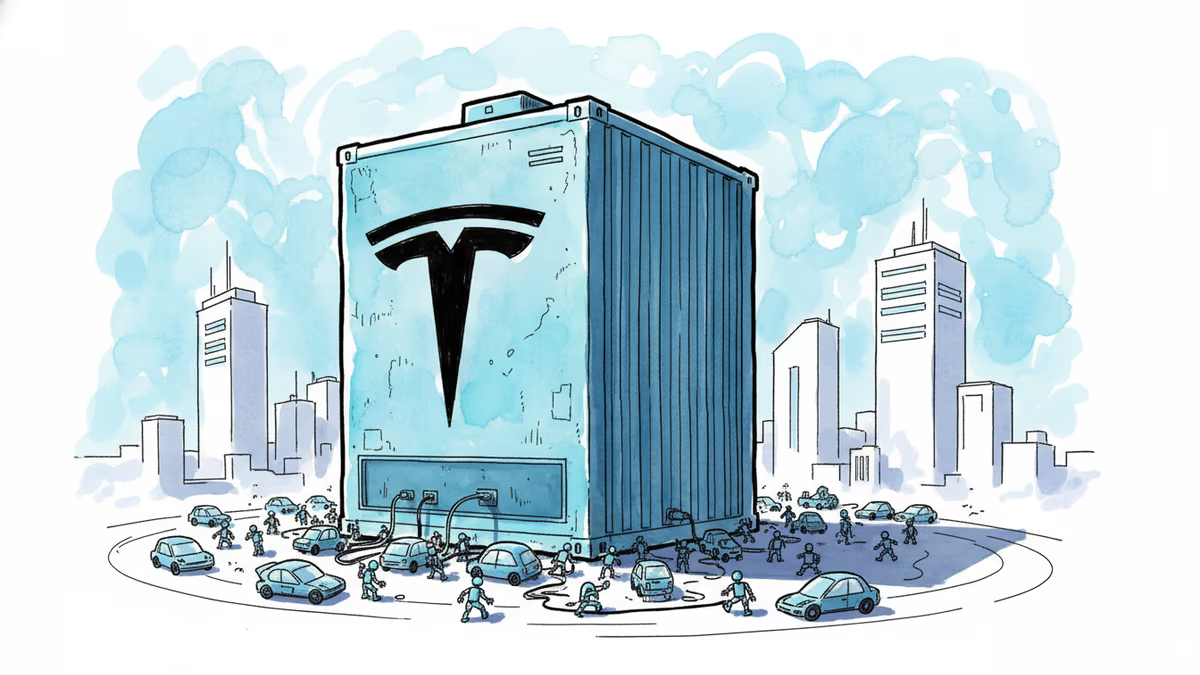
While Tesla grabs headlines with Cybercabs and humanoid robots, the company's actual future lies in massive Megapack batteries powering AI's energy hunger. Inside Musk's quiet pivot to energy dominance.
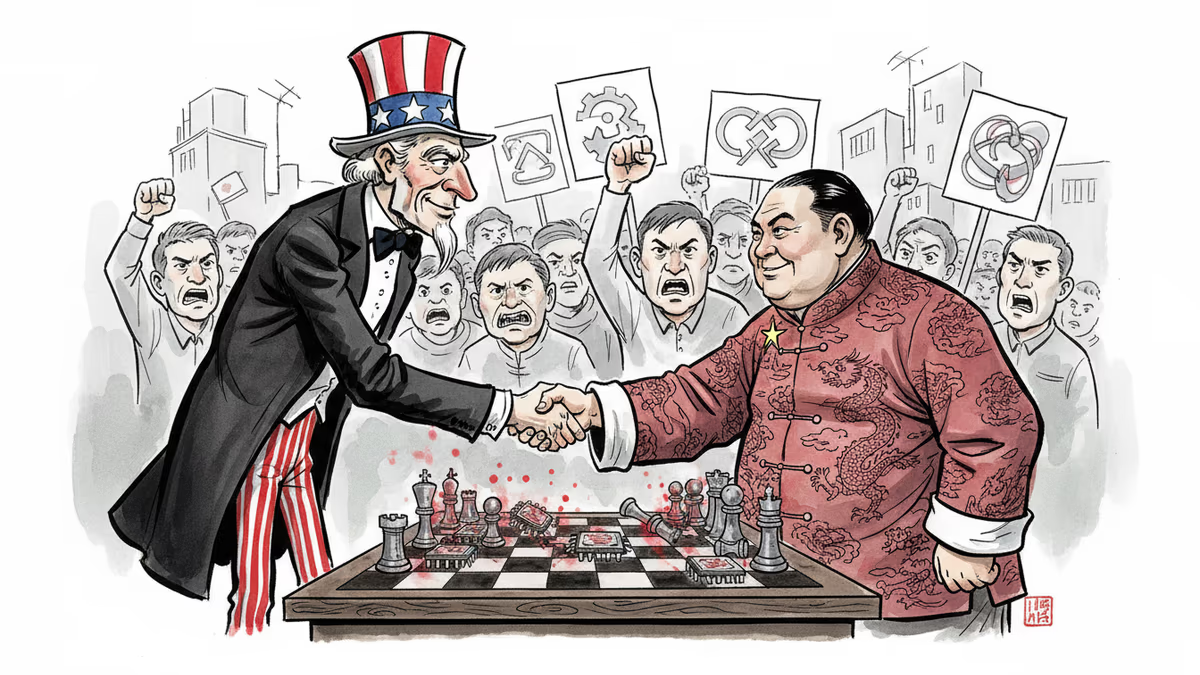
The Pentagon blacklisted Anthropic for refusing mass surveillance uses, embracing OpenAI instead. Is America becoming the authoritarian bogeyman it warns against?
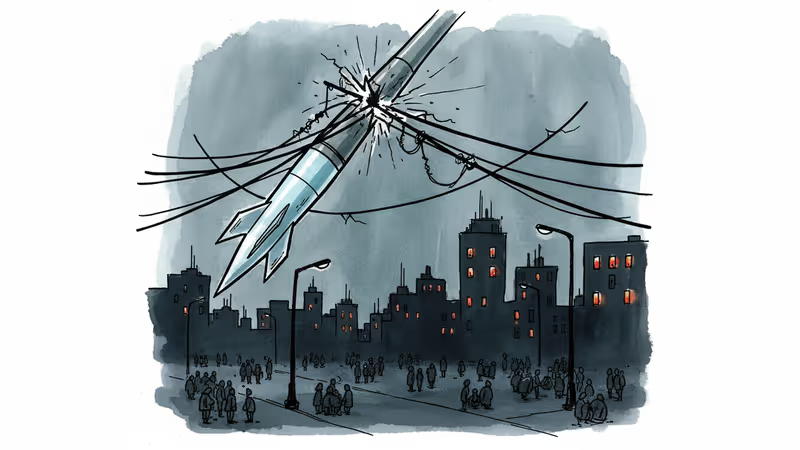
As Ukraine's war enters its fourth year, Russia systematically targets civilian power infrastructure in what Ukrainians call 'energy terror.' Despite Trump's ceasefire plea, why does Putin persist?
The Pentagon used Anthropic's Claude AI in Iran strikes despite Trump's ban. How AI is reshaping warfare and what autonomous weapons mean for the future.
While Tesla grabs headlines with Cybercabs and humanoid robots, the company's actual future lies in massive Megapack batteries powering AI's energy hunger. Inside Musk's quiet pivot to energy dominance.
The Pentagon blacklisted Anthropic for refusing mass surveillance uses, embracing OpenAI instead. Is America becoming the authoritarian bogeyman it warns against?
As Ukraine's war enters its fourth year, Russia systematically targets civilian power infrastructure in what Ukrainians call 'energy terror.' Despite Trump's ceasefire plea, why does Putin persist?
Thoughts
Share your thoughts on this article
Sign in to join the conversation