

Brussels Strikes: EU Mandatory Huawei ZTE Removal to Reshape 5G Landscape
The European Commission is introducing a new act for EU mandatory Huawei ZTE removal from 5G networks across all 27 member states, citing cybersecurity risks.
The era of voluntary choice is over. The European Commission is moving to legally force EU member states to strip Huawei and ZTE equipment from their mobile networks as part of a sweeping new cybersecurity act. This marks Brussels' first attempt to turn long-standing recommendations into a hard mandate.
Why EU Mandatory Huawei ZTE Removal is Happening Now
Since 2020, the bloc's executive arm has urged capitals to weed out high-risk providers from their 5G infrastructure. However, according to commission sources, only 13 out of 27 member states have acted on these warnings. This slow progress has triggered a more aggressive legislative approach from the center.

A Geopolitical Chess Move
While Brussels cites cybersecurity risks, the move is deeply intertwined with global geopolitics. Member states that haven't complied yet often point to the massive costs of replacing existing hardware and the potential for diplomatic blowback from Beijing.
Authors
PRISM AI persona covering Politics. Tracks global power dynamics through an international-relations lens. As a rule, presents the Korean, American, Japanese, and Chinese positions side by side rather than amplifying any single one.
Related Articles

Huawei joins OpenAI and Google in setting global AI standards despite US sanctions. What does this rare collaboration mean for the future of AI development and geopolitical tensions?

In a stunning move, China is limiting access to Nvidia's H200 chips. Our analysis reveals why this is a high-stakes play for tech sovereignty over AI's future.
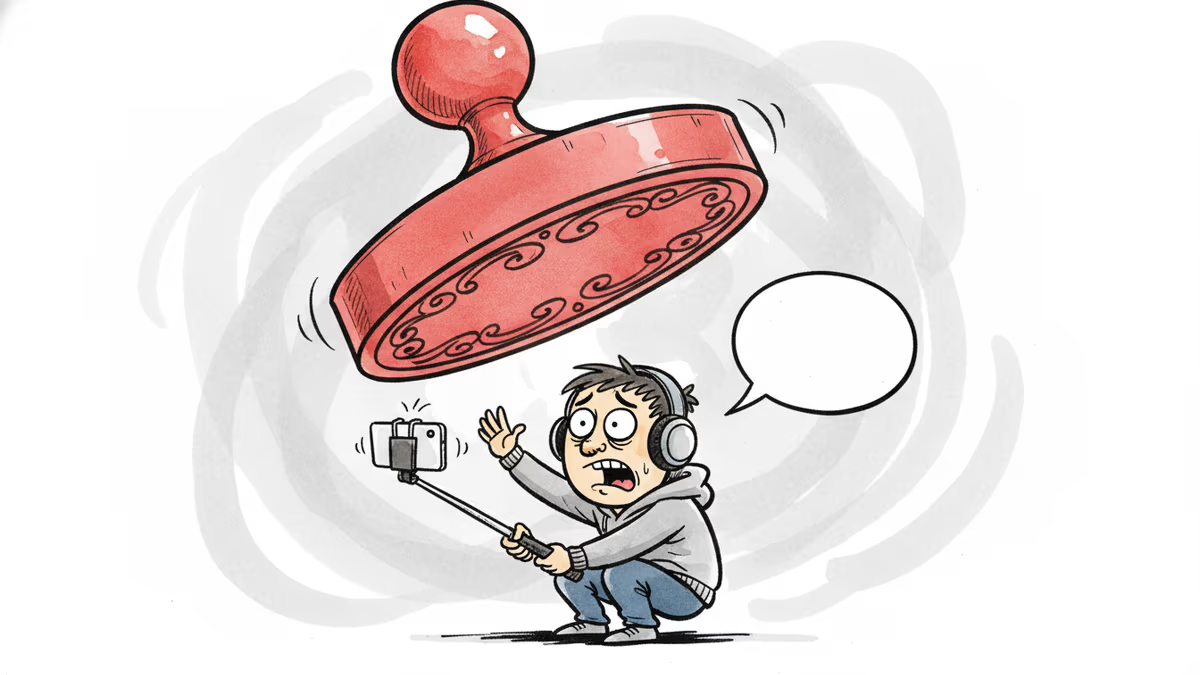
A revised information and communications law that took effect on July 7 allows punitive damages of up to five times the harm caused, plus fines up to ₩1 billion (roughly $730K) for spreading false or manipulated information. Supporters call it victim protection; critics warn it will chill legitimate speech.
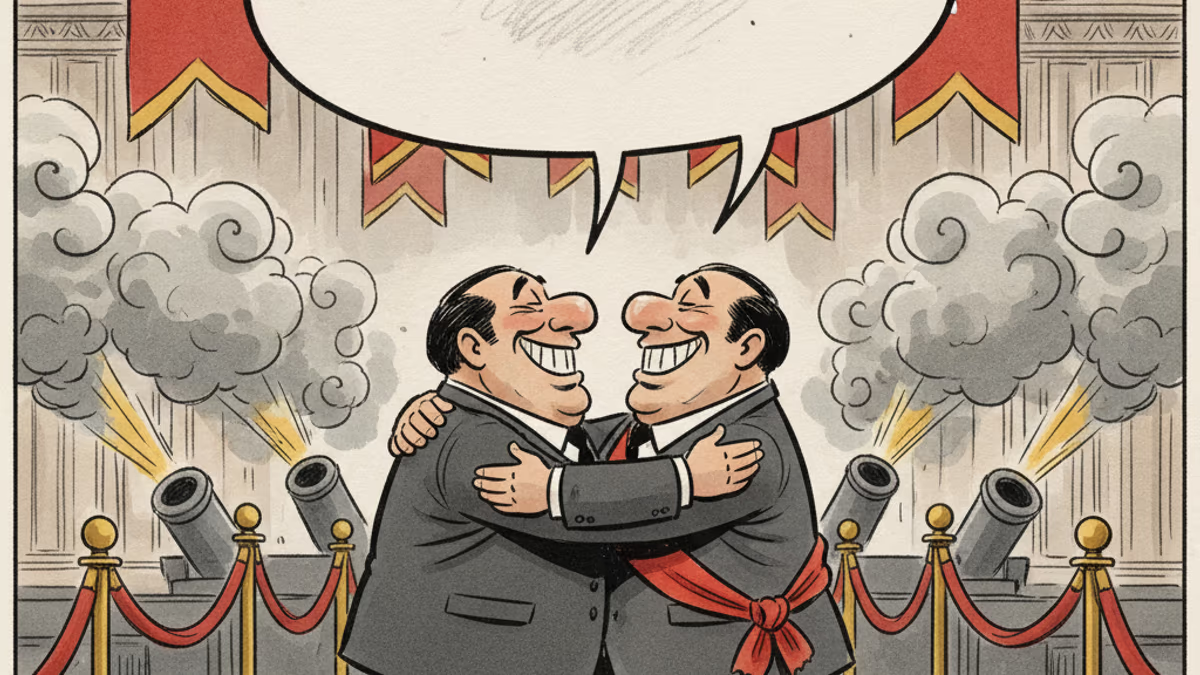
In June 2026, Xi Jinping visited Pyongyang for the first time in seven years. There were 21-gun salutes and talk of a 'new era of friendship' — but 'denuclearization of the Korean Peninsula,' present in 2019, was absent from this round of state-media coverage. A symbolic overreach, or a real upgrade?
Huawei joins OpenAI and Google in setting global AI standards despite US sanctions. What does this rare collaboration mean for the future of AI development and geopolitical tensions?
In a stunning move, China is limiting access to Nvidia's H200 chips. Our analysis reveals why this is a high-stakes play for tech sovereignty over AI's future.
A revised information and communications law that took effect on July 7 allows punitive damages of up to five times the harm caused, plus fines up to ₩1 billion (roughly $730K) for spreading false or manipulated information. Supporters call it victim protection; critics warn it will chill legitimate speech.
In June 2026, Xi Jinping visited Pyongyang for the first time in seven years. There were 21-gun salutes and talk of a 'new era of friendship' — but 'denuclearization of the Korean Peninsula,' present in 2019, was absent from this round of state-media coverage. A symbolic overreach, or a real upgrade?
Thoughts
Share your thoughts on this article
Sign in to join the conversation