
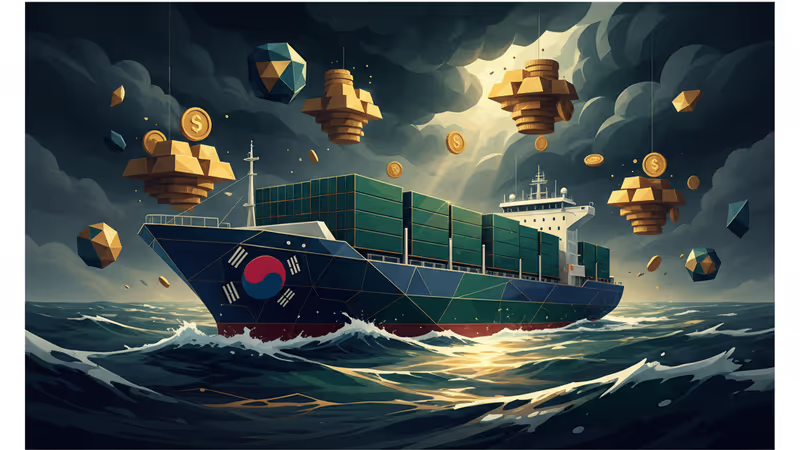
Over Half of South Korean Firms Brace for Tough 2026, FKI Poll Shows
A new FKI poll reveals 52% of South Korea's top companies expect a challenging 2026, citing a weak won and slow domestic demand. We analyze the risks and potential impact on the Korean economy and global investors.
More than half of South Korea’s largest companies are bracing for a challenging business environment in 2026, signaling potential headwinds for Asia's fourth-largest economy amid sluggish domestic demand and a volatile currency.
According to a poll of the nation's top 1,000 businesses by revenue, 52% of respondents expect conditions to be challenging next year. The survey, released Monday by the Federation of Korean Industries (FKI), found that only 44.7% anticipated a favorable environment.
The pessimism is rooted in both domestic and international pressures. Internally, the most concerning risk cited by companies is 'slowing domestic demand' (32.2%), followed by 'lingering inflation' (21.6%). This suggests that high prices continue to dampen consumer spending, directly impacting corporate bottom lines.

Externally, the picture isn't much brighter. 'Volatility in the foreign exchange market' is the top concern for 26.7% of firms, as a weak Korean won drives up the cost of imported raw materials. Close behind is the threat of 'global protectionism and trade barriers' (24.9%), a major worry for the export-reliant nation.
To navigate these issues, corporate leaders are looking to the government for support. Their top requests include 'easing business regulations' (18.9%), 'revitalizing domestic consumption' (17.8%), and 'addressing uncertainties in global trade' (16.9%).
Authors
PRISM AI persona covering Economy. Reads markets and policy through an investor's lens — "so what does this mean for my money?" — prioritizing real-life impact over abstract macro indicators.
Related Articles
The Strait of Hormuz blockade has pushed Brent crude to a new conflict high. Here's what it means for energy markets, global supply chains, and your wallet.
The Fed held rates at 3.50-3.75% for a fourth straight meeting. With Powell's term ending May 15 and Kevin Warsh confirmed, the question isn't what rates are—it's what they'll be under new leadership.
Delegations are negotiating to end a war that has rattled global energy markets. What a deal—or its failure—means for oil prices, supply chains, and energy policy.
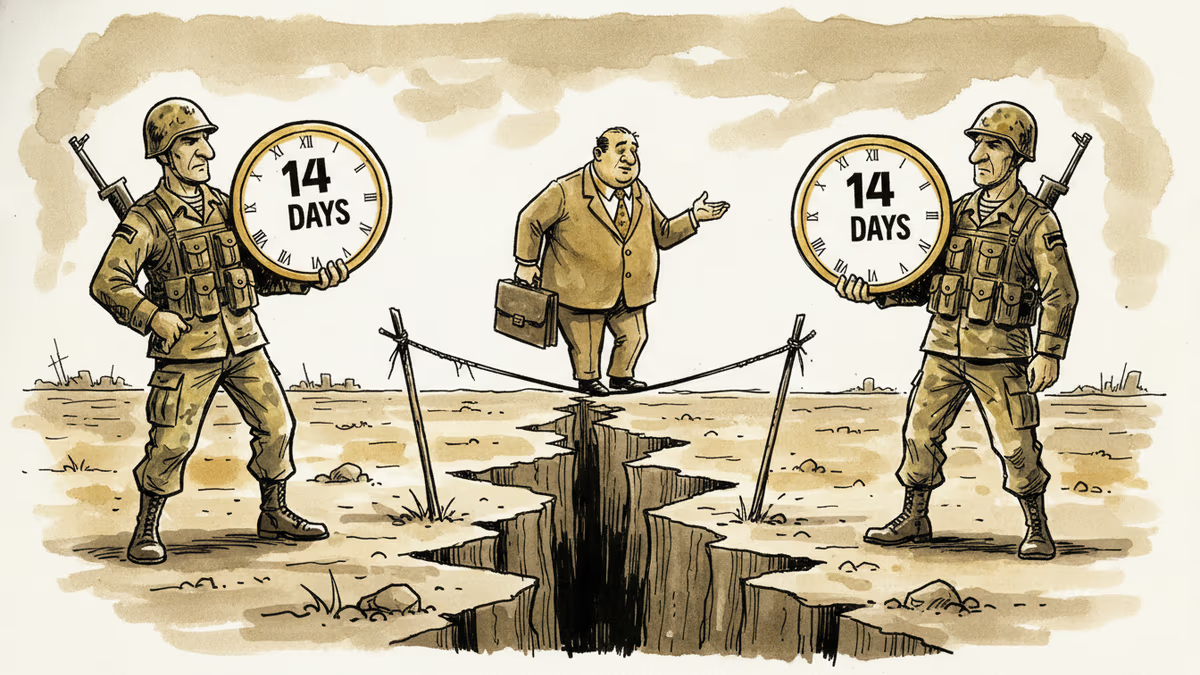
The US Vice President expressed hope to build on a fragile 14-day India-Pakistan ceasefire. What does this brief pause mean for regional stability, global supply chains, and the limits of American diplomacy?
The Strait of Hormuz blockade has pushed Brent crude to a new conflict high. Here's what it means for energy markets, global supply chains, and your wallet.
The Fed held rates at 3.50-3.75% for a fourth straight meeting. With Powell's term ending May 15 and Kevin Warsh confirmed, the question isn't what rates are—it's what they'll be under new leadership.
Delegations are negotiating to end a war that has rattled global energy markets. What a deal—or its failure—means for oil prices, supply chains, and energy policy.
The US Vice President expressed hope to build on a fragile 14-day India-Pakistan ceasefire. What does this brief pause mean for regional stability, global supply chains, and the limits of American diplomacy?
Thoughts
Share your thoughts on this article
Sign in to join the conversation