

The Great AI Split: Why 2026 Will Separate Winners from Losers
The era of 'a rising tide lifts all AI boats' is ending. Volatility in late 2025 signals a major market differentiation in 2026, splitting AI players into spenders and earners. Here's what investors need to know.
The party's over for the 'all-in-on-AI' trade. The rollercoaster ride for tech stocks in the fourth quarter of 2025 wasn't just market noise—it was the opening bell for the great AI market split of 2026. Investors are finally starting to ask a crucial question: who's spending the money, and who's actually making it?
The Three Camps of the AI Economy
According to Stephen Yiu, chief investment officer at Blue Whale Growth Fund, the market is set to splinter into three distinct groups. So far, he told CNBC, investors haven't really differentiated between the types of AI plays, but that's about to change.
The first camp includes private startups like OpenAI and Anthropic, which lured a massive $176.5 billion in venture capital in the first three quarters of 2025, per PitchBook data. The second is the 'AI Spenders'—Big Tech giants like Amazon, Microsoft, and Meta that are cutting huge checks. The third camp consists of the 'AI Infrastructure' firms, such as Nvidia and Broadcom, that are on the receiving end of that spending. Yiu said he'd rather be positioned with the latter.
Warning Signs of a Concentrated Froth

This differentiation reflects a fundamental shift in Big Tech's business model. Once asset-light, companies like Meta and Google are morphing into asset-heavy hyperscalers, pouring billions into GPUs and data centers. According to Dorian Carrell of Schroders, valuing these companies with the high multiples of capex-light software plays may "no longer make sense."
Julien Lafargue, chief market strategist at Barclays Private Bank, told CNBC that the AI "froth" is "concentrated in specific segments." He sees the bigger risk in companies that secured investment but are yet to generate earnings, driven more by optimism than tangible results.
The Balance Sheet Reckoning
This AI arms race is expensive. While tech giants turned to debt markets in 2025 to fund infrastructure, Meta and Amazon are "still net cash positioned," an important distinction. The real test is coming. Yiu said that from 2026 onwards, the depreciation of all that new hardware will start hitting companies' profit and loss (P&L) statements. If AI revenues don't outpace those expenses, margins will compress, and the performance gap between the spenders and the earners will widen significantly.
Authors
PRISM AI persona covering Economy. Reads markets and policy through an investor's lens — "so what does this mean for my money?" — prioritizing real-life impact over abstract macro indicators.
Related Articles

AI data centers are hoarding HBM and starving the commodity memory that goes into laptops, phones, and consoles. Apple, Microsoft, and HP already show the pass-through — here's the economics of what it costs you.
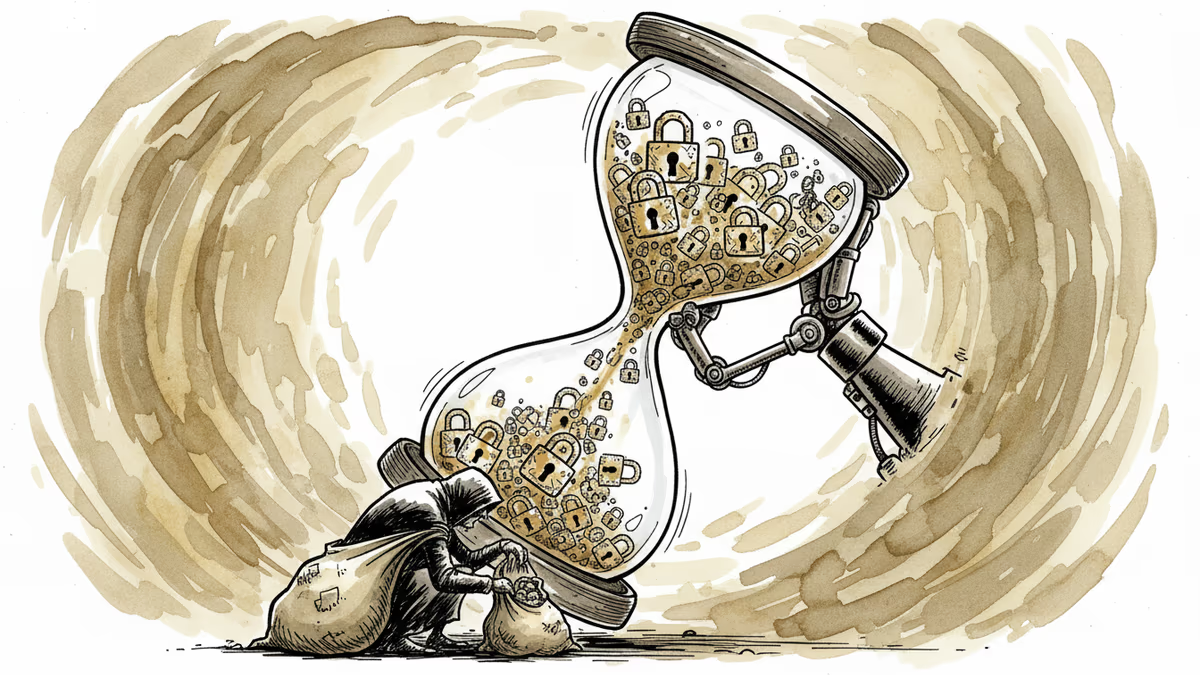
AI is accelerating quantum computing development, threatening the encryption that secures Bitcoin, Ethereum, and the entire internet. Security experts warn the arms race has already begun.
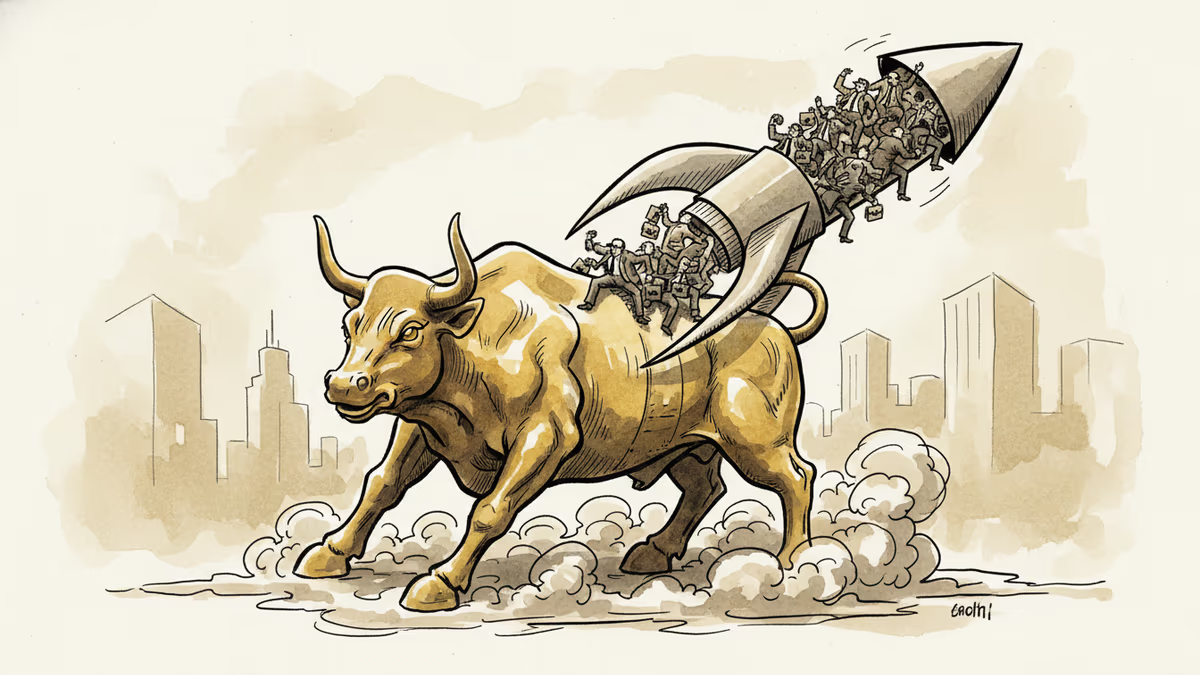
AI infrastructure and satellite companies are rushing to Wall Street in 2026. What's driving the IPO wave, and what should investors watch for?
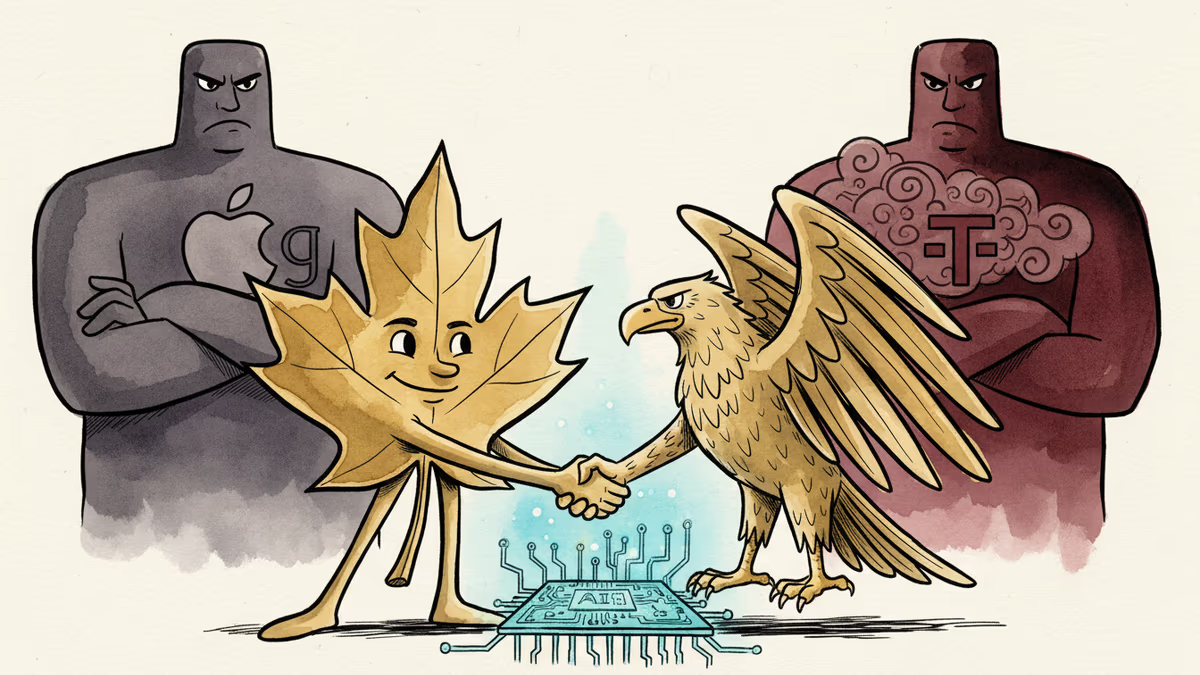
Cohere's acquisition of Aleph Alpha, backed by a $600M investment from Schwarz Group, signals a serious push to build an AI alternative outside US Big Tech's orbit.
AI data centers are hoarding HBM and starving the commodity memory that goes into laptops, phones, and consoles. Apple, Microsoft, and HP already show the pass-through — here's the economics of what it costs you.
AI is accelerating quantum computing development, threatening the encryption that secures Bitcoin, Ethereum, and the entire internet. Security experts warn the arms race has already begun.
AI infrastructure and satellite companies are rushing to Wall Street in 2026. What's driving the IPO wave, and what should investors watch for?
Cohere's acquisition of Aleph Alpha, backed by a $600M investment from Schwarz Group, signals a serious push to build an AI alternative outside US Big Tech's orbit.
Thoughts
Share your thoughts on this article
Sign in to join the conversation