
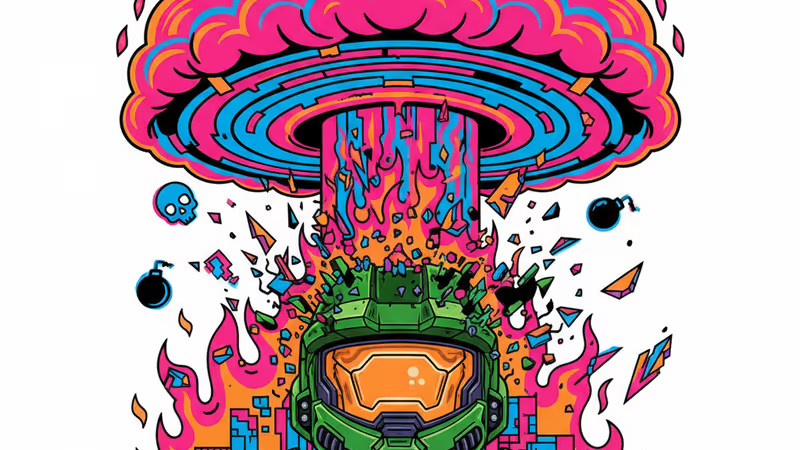
Microsoft Nukes a Viral Halo Mod in Counter-Strike 2, Sparking a Firestorm Over Fan Creativity
An ambitious Halo mod for CS2 was shut down by Microsoft's lawyers. We break down why it went viral and what the fallout means for the future of gaming.
Why This Blew Up the Internet
An incredibly ambitious fan project that brought the iconic feel of Halo 3 into Counter-Strike 2 was abruptly shut down by Microsoft's legal team. This wasn't just a mod takedown; it was a flashpoint that ignited a massive debate across the gaming world about where the line is between passionate fandom and corporate intellectual property. The community's reaction reveals a deep rift in how players and publishers see the future of gaming.
The Story: A Dream Crossover Becomes a Legal Nightmare
For a few glorious weeks, Project Misriah was the talk of the PC gaming town. Created by modder 'Froddoyo', it was more than just a map pack; it was a near-perfect recreation of the Halo 3 multiplayer experience inside Valve's new Source 2 engine. The mod directly ported character models, weapons, sounds, and even Halo's signature movement mechanics into Counter-Strike 2. It was a technical marvel and a nostalgia-fueled blast.
The project quickly gained viral traction, praised by both Halo purists and CS2 players amazed by the mod's quality. But its high profile was its downfall. Microsoft issued a Digital Millennium Copyright Act (DMCA) notice, citing the “unauthorized use of Halo game content.” Just like that, Project Misriah was wiped from the Steam Workshop, leaving a trail of disappointed fans and a heated online debate in its wake.
The Best Reactions: Rage, Irony, and Resignation
The internet did what it does best: it reacted with a mix of fury, dark humor, and insightful commentary. We've curated the most compelling takes from across the community.
The 'Labor of Love' Argument
This camp sees the takedown as a slap in the face to the most dedicated fans—the ones who keep franchises relevant between official releases.
- A popular forum comment: "This is FREE marketing for Halo. A project born out of pure love for the franchise. Microsoft should be hiring these guys, not sending them legal threats."
- A streamer's take: "I haven't been this excited about Halo or CS2 in years. The mod was genuinely innovative. Big L for Microsoft on this one."
The 'Inevitable Reality' Crew
For every outraged fan, there was a pragmatist pointing out the obvious legal reality of using copyrighted assets without permission.
- A developer's perspective on X (formerly Twitter): "As a dev, I get it. They ripped assets 1-for-1. You can't just take someone's entire game and put it in another. It's a clear-cut IP violation, no matter how cool it is."
- A legal-minded gamer: "What did anyone expect? If you fly too close to the sun with ripped assets, you're going to get burned. It sucks, but it's the law."
The 'Ultimate Irony' Observation
The most insightful (and funniest) reactions pointed out the deep irony of this situation, given the history of both games involved.
- A viral tweet: "Let's not forget that Counter-Strike itself started as a mod of Half-Life. And DOTA was a mod of Warcraft III. Modding is in gaming's DNA. This feels like forgetting your roots."
- Another user added: "Halo on PC only became a phenomenon because of the incredible modding community around Halo: Custom Edition. Microsoft is shutting down the very culture that made its game a legend on this platform."
Cultural Context: The Unspoken Contract of Modding
This isn't just a niche gaming drama; it taps into the very soul of PC gaming culture. For decades, an unspoken contract has existed between developers and their communities: fans can create, tinker, and modify games as long as they don't try to sell their creations or directly harm the brand. Project Misriah's takedown suggests this contract is becoming increasingly fragile.
In an era of live-service games and tightly controlled ecosystems, fan-made content is often seen less as a tribute and more as a threat to a publisher's monetization strategy. The global reaction of disappointment shows that for many players, modding isn't piracy—it's the ultimate form of engagement and a vital part of a game's long-term health and legacy.
PRISM Insight: A Legally Correct, Strategically Flawed Move
From a purely legal standpoint, Microsoft is in the right. The mod used proprietary Halo assets without a license. Case closed. But in the court of public opinion—and long-term brand strategy—this move is a significant misstep.
This is a classic example of a company winning a legal battle but losing the culture war. The goodwill and free marketing generated by a high-quality fan project like Project Misriah are invaluable. It keeps a legacy franchise like Halo in the conversation and demonstrates the passion of its fanbase to a new generation of players on a different platform. Erasing it sends a chilling message to the creative community: your passion is only welcome within the boundaries we set.
Contrast this with companies like Bethesda, which have built empires on the back of their modding communities. Or even 343 Industries' (the current Halo developer) more tolerant stance towards other fan projects. This DMCA feels like a relic of an older, more adversarial era of publisher-fan relations. In 2025, the smartest brands don't just tolerate their communities; they empower them. This takedown, while legally sound, reveals a strategic blind spot, prioritizing short-term control over long-term community health.
Related Articles
Microsoft's DMCA takedown of the viral Halo mod for CS2 has gamers divided. We break down why this happened, the best reactions, and what it means for the future of modding.
Microsoft's DMCA takedown of the viral Halo mod for CS2 has gamers divided. We break down why this happened, the best reactions, and what it means for the future of modding.
A brilliant fan-made Halo mod for CS2 went viral—then Microsoft shut it down. We break down why this DMCA takedown is more than just a legal issue.
Stray Kids & NCT DREAM's chart dominance isn't just a win. It's a masterclass in fandom economics that reveals a new blueprint for the global music industry.