
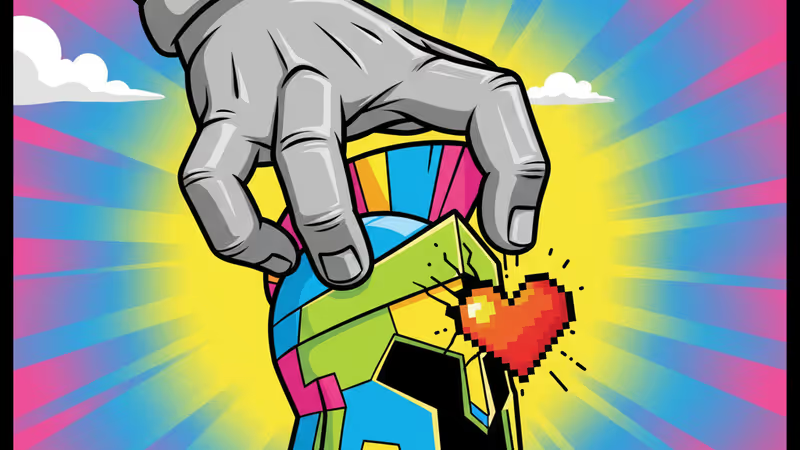
Microsoft Just Killed a Viral Halo Mod. It's a Battle for Gaming's Soul.
A brilliant fan-made Halo mod for CS2 went viral—then Microsoft shut it down. We break down why this DMCA takedown is more than just a legal issue.
The Dream Crossover That Was Too Good to Last
One minute, the gaming world was celebrating Project Misriah, a stunningly ambitious mod that brought the iconic feel of Halo 3 into Counter-Strike 2. The next, it was gone—vaporized by a legal notice from Microsoft. This isn't just another takedown; it's a flashpoint in the decades-long cold war between corporate IP holders and the passionate fan communities that keep their games alive.
The Story: A Fan's Masterpiece Meets a Corporate Hammer
For a few glorious weeks, Project Misriah was the talk of the PC gaming town. Created by modder Froddoyo, it wasn't just a Halo-themed map. It was a meticulous port of Halo 3's soul into Valve's Source 2 engine, complete with character models, sound effects, maps, and even the series' signature movement mechanics. It was a technical marvel and a massive hit, celebrated by both Halo veterans and CS2 players who were impressed by the sheer dedication on display.
Then, the inevitable happened. Froddoyo received a Digital Millennium Copyright Act (DMCA) takedown notice from Microsoft. The reason was blunt: "unauthorized use of Halo game content." The project was promptly pulled from the Steam Workshop, leaving a trail of disappointment and a firestorm of debate in its wake.
The Internet's Reaction: A Community Divided
The community's response was swift, loud, and fractured. This wasn't a simple case of right and wrong; it tapped into deep-seated beliefs about creativity, ownership, and corporate responsibility. We've curated the core arguments that erupted across social media and forums.
The "Let Fans Have Fun" Camp
This group saw the takedown as a classic case of a corporation stomping on pure, unadulterated passion. The sentiment was clear: "This mod was a free love letter to Halo, generating goodwill and excitement that money can't buy. Why kill it?" Many argued that projects like Misriah keep legacy games relevant and serve as free marketing, and that Microsoft's move was petty and out of touch with the very community it claims to serve.
The "Copyright is Copyright" Realists
On the other side were the pragmatists. Their take was less emotional and more legalistic: "What did you expect? You can't rip assets directly from one company's game and put them into a competitor's ecosystem." This camp pointed out that while the mod was impressive, it was a clear-cut case of copyright infringement. For Microsoft, allowing it to exist could set a dangerous precedent for protecting its multi-billion dollar intellectual property.
The "Missed Opportunity" Strategists
Perhaps the most insightful commentary came from those who saw this not as a legal necessity, but as a strategic blunder. Their perspective: "Instead of a DMCA, Microsoft should have hired the modder. Imagine the PR win." This group argued that the takedown generated nothing but ill will, whereas embracing the project—or at least opening a dialogue—could have turned a legal headache into a massive community engagement victory. It felt, to them, like a failure of imagination from the Xbox team.
Cultural Context: The Timeless War on Remix Culture
Project Misriah's demise resonates so strongly because it's a story we've seen countless times. From fan-made Star Wars films to unofficial Pokémon projects, the internet's inherent "remix culture" is constantly at odds with 20th-century intellectual property law. Fans see their work as transformative tribute; legal departments see it as unauthorized use. This incident is a perfect 2024 snapshot of that unresolved conflict. PC gaming, in particular, was built on the back of modding—Counter-Strike itself began as a mod of Half-Life. For many, this takedown feels like a betrayal of that foundational spirit.
PRISM INSIGHT: The Corporation's Dilemma—Control vs. Community
Microsoft's action, while legally sound, reveals a fundamental misunderstanding of the modern creator economy. The company had two paths: the path of control or the path of community. It chose control, and in doing so, missed a golden opportunity.
The core issue here isn't just the use of Halo's assets; it's *where* they were used: in Counter-Strike 2, a flagship title on Valve's Steam, a direct competitor to Microsoft's own PC gaming ecosystem. Allowing a perfect Halo experience to exist and thrive on a rival platform, built by a fan for free, likely felt like an unacceptable loss of platform control. The DMCA was a tool not just for copyright protection, but for market containment.
However, this defensive crouch is a strategic error. In an era where community goodwill is a priceless asset, the takedown telegraphs a message of rigidity. What if, instead, Microsoft had contacted Froddoyo and offered to officially support the project, perhaps bringing it into the Halo Master Chief Collection's mod tools? The PR value would have been immense, painting Microsoft as a champion of its most passionate fans. By issuing a takedown, they didn't just remove a mod; they alienated a segment of their core audience and reinforced the age-old image of the out-of-touch corporate giant. In the battle for gamers' hearts and minds, that's a self-inflicted wound.
Related Articles

First stills of Kim Hye-yoon and Lomon's new K-drama are out, and the internet is losing it. Here's our analysis on why this is a masterclass in viral marketing.

Actress Kim Go Eun's pre-debut photos went viral, but it's not just about nostalgia. Here's our analysis on why it reveals a deep truth about authenticity.
New K-drama 'Undercover Ms. Hong' is sparking a frenzy online. We break down why the 90s nostalgia, star cast, and meme-worthy stills are making it the next viral hit.
K-drama star Park Shin-hye's new 90s comedy 'Undercover Miss Hong' is already creating buzz. We analyze the formula that's priming it for viral success.