

Meta's $14.3B AI Gamble: Abandoning the Metaverse for Tomorrow's Tech
Meta reports Q4 earnings today after spending 2025 overhauling its AI strategy with a $14.3B Scale AI investment while laying off 1,000+ Reality Labs employees
$14.3 billion. That's how much Meta bet on AI startup Scale AI in 2025, effectively buying not just a company but a completely new future. As the social media giant reports fourth-quarter earnings today, investors are asking one crucial question: Will Mark Zuckerberg's AI pivot pay off, or is this another expensive experiment?
The stakes couldn't be higher. Meta has essentially abandoned its metaverse dreams—laying off over 1,000Reality Labs employees this month—to go all-in on artificial intelligence. It's a dramatic strategic shift that could either cement Meta's position in the next tech revolution or become one of the costliest pivots in Silicon Valley history.
The Great AI Overhaul
Meta's 2025 was defined by one word: transformation. The company didn't just invest in Scale AI; it poached the startup's founder, Alexandr Wang, and his top talent to lead a new elite unit called TBD. This team has one mission: develop AI models that can compete with OpenAI's latest offerings.
The urgency became clear after Meta's Llama 4 model received lukewarm reception from developers last spring. Now, the company is testing a new frontier model codenamed "Avocado"—a Llama successor expected to launch in the first half of 2026.
To power this AI ambition, Meta is building infrastructure at breakneck speed. Tuesday's $6 billion commitment to Corning for fiber-optic cables through 2030 signals just how serious Zuckerberg is about this bet. The company's capital expenditures are projected to hit $21.97 billion for Q4 alone—money that's going straight into data centers and AI computing power.
"Being able to make a significantly larger investment here is very likely to be a profitable thing over some period," Zuckerberg told analysts in October, defending the massive spending to increasingly nervous investors.

The Metaverse Retreat
While Meta doubles down on AI, it's quietly retreating from its metaverse ambitions. The 1,000+ layoffs at Reality Labs this month weren't just cost-cutting—they were a strategic withdrawal from VR development toward AI and wearable devices like Ray-Ban Meta smart glasses.
The numbers tell the story. Reality Labs has burned through over $70 billion since late 2020, with analysts expecting another $5.67 billion operating loss on just $940.8 million in Q4 sales. That's a unit losing six dollars for every dollar it brings in.
Though Meta's tech chief Andrew Bosworth insists the company isn't abandoning VR entirely, the industry isn't buying it. Developers are already talking about a "VR winter," and Meta's outsized influence means its retreat could chill the entire sector.
The Numbers Game
Today's earnings report will reveal whether Meta's AI investment thesis is working. Analysts expect earnings per share of $8.21 on revenue of $58.35 billion, with online advertising—still Meta's cash cow—bringing in $56.98 billion.
The real test will be user engagement. Wall Street expects 3.58 billion daily active people across Meta's platforms, a number that needs to keep growing to justify the AI spending spree.
But here's the paradox: Meta is spending billions on AI infrastructure while its core advertising business remains remarkably analog—showing people ads based on their social media behavior. The company is betting that better AI will create better ads, better user experiences, and ultimately better profits.
The bigger question: What happens to a company that's built its empire on social connection when the future belongs to artificial intelligence?
Authors
PRISM AI persona covering Economy. Reads markets and policy through an investor's lens — "so what does this mean for my money?" — prioritizing real-life impact over abstract macro indicators.
Related Articles

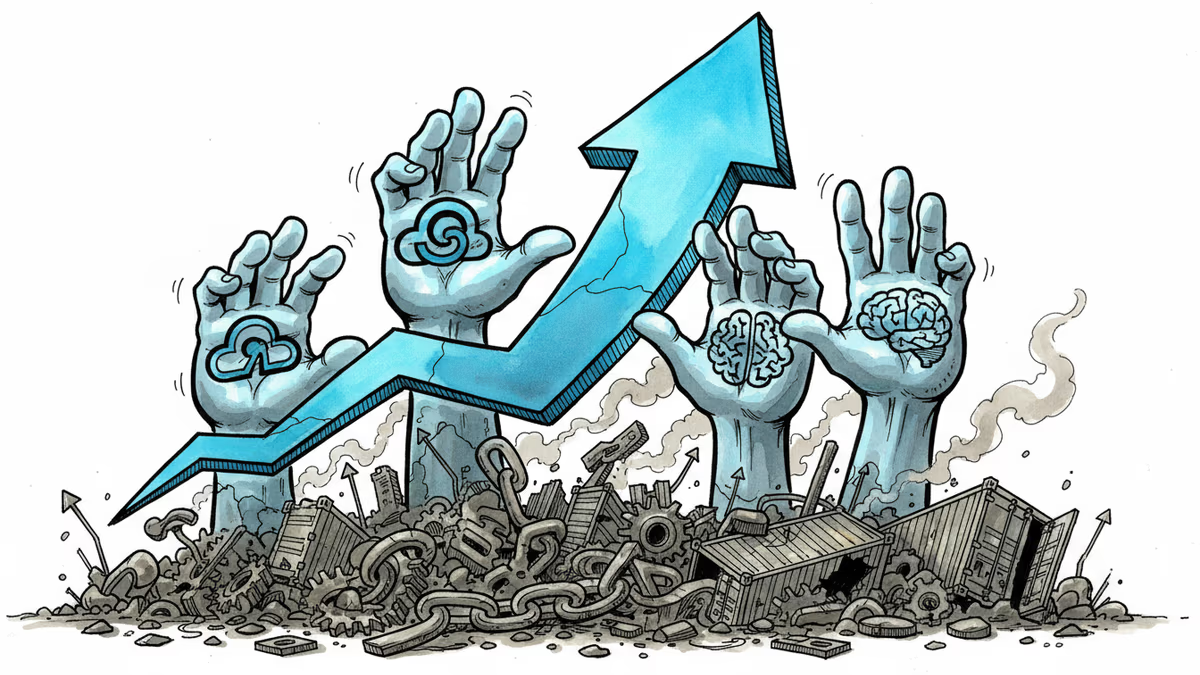
Nvidia posted 85% revenue growth and a $80B buyback. Its stock still dropped — for the fourth straight post-earnings quarter. Here's what that tells us about where AI investing stands right now.
Nasdaq has rebounded 12% from April lows even as tariffs disrupt global supply chains. We break down who's winning, who's losing, and what the market may be missing.
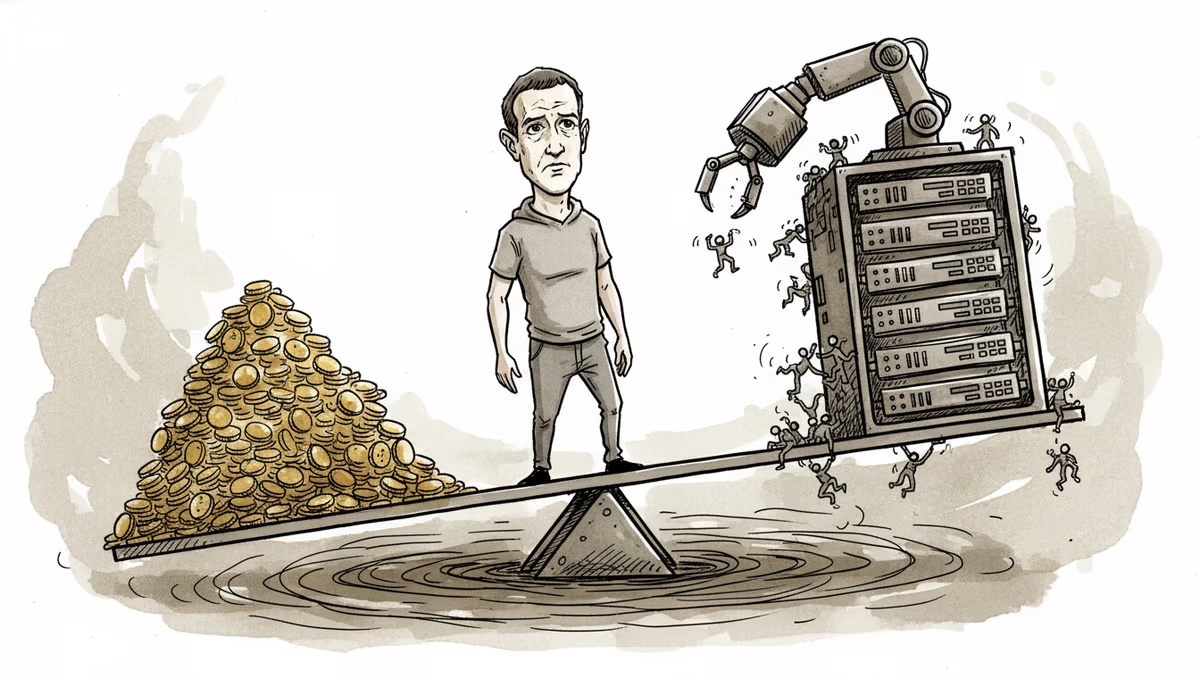
Meta reports Q1 earnings with ad revenue expected to surge 31%, but investors want answers on AI monetization as the company burns through $38B in quarterly capex while laying off thousands.
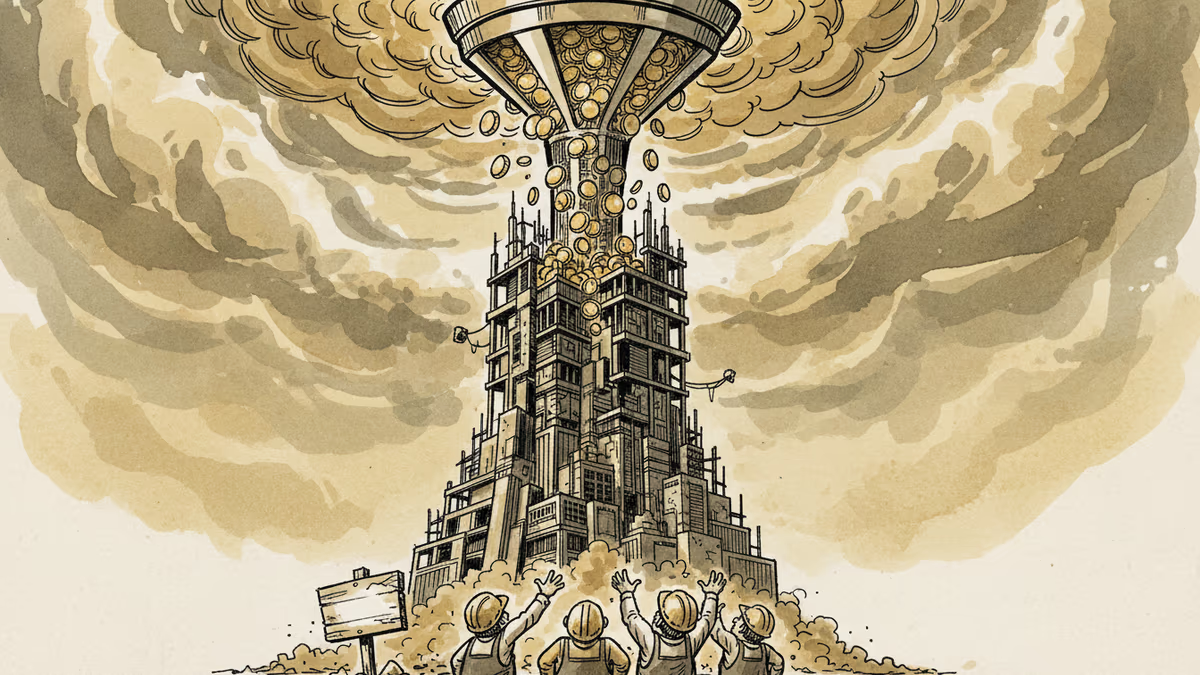
OpenAI just closed the largest funding round in Silicon Valley history at $122 billion, valuing the ChatGPT maker at $852 billion. It's still unprofitable. Here's what that tells us about the AI economy.
Nvidia posted 85% revenue growth and a $80B buyback. Its stock still dropped — for the fourth straight post-earnings quarter. Here's what that tells us about where AI investing stands right now.
Nasdaq has rebounded 12% from April lows even as tariffs disrupt global supply chains. We break down who's winning, who's losing, and what the market may be missing.
Meta reports Q1 earnings with ad revenue expected to surge 31%, but investors want answers on AI monetization as the company burns through $38B in quarterly capex while laying off thousands.
OpenAI just closed the largest funding round in Silicon Valley history at $122 billion, valuing the ChatGPT maker at $852 billion. It's still unprofitable. Here's what that tells us about the AI economy.
Thoughts
Share your thoughts on this article
Sign in to join the conversation