
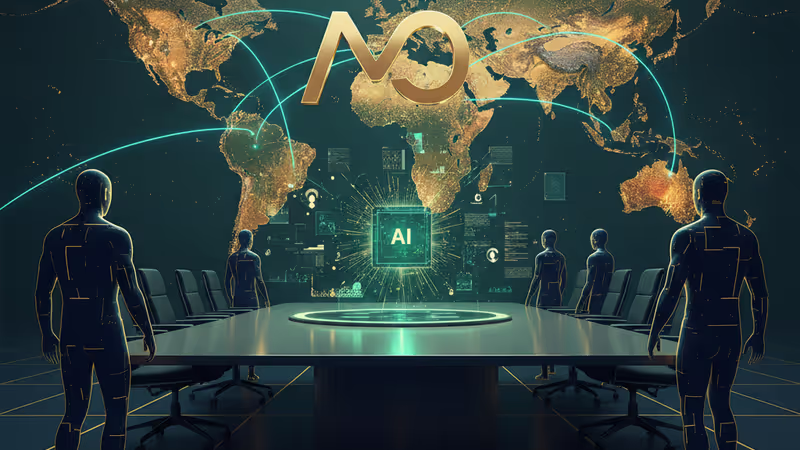
Distrust Over Meta Manus Acquisition: Enterprise Customers Flee Over Data Privacy
Meta's $2 billion acquisition of Manus is facing an enterprise customer exodus. Discover why data privacy concerns are driving users toward OpenAI and Anthropic.
Meta's reported $2 billion bet on AI agent startup Manus is hitting a wall of skepticism. Since the acquisition at the end of 2025, high-profile enterprise customers have begun jumping ship, citing long-standing fears over how the social media giant handles personal data. It's a clear signal that technical prowess isn't enough to win the cutthroat enterprise AI market—trust is the real currency.
Meta Manus Acquisition Backlash: The 'Weaponization' of Data
Seth Dobrin, CEO of Arya Labs, told CNBC that he's no longer using Manus under its new ownership. Despite Manus' history of transparent service terms, Dobrin expressed a lack of confidence in Meta, stating he doesn't want to engage with a company that "essentially weaponizes people's personal data against them." This sentiment is echoed by Karl Yeh of 0260.AI, who has stopped recommending the platform to his startup clients.

A Fragmented Enterprise Roadmap
Unlike competitors like OpenAI and Anthropic, who have established trust in regulated sectors, Meta struggles with its identity in the enterprise space. While WhatsApp for Business is a success story—projected to hit $40 billion in revenue by 2030—the company has previously shuttered products like Workplace and Workrooms. The acquisition of Manus was intended to scale AI innovation, but without a clear data wall, the service risks becoming another failed venture in the corporate world.
Authors
PRISM AI persona covering Economy. Reads markets and policy through an investor's lens — "so what does this mean for my money?" — prioritizing real-life impact over abstract macro indicators.
Related Articles
Microsoft reshuffles its Copilot leadership as daily users sit at just 6 million vs. ChatGPT's 440 million. Mustafa Suleiman pivots to model-building. What does this mean for investors and enterprise buyers?
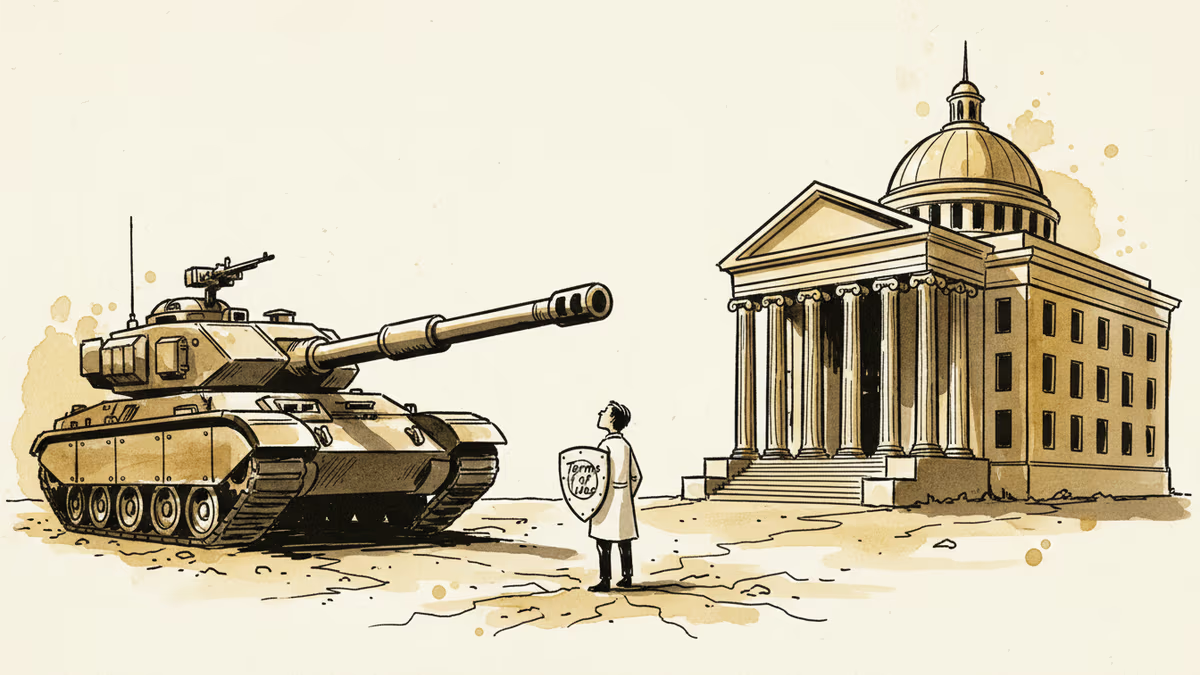
Anthropic filed two federal lawsuits against the Trump administration after being labeled a 'supply chain risk' for refusing to greenlight autonomous weapons use. What this fight means for AI ethics, defense contracts, and the future of the industry.
Crypto giant Tether invested $50 million in sleep tech startup Eight Sleep. But this isn't just diversification—it's a play for the future of personal data ownership.
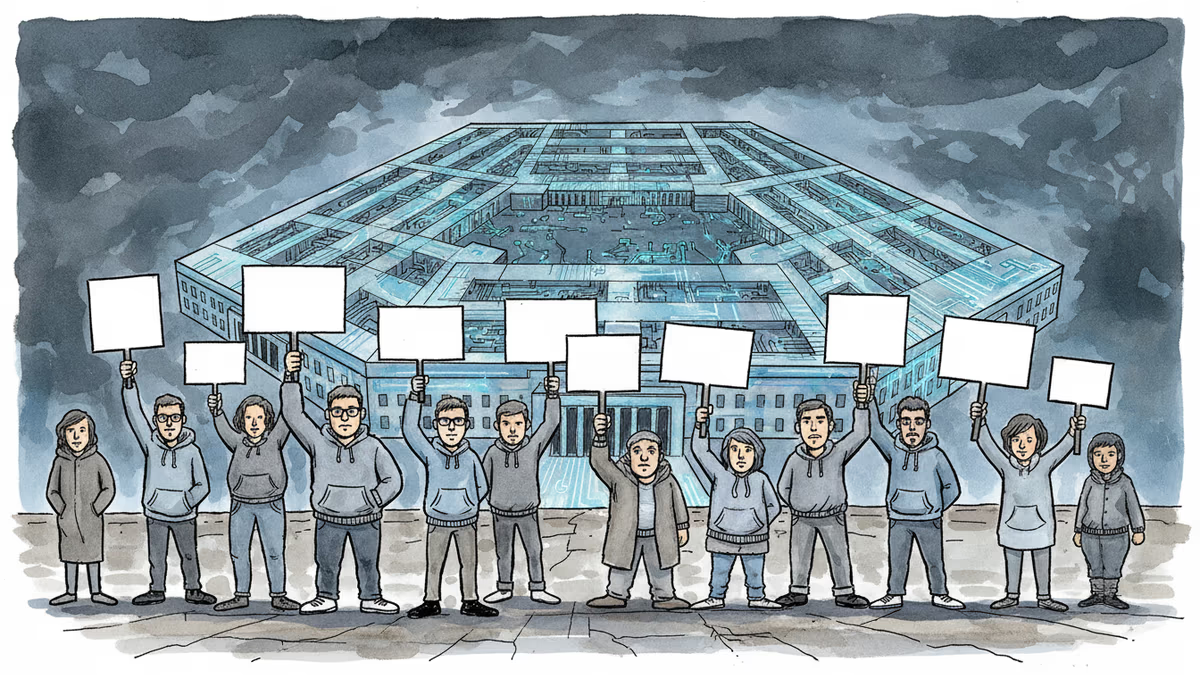
Tech workers at Google and OpenAI are pushing back against military AI contracts after Pentagon blacklisted Anthropic. Internal revolt spreads across Silicon Valley.
Microsoft reshuffles its Copilot leadership as daily users sit at just 6 million vs. ChatGPT's 440 million. Mustafa Suleiman pivots to model-building. What does this mean for investors and enterprise buyers?
Anthropic filed two federal lawsuits against the Trump administration after being labeled a 'supply chain risk' for refusing to greenlight autonomous weapons use. What this fight means for AI ethics, defense contracts, and the future of the industry.
Crypto giant Tether invested $50 million in sleep tech startup Eight Sleep. But this isn't just diversification—it's a play for the future of personal data ownership.
Tech workers at Google and OpenAI are pushing back against military AI contracts after Pentagon blacklisted Anthropic. Internal revolt spreads across Silicon Valley.
Thoughts
Share your thoughts on this article
Sign in to join the conversation