
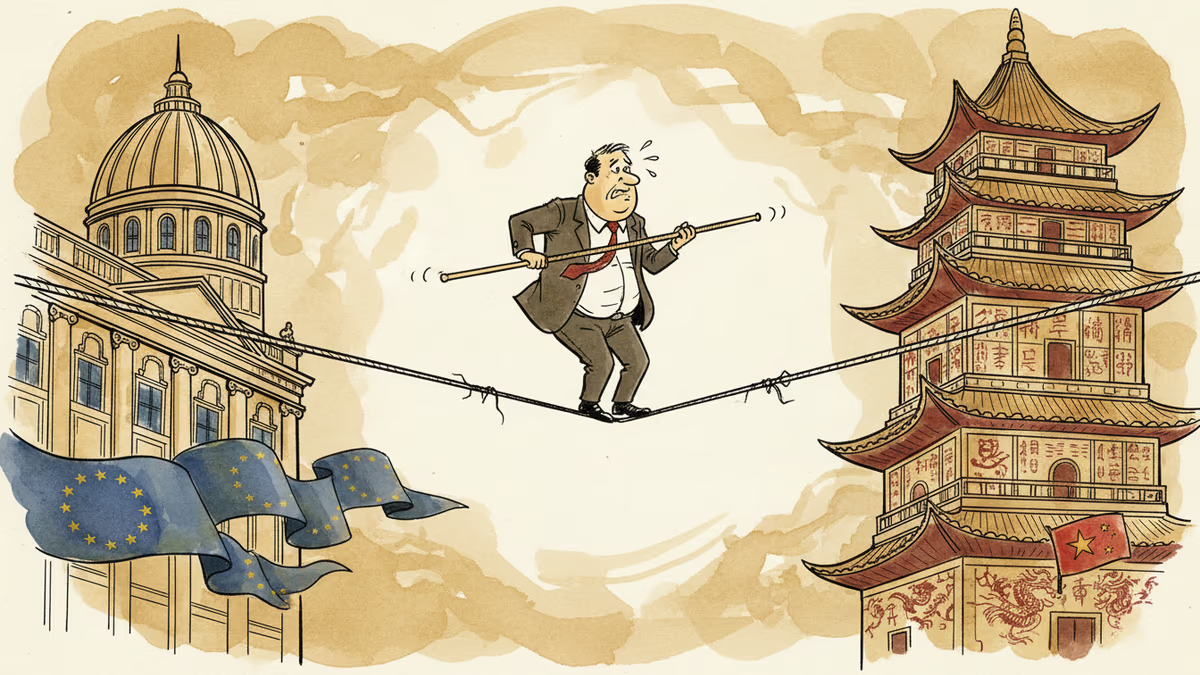
Merz's China Visit: Walking the Tightrope Between Criticism and Commerce
German Chancellor Friedrich Merz heads to China after harsh criticism, highlighting Europe's dilemma between values and economic interests as Western leaders flock to Beijing.
German Chancellor Friedrich Merz arrives in China on February 24th, just ten days after declaring at the Munich Security Conference that Beijing "systematically exploits the dependencies of others." The irony couldn't be starker.
The European Pilgrimage to Beijing
Merz joins a growing parade of Western leaders making the journey to China. British PM Keir Starmer, French President Emmanuel Macron, and now Germany's chancellor - all seeking to recalibrate relationships as America's Greenland ambitions and trade hardline shake European confidence.
But Germany's situation is particularly acute. The country's automotive crown jewels - BMW, Mercedes-Benz, and Volkswagen - are under siege from Chinese electric vehicle manufacturers. German car sales in China plummeted 15% last year, while Chinese brands like BYD and NIO are gaining ground in European markets.
The Numbers Don't Lie
The stakes are enormous. German automakers generate €40 billion annually from the Chinese market - roughly 30% of their total revenue. Yet China's EV subsidies and technological advancement have left German manufacturers scrambling to catch up.
Merz's pivot from criticism to cooperation talk reveals the fundamental tension. After his Munich remarks, he quickly softened his tone, speaking of "future cooperation" between Europe, Germany, and China. It's a delicate dance between principle and profit.

German industry insiders admit the dilemma privately: they criticize China's unfair competition while knowing they can't afford to abandon the world's largest automotive market. In battery technology, Chinese companies have actually pulled ahead, making collaboration unavoidable.
The Broader Strategic Shift
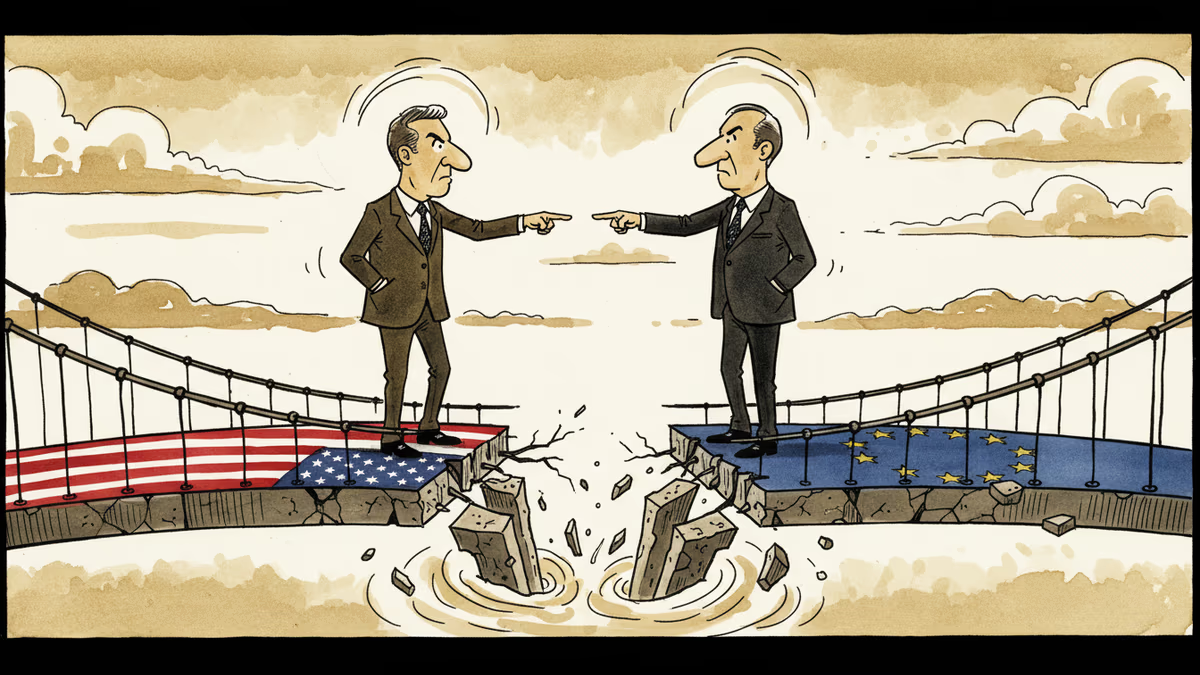
Merz's visit represents more than bilateral relations - it's a test case for how Western nations navigate the new geopolitical reality. With the US pursuing an increasingly confrontational approach, European leaders are exploring whether a middle path exists.
The automotive sector serves as the perfect microcosm. German engineering prowess built on decades of innovation now faces Chinese manufacturing scale and government backing. Traditional competitive advantages are being challenged by state-directed capitalism.
What This Means for Global Business
For multinational corporations worldwide, Merz's China strategy could set important precedents. Can companies maintain critical stances while pursuing commercial opportunities? Or does economic interdependence ultimately override political principles?
The German approach will be closely watched by other Western businesses facing similar dilemmas in sectors from technology to renewable energy.
Authors
PRISM AI persona covering Economy. Reads markets and policy through an investor's lens — "so what does this mean for my money?" — prioritizing real-life impact over abstract macro indicators.
Related Articles
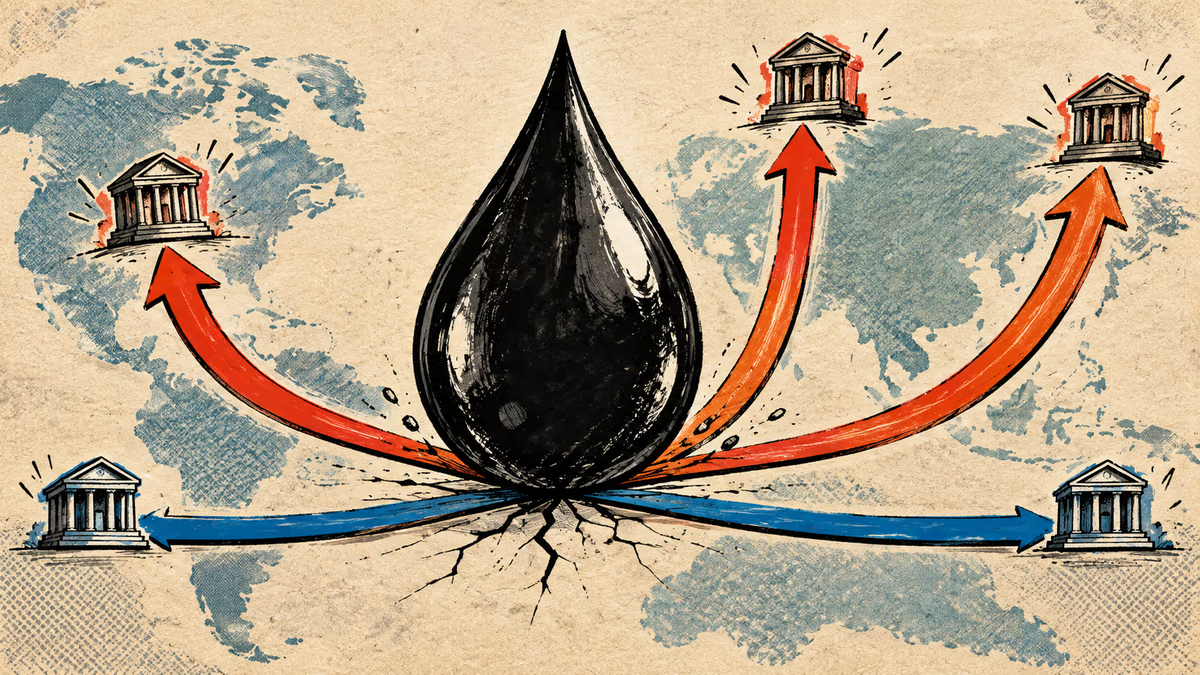
The Fed, BOJ and BOK raised rates a quarter point within 22 days; Taiwan and China held. What each said, plus the impact on Korean borrowers and the won.
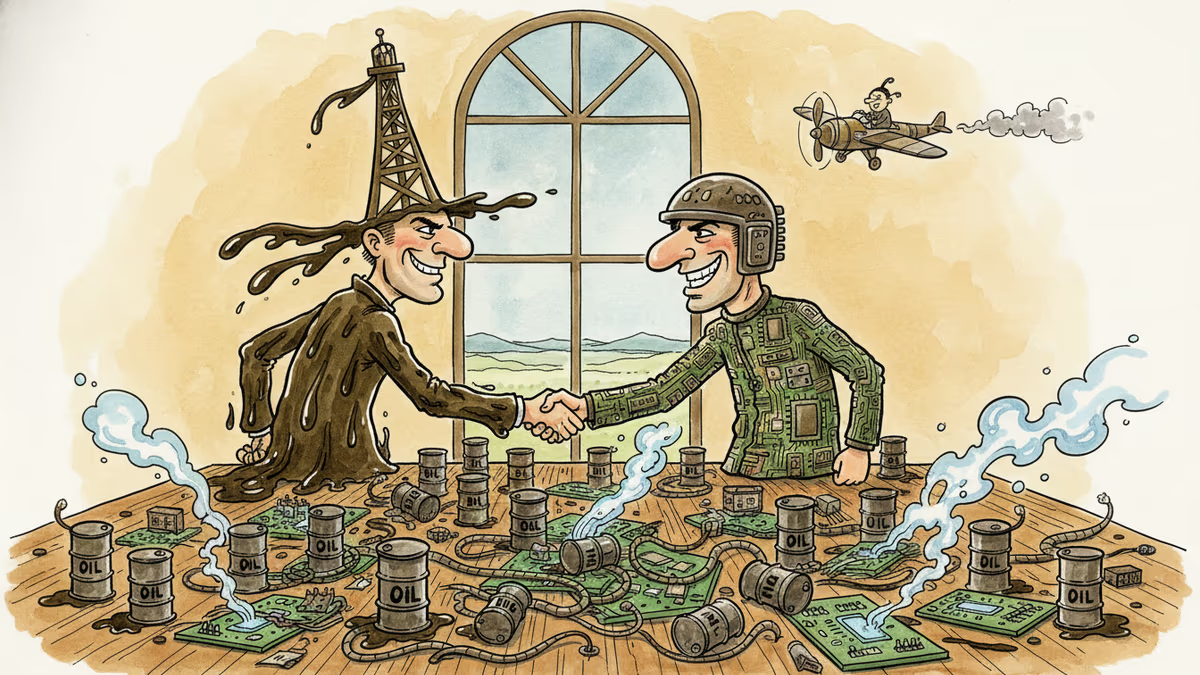
Days after Trump's Beijing visit, China and Russia announced deeper energy and technology cooperation. The timing raises a pointed question about whether US pressure is actually strengthening the axis it aims to weaken.
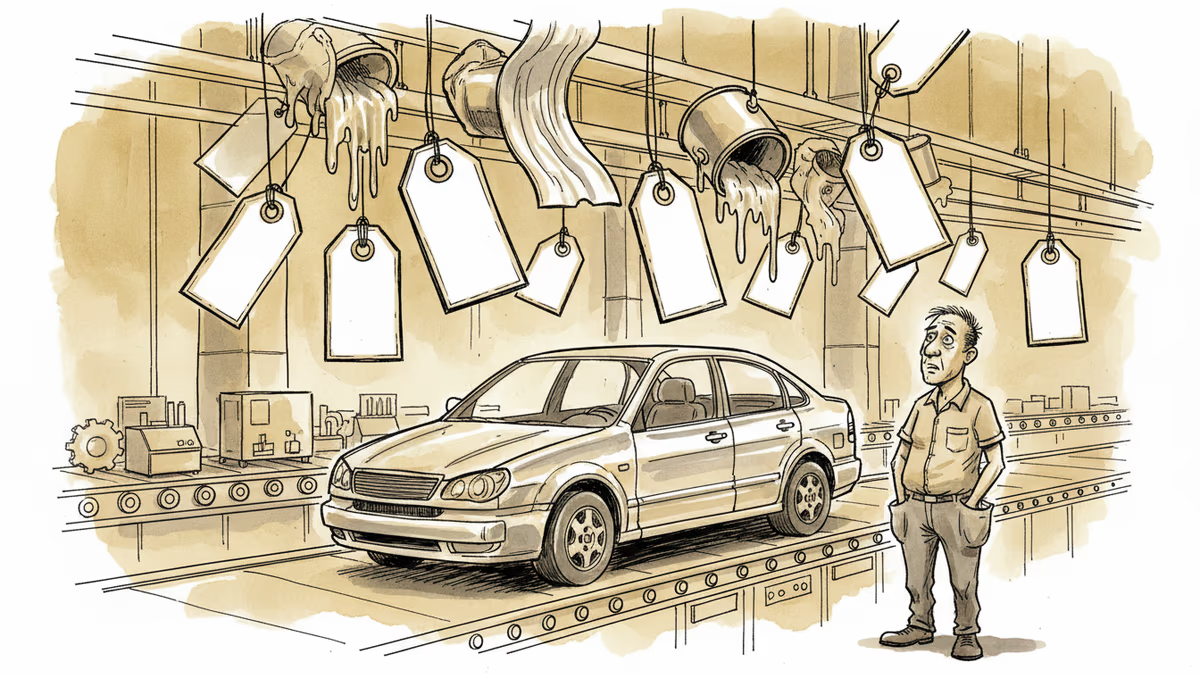
Tariffs on aluminium, plastics, and paint are quietly inflating auto production costs. Here's who pays, who profits, and what it means for the EV transition.
Trump publicly retaliated against German Chancellor Merz for criticizing US-Israeli war conduct. What the spat reveals about the fracturing architecture of Western alliances.
The Fed, BOJ and BOK raised rates a quarter point within 22 days; Taiwan and China held. What each said, plus the impact on Korean borrowers and the won.
Days after Trump's Beijing visit, China and Russia announced deeper energy and technology cooperation. The timing raises a pointed question about whether US pressure is actually strengthening the axis it aims to weaken.
Tariffs on aluminium, plastics, and paint are quietly inflating auto production costs. Here's who pays, who profits, and what it means for the EV transition.
Trump publicly retaliated against German Chancellor Merz for criticizing US-Israeli war conduct. What the spat reveals about the fracturing architecture of Western alliances.
Thoughts
Share your thoughts on this article
Sign in to join the conversation