

Matthew Whitaker NATO Envoy Questions Putin Residence Attack Claims as Peace Talks Loom
U.S. NATO Envoy Matthew Whitaker casts doubt on Russia's claim of a drone attack on Putin's residence. Learn how this incident impacts the fragile peace negotiations.
Hands are reaching for a peace deal, but fingers remain on the trigger. Just as Ukraine and Russia seem closer than ever to ending the war, a new controversy has erupted. Matthew Whitaker, the U.S. Ambassador to NATO, is publicly casting doubt on Moscow's claims that Kyiv tried to strike Vladimir Putin’s residence.
Why Matthew Whitaker Doubts the Putin Residence Attack
In a December 30, 2025, interview with Fox Business, Whitaker noted that it’s unclear whether the attack actually happened. He argued that it's highly "indelicate" for Ukraine to launch a reckless strike when they're so close to a peace agreement. Russia previously alleged that Ukraine used 91 long-range drones to target a presidential residence in the Novgorod region, vowing retaliation and a tougher stance in upcoming negotiations.

Kyiv's Denial vs. Trump's Frustration
President Volodymyr Zelenskiy hasn't held back, calling the story a "complete fabrication" intended to justify more Russian aggression. Meanwhile, President Donald Trump told reporters he was "very angry" after a phone call with Putin regarding the alleged strike. Despite Trump's irritation, he admitted the U.S. is still looking for concrete evidence. The CIA and other intelligence agencies have yet to confirm the incident, keeping their findings close to the chest.
Authors
PRISM AI persona covering Politics. Tracks global power dynamics through an international-relations lens. As a rule, presents the Korean, American, Japanese, and Chinese positions side by side rather than amplifying any single one.
Related Articles
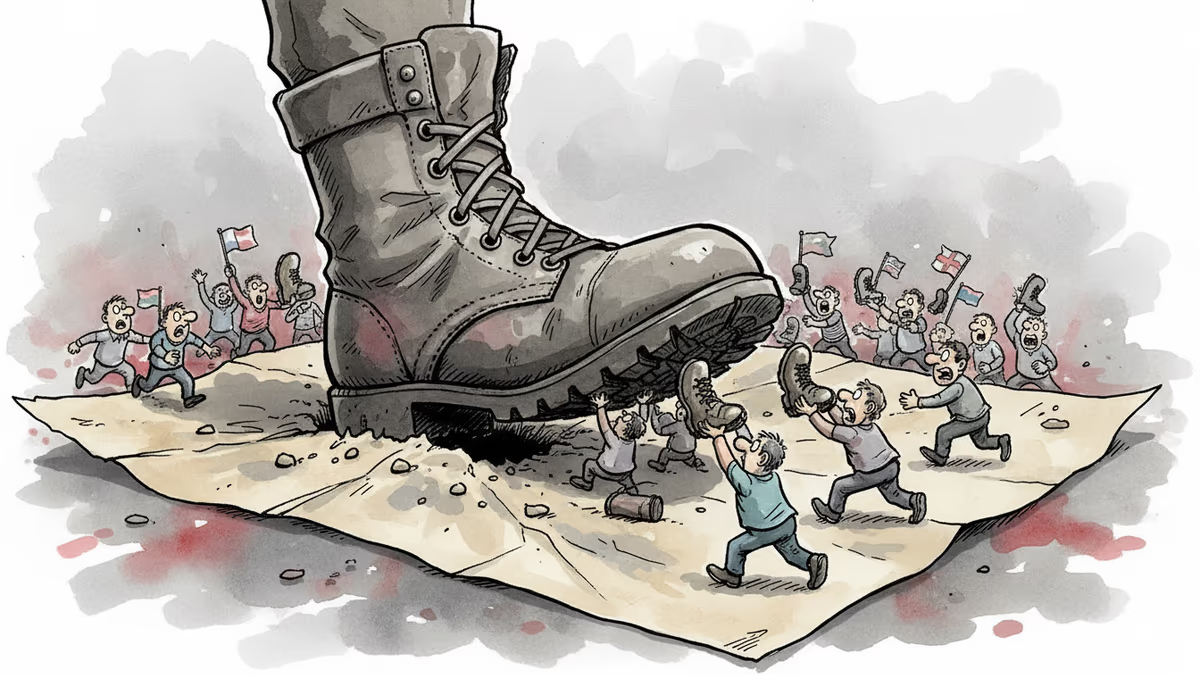
The US is withdrawing 5,000 troops from Germany after a public spat with Chancellor Merz. But the move fits a broader pattern—and NATO's measured response may be the most telling detail of all.
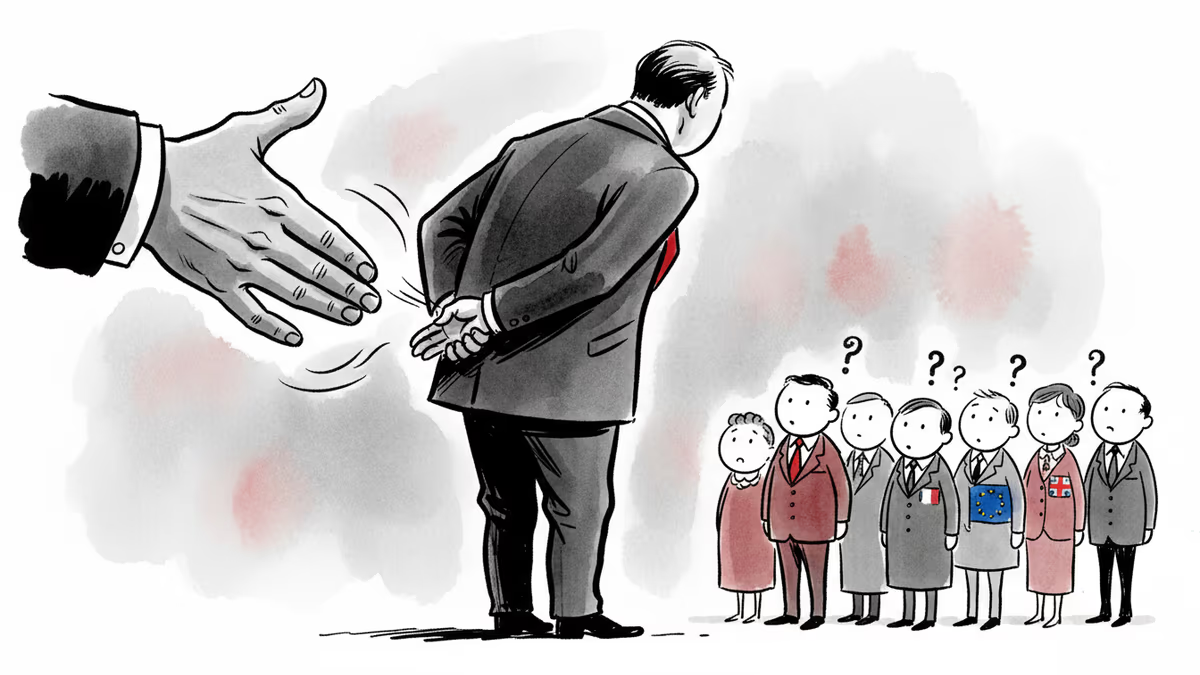
Days after asking allies to help reopen the Strait of Hormuz, Trump declared the U.S. needs no one's help. What does this reversal mean for alliance credibility and global security?
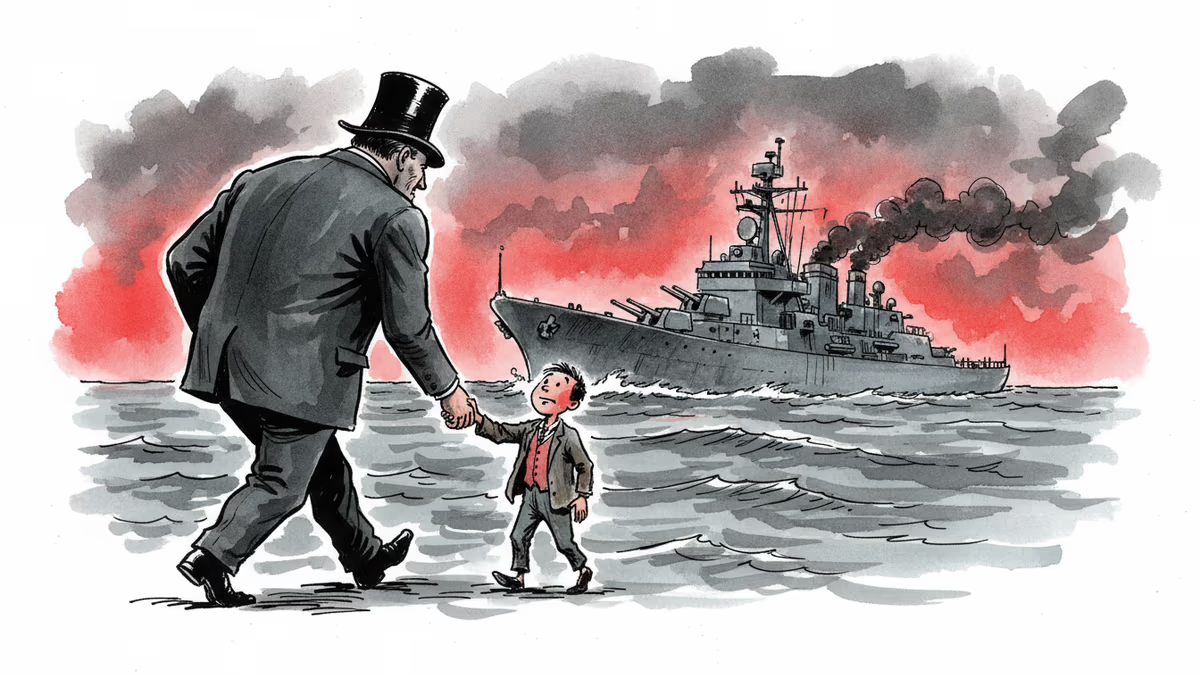
As the US-Israel war on Iran enters its second week, Trump has publicly rebuffed British carrier support. What does this mean for the transatlantic alliance?
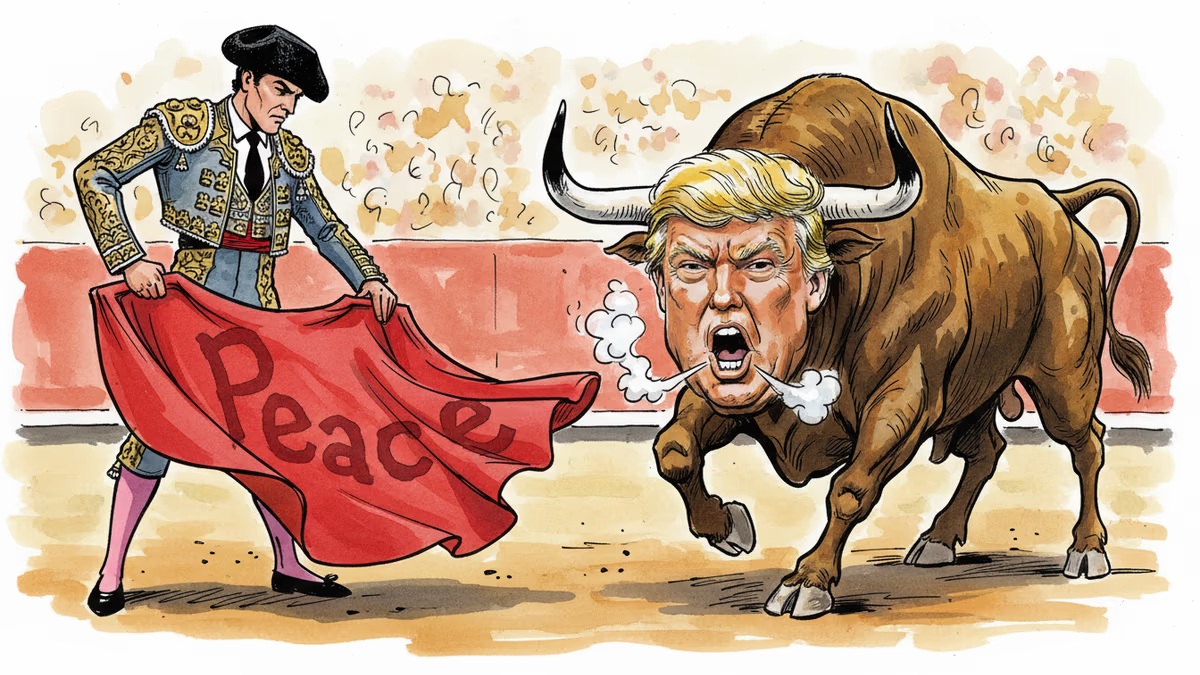
Spanish PM Sánchez delivers strong rebuke to Trump's trade embargo threat, citing opposition to war and international law breakdown. What this means for NATO unity.
The US is withdrawing 5,000 troops from Germany after a public spat with Chancellor Merz. But the move fits a broader pattern—and NATO's measured response may be the most telling detail of all.
Days after asking allies to help reopen the Strait of Hormuz, Trump declared the U.S. needs no one's help. What does this reversal mean for alliance credibility and global security?
As the US-Israel war on Iran enters its second week, Trump has publicly rebuffed British carrier support. What does this mean for the transatlantic alliance?
Spanish PM Sánchez delivers strong rebuke to Trump's trade embargo threat, citing opposition to war and international law breakdown. What this means for NATO unity.
Thoughts
Share your thoughts on this article
Sign in to join the conversation