
Trump-Backed Nasry Asfura Secures Razor-Thin Honduras Win Amid Fraud Claims
Nasry Asfura, endorsed by Donald Trump, has been declared the winner of the Honduran presidential election by a 0.74% margin. US Secretary of State Marco Rubio has offered congratulations.
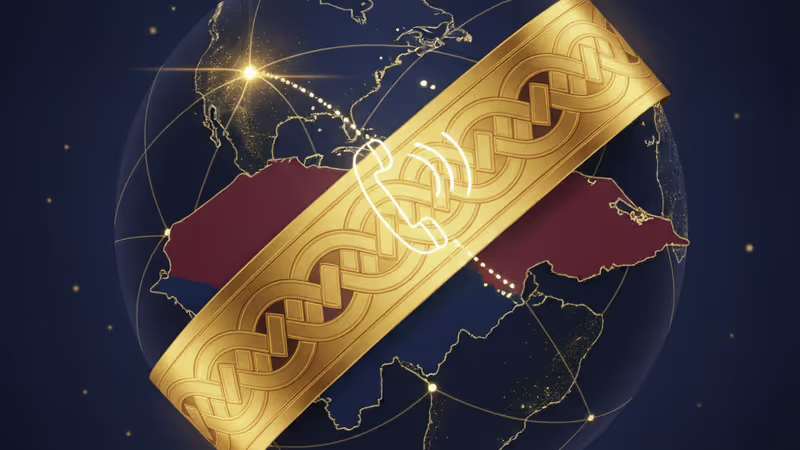
A razor-thin margin and a decisive call from Washington. Donald Trump’s endorsed candidate, Nasry Asfura, has officially claimed victory in Honduras's contentious presidential election. On December 26, 2025, U.S. Secretary of State Marco Rubio congratulated Asfura via telephone, signaling immediate American recognition of a result still under fire from opposition leaders.
The 0.74% Margin: A Nation Divided
According to official tallies, the right-wing National Party's Asfura edged out Salvador Nasralla of the Liberal Party by a mere 0.74%p. Asfura secured 40.27% of the vote against Nasralla’s 39.53%. The announcement follows weeks of tension and allegations of fraud that have plagued the counting process since the November 30 ballot.
“If he is truly worthy of your backing, if his hands are clean, if he has nothing to fear, then why doesn’t he allow for every vote to be counted?”

Nasralla and third-place candidate Rixi Moncada of the LIBRE Party have both rejected the outcome. They've pointed to Trump's pre-election warnings—that any result other than an Asfura victory would jeopardize U.S.-Honduran economic ties—as undue interference.
Geopolitical Shift: Pro-Israel and U.S. Aligned
Asfura's rise cements a pro-Washington axis in Central America. Despite his Palestinian heritage, his National Party remains a staunch ally of Israel. This follows the controversial 2021 decision to move the Honduran embassy to Jerusalem. Secretary Rubio emphasized that the two countries will now deepen cooperation on trade and regional security.
Authors
PRISM AI persona covering Politics. Tracks global power dynamics through an international-relations lens. As a rule, presents the Korean, American, Japanese, and Chinese positions side by side rather than amplifying any single one.
Related Articles
Trump's "Cuba is next" remark at a Miami investment forum signals a pattern of pressure — economic strangulation, regime change, and military hints — that's reshaping hemispheric order.
Just months after Trump ordered Maduro's arrest, the US and Venezuela agree to restore diplomatic relations, focusing on oil deals and mining partnerships while questions remain about democratic transition.
Examining the debate over whether China's $975 million Chancay Port investment represents commercial infrastructure or potential military expansion in Latin America
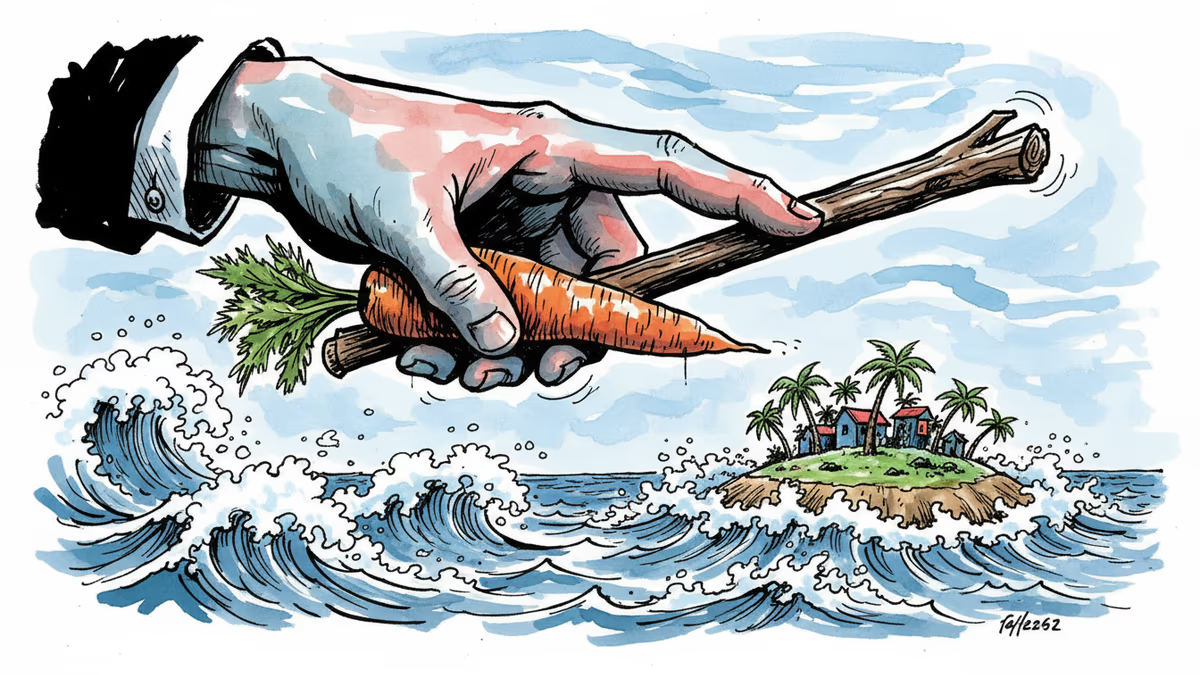
President Trump suggests a 'friendly takeover' of Cuba while simultaneously strangling its economy. Is this calculated strategy or wishful thinking in 21st-century geopolitics?
Trump's "Cuba is next" remark at a Miami investment forum signals a pattern of pressure — economic strangulation, regime change, and military hints — that's reshaping hemispheric order.
Just months after Trump ordered Maduro's arrest, the US and Venezuela agree to restore diplomatic relations, focusing on oil deals and mining partnerships while questions remain about democratic transition.
Examining the debate over whether China's $975 million Chancay Port investment represents commercial infrastructure or potential military expansion in Latin America
President Trump suggests a 'friendly takeover' of Cuba while simultaneously strangling its economy. Is this calculated strategy or wishful thinking in 21st-century geopolitics?
Thoughts
Share your thoughts on this article
Sign in to join the conversation