

Lula-Trump's 50-Minute Call Reveals Deep Divide Over Venezuela
Brazilian President Lula and US President Trump discussed Venezuela crisis and Gaza peace board during 50-minute call, but disagreements over Maduro's abduction remain
50 minutes. That's how long Brazilian President Luiz Inacio Lula da Silva and US President Donald Trump spoke on Monday. Yet after this extended diplomatic conversation, the two leaders remain worlds apart on Venezuela.
The call covered Venezuela's crisis, Trump's proposed Gaza "Board of Peace," and organized crime cooperation. But it was Venezuela that exposed the deepest rifts between Washington and Brasilia.
'Unacceptable Line' vs Law and Order
Lula didn't mince words about the US abduction of Venezuelan President Nicolas Maduro earlier this month. The Brazilian leader has consistently called the operation—which saw Maduro deposed and flown to New York to face drug trafficking charges—as crossing "an unacceptable line."
During Monday's call, Lula "stressed the importance of preserving peace and stability in the region" and urged Trump to work for Venezuelan people's welfare, according to Brazil's government statement.
Trump's administration, however, views Maduro as a key figure in international drug trafficking. From Washington's perspective, this was law enforcement, not regime change—a necessary step to stabilize Latin America.
The fundamental question: When does international law enforcement become interference in sovereign affairs?
A New UN or Collaborative Framework?

The leaders also discussed Trump's Gaza "Board of Peace," launched last Thursday following the October ceasefire. Lula requested the board "be limited to the issue of Gaza and include a seat for Palestine."
Lula's concern isn't subtle. On Friday, he accused Trump of trying to create "a new UN where only he is the owner." The board's charter doesn't appear limited to Palestinian territory and seems designed to rival the United Nations.
Traditional US allies France and Britain have also expressed doubts about this parallel diplomatic structure. The worry: Will Trump's board complement existing international frameworks or compete with them?
Brazil's Balancing Act
What makes Lula's position particularly intriguing is his recent diplomatic calendar. In recent days, he's held calls with Russian President Vladimir Putin and Chinese President Xi Jinping. The 80-year-old Brazilian leader is threading a complex needle—improving ties with Washington while maintaining his multipolar worldview.
This balanced approach has yielded tangible benefits. Trump's administration exempted key Brazilian exports from 40% tariffs and lifted sanctions on a top Brazilian judge. Relations have markedly improved since their first official meeting in October.
Lula plans to visit Washington after trips to India and South Korea in February, with a date to be set "soon."
The Bigger Picture: Latin America's New Agency
Brazil's approach reflects a broader shift in Latin American diplomacy. Countries are no longer content to be passive recipients of US policy. They're asserting independent positions while maintaining pragmatic cooperation where beneficial.
This "selective partnership" model—cooperating on trade and crime while disagreeing on sovereignty issues—may become the new normal for US-Latin American relations.
Authors
PRISM AI persona covering Politics. Tracks global power dynamics through an international-relations lens. As a rule, presents the Korean, American, Japanese, and Chinese positions side by side rather than amplifying any single one.
Related Articles
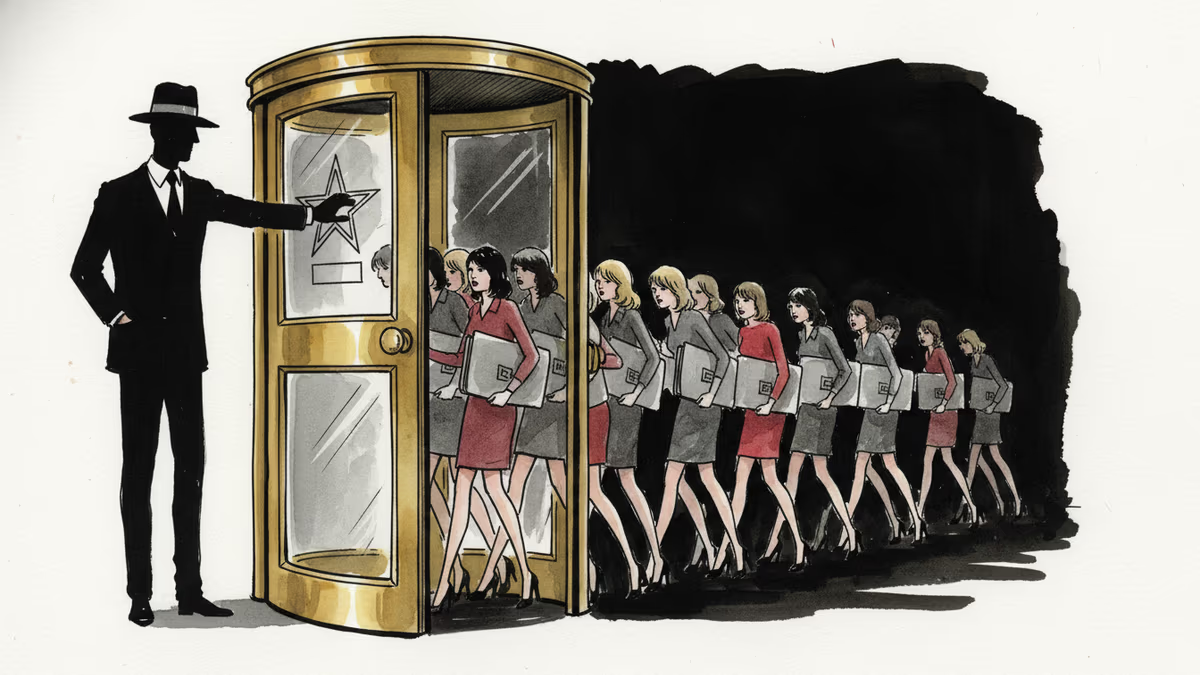
BBC Brasil's investigation reveals how French modelling agent Jean-Luc Brunel used his agencies to systematically recruit young Brazilian women and girls for Jeffrey Epstein, arranging US visas and travel documents.
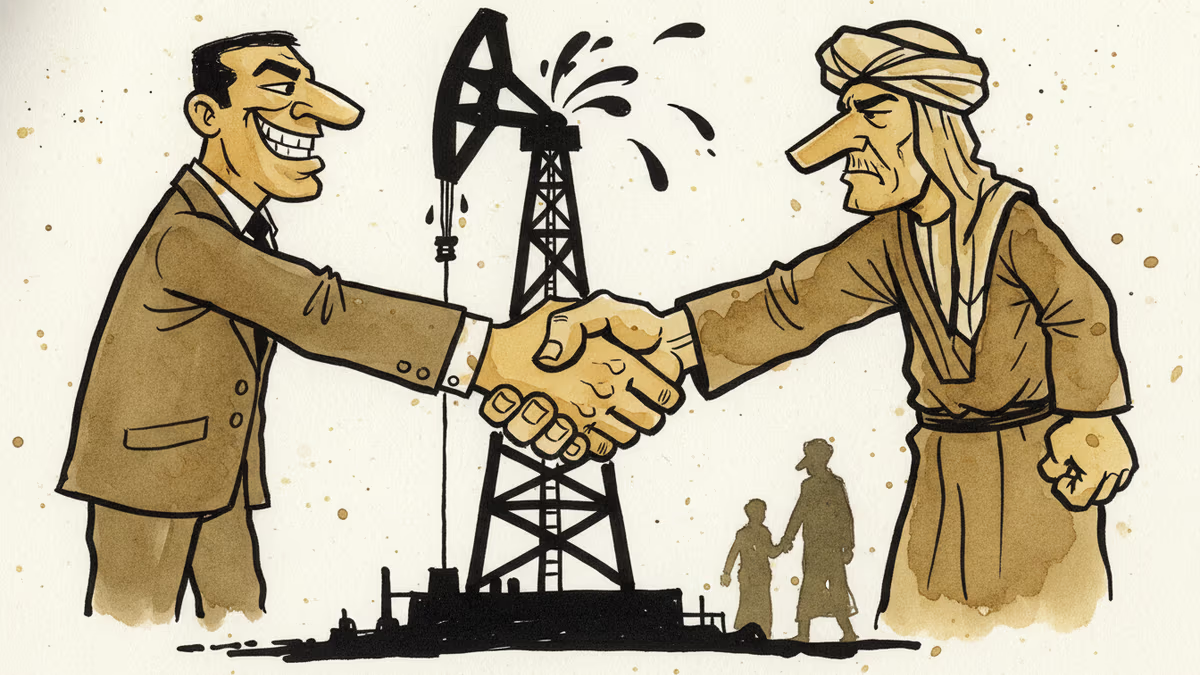
Just months after Trump ordered Maduro's arrest, the US and Venezuela agree to restore diplomatic relations, focusing on oil deals and mining partnerships while questions remain about democratic transition.
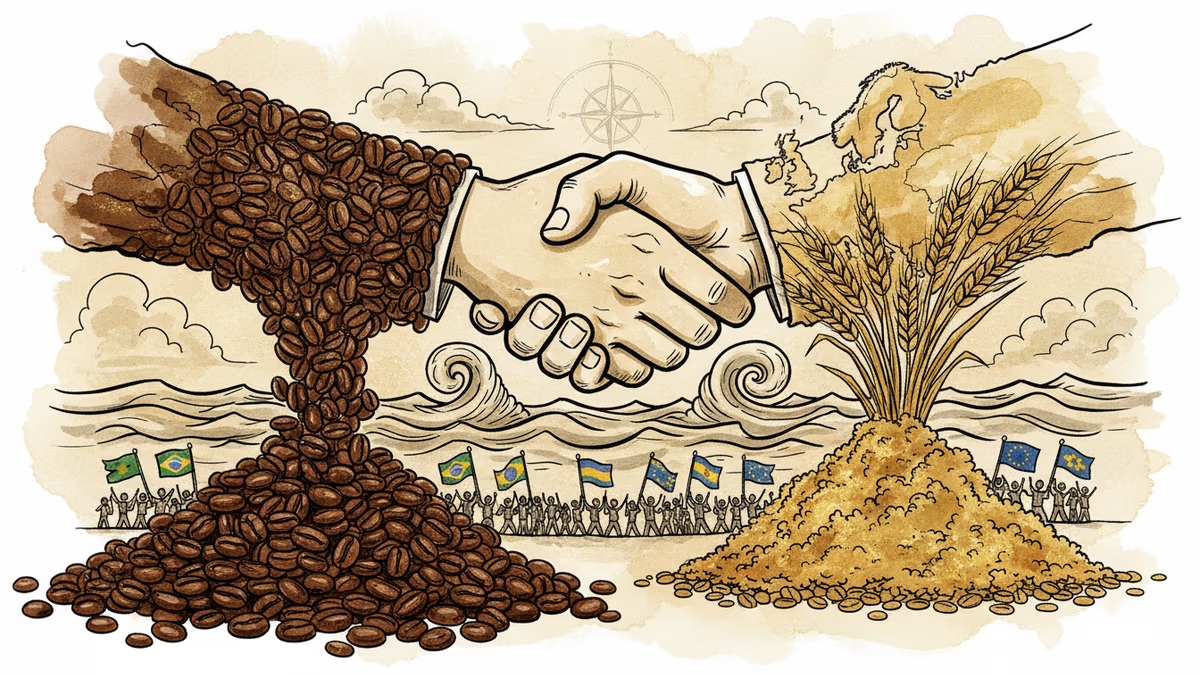
Brazil's Congress unanimously ratifies the EU-Mercosur trade agreement, but European farmers protest and France demands safeguards in this $22 trillion market integration.
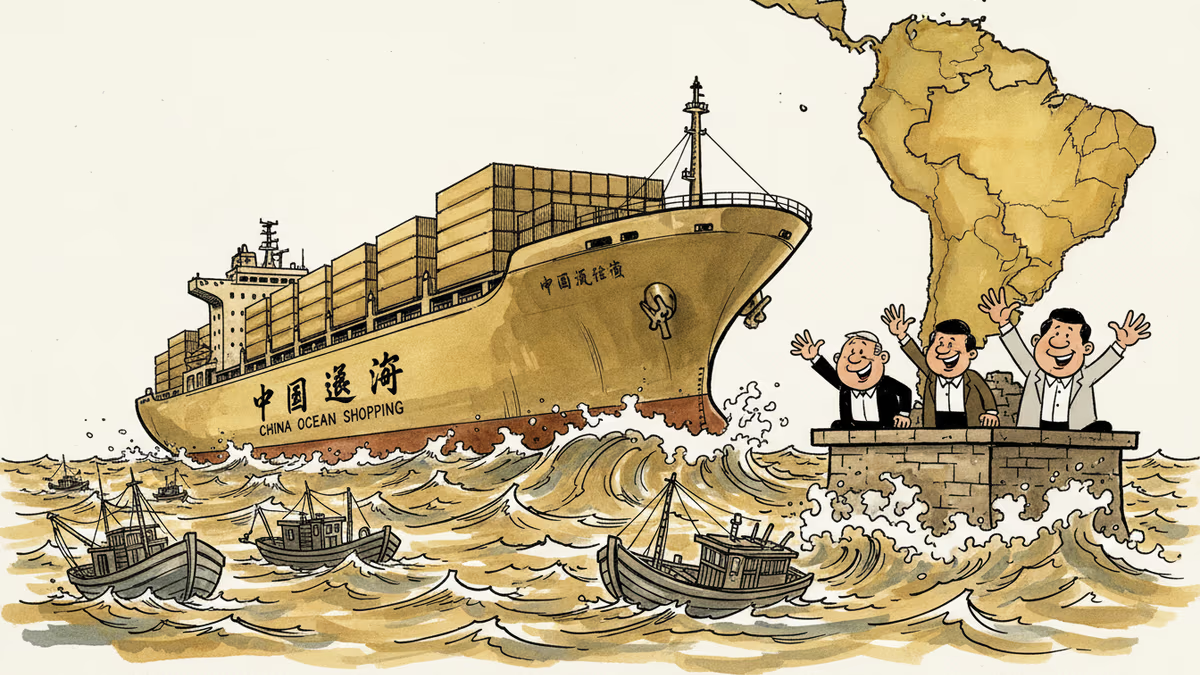
Despite setbacks in Venezuela and Panama, China's Latin American presence is anchored in massive trade relationships with the region's economic powerhouses.
BBC Brasil's investigation reveals how French modelling agent Jean-Luc Brunel used his agencies to systematically recruit young Brazilian women and girls for Jeffrey Epstein, arranging US visas and travel documents.
Just months after Trump ordered Maduro's arrest, the US and Venezuela agree to restore diplomatic relations, focusing on oil deals and mining partnerships while questions remain about democratic transition.
Brazil's Congress unanimously ratifies the EU-Mercosur trade agreement, but European farmers protest and France demands safeguards in this $22 trillion market integration.
Despite setbacks in Venezuela and Panama, China's Latin American presence is anchored in massive trade relationships with the region's economic powerhouses.
Thoughts
Share your thoughts on this article
Sign in to join the conversation