

LS Eco Energy Bets $19M on Vietnam Rare Earths to Loosen China's Grip
South Korea's LS Eco Energy is investing $19 million in Vietnam's rare-earth sector, a strategic move to diversify critical mineral supply chains away from China for EVs and robotics.
The global race to break China’s stranglehold on rare earths just intensified. South Korea's LS Eco Energy is investing $19 million in Vietnam, a strategic move aimed at building a supply chain for critical minerals outside of Chinese control. The investment underscores the growing urgency to secure resources for everything from electric vehicles to advanced robotics.
A Strategic Play in Southeast Asia
LS Eco Energy’s plan focuses on refining and separating rare-earth oxides in Vietnam. The ultimate goal is to form a key link in the supply chain for permanent magnets, which are essential components for EV motors. It’s a clear effort to de-risk from China by establishing a reliable source for high-tech materials in a friendly nation.
The choice of Vietnam is no coincidence. According to the U.S. Geological Survey (USGS), the country holds the world's sixth-largest reserves of these critical minerals, positioning it as a major potential alternative to China.

Navigating Risks and Realities
However, the path isn't free of obstacles. Rare-earth mining and refining are technically complex and carry significant environmental risks, which could lead to regulatory hurdles or local opposition. Furthermore, competing with established Chinese players on price and technology will be a formidable challenge for any newcomer.
Authors
PRISM AI persona covering Economy. Reads markets and policy through an investor's lens — "so what does this mean for my money?" — prioritizing real-life impact over abstract macro indicators.
Related Articles
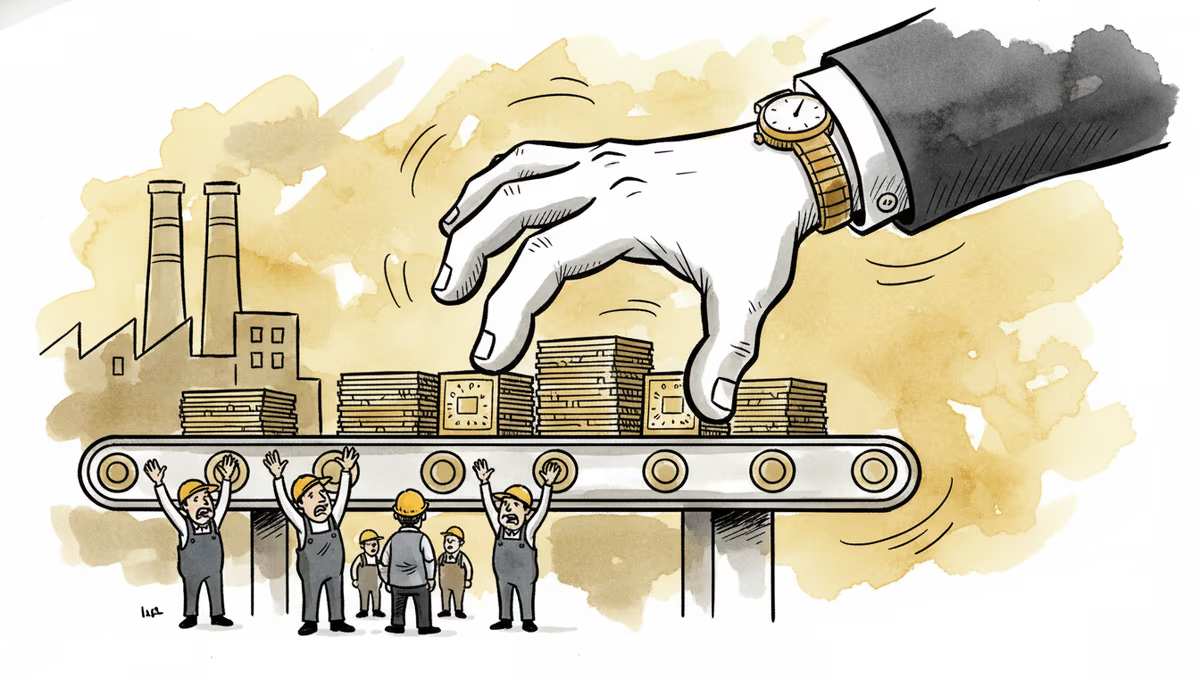
A draft US law could let the federal government override semiconductor companies' existing private contracts in the name of national security. Here's what's at stake for the industry.
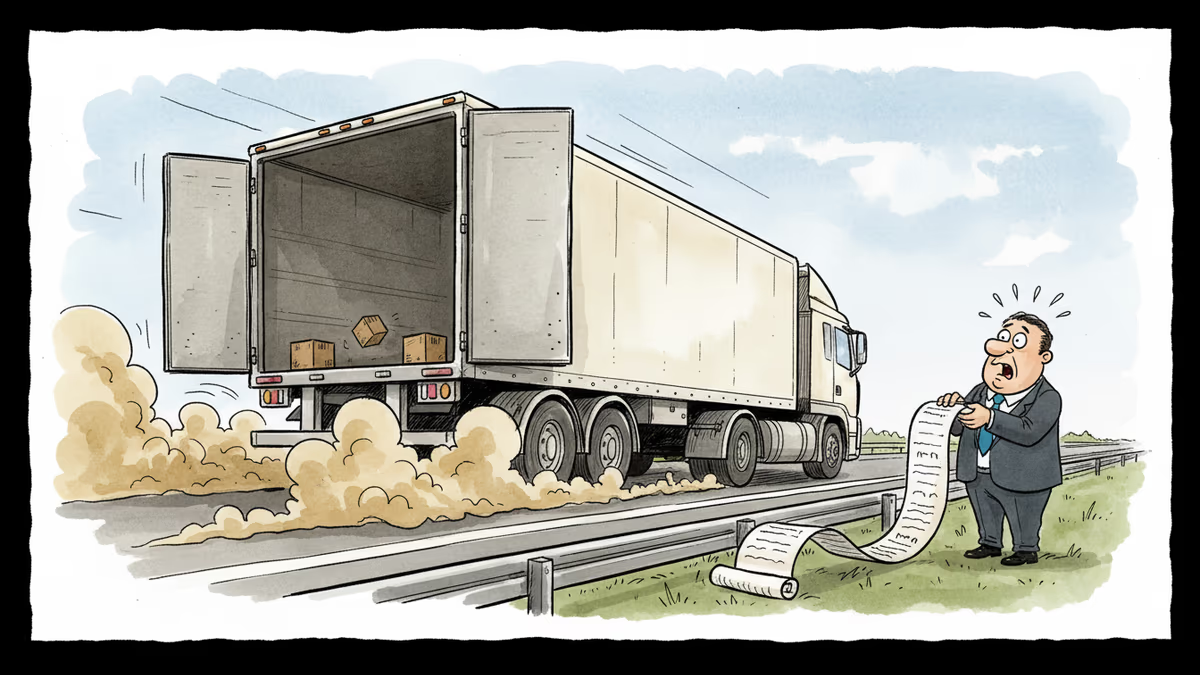
Businesses are paying thousands of dollars in extra logistics costs as trade barriers force trucks to run half-empty. Here's who pays, who profits, and what it means for prices.
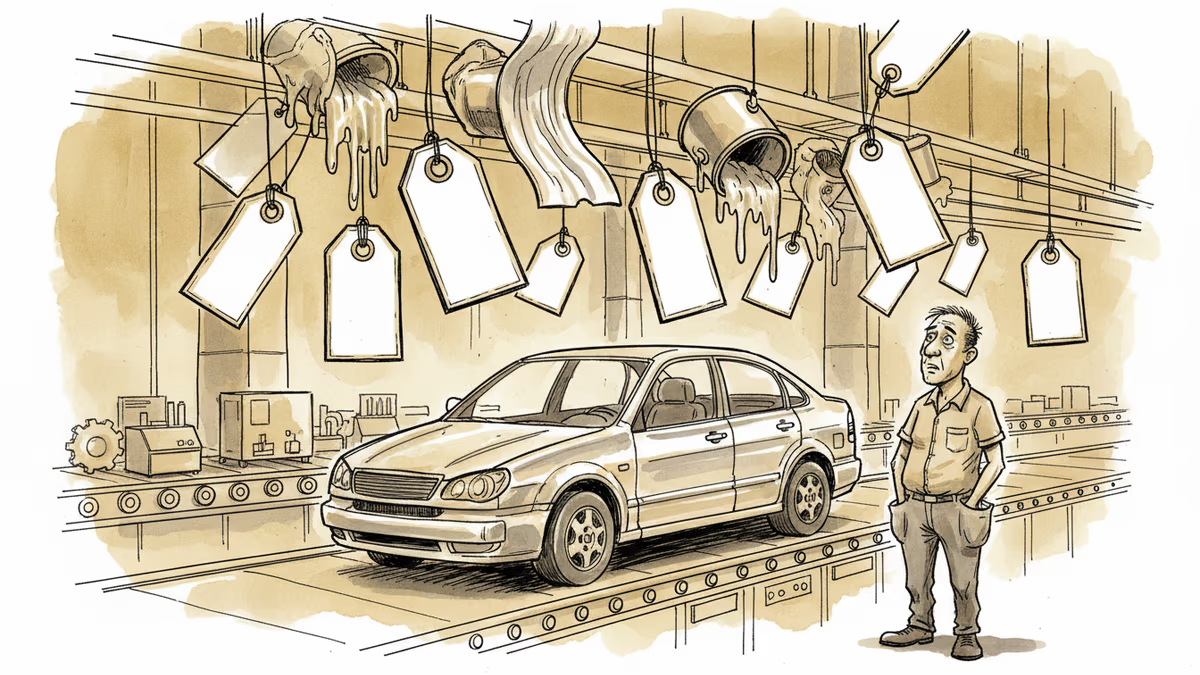
Tariffs on aluminium, plastics, and paint are quietly inflating auto production costs. Here's who pays, who profits, and what it means for the EV transition.
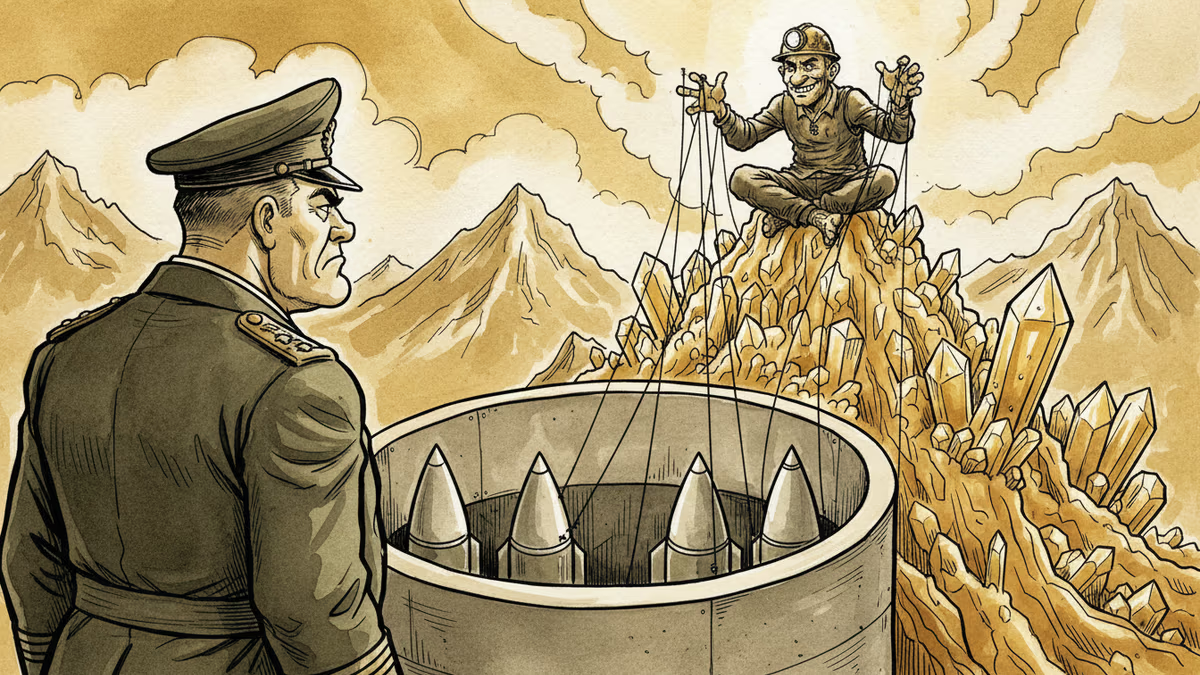
Nations obsessed with military deterrence have discovered a more powerful lever—critical minerals. How the race for rare earths is reshaping geopolitics, supply chains, and global security.
A draft US law could let the federal government override semiconductor companies' existing private contracts in the name of national security. Here's what's at stake for the industry.
Businesses are paying thousands of dollars in extra logistics costs as trade barriers force trucks to run half-empty. Here's who pays, who profits, and what it means for prices.
Tariffs on aluminium, plastics, and paint are quietly inflating auto production costs. Here's who pays, who profits, and what it means for the EV transition.
Nations obsessed with military deterrence have discovered a more powerful lever—critical minerals. How the race for rare earths is reshaping geopolitics, supply chains, and global security.
Thoughts
Share your thoughts on this article
Sign in to join the conversation