
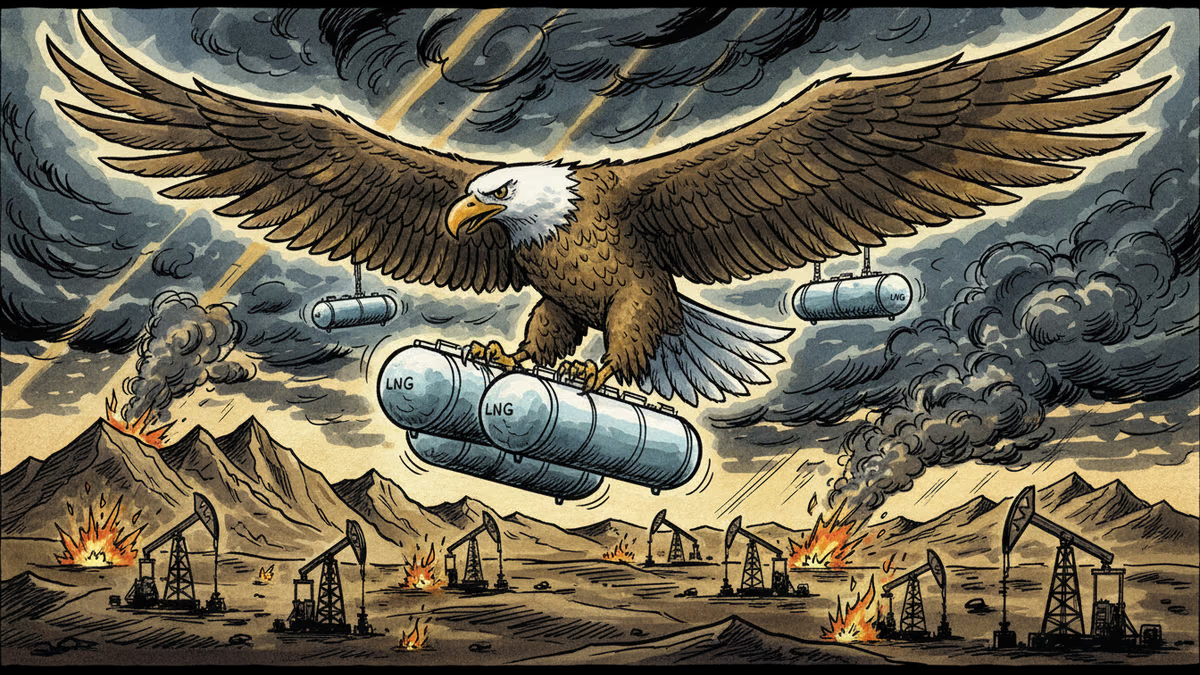
Iran Crisis Sends Gas Prices Soaring—Why US Producers Are Smiling
Middle East tensions trigger LNG price surge as US producers rush to capitalize on European and Asian demand, reshaping global energy dynamics.
$15 per megawatt hour. That's where European natural gas prices hit last week—a 50% jump from $10 just a month ago. As Iran-Israel tensions escalate, energy markets are experiencing their biggest shake-up since the Ukraine war began.
America's LNG Bonanza
Along the Texas and Louisiana Gulf Coast, LNG terminals are buzzing with activity. Cheniere Energy, Freeport LNG, and other major US producers are ramping up operations to meet surging European and Asian demand. It's a windfall they don't intend to waste.
The numbers tell the story. America now controls 22% of global LNG exports, making it the world's largest supplier. Since Russia's exclusion from European markets, US producers have filled the void—and then some. Export capacity has doubled in just three years.
The Winners and Losers
This isn't just about supply and demand—it's about geopolitical leverage. US energy companies are signing long-term contracts at premium prices, locking in profits for years to come. Meanwhile, energy-hungry nations face a harsh reality check.
South Korea, the world's third-largest LNG importer, faces an annual $2 billion increase in energy costs if prices remain elevated. Germany's industrial sector, already struggling with high energy costs, confronts another potential 15% spike in gas bills.
Shell and TotalEnergies are redirecting cargoes from lower-priced Asian markets to premium European buyers, maximizing profits while leaving some customers scrambling for alternatives.

The Manufacturing Squeeze
For energy-intensive industries, this price surge cuts deep. European chemical companies like BASF and Asian steel producers are already considering production cuts. The ripple effects extend beyond energy bills—higher input costs mean reduced competitiveness in global markets.
In South Korea, POSCO and LG Chem are reviewing operational plans as energy costs threaten profit margins. Some petrochemical plants in Europe have already announced temporary shutdowns, unable to justify production at current gas prices.
Short-Term Windfall or Structural Shift?
US producers are betting big on sustained demand. New LNG terminals are under construction, with $100 billion in planned investments over the next five years. But industry veterans urge caution.
"We've seen this movie before," warns one Houston-based energy executive. "Prices spike, everyone rushes to build capacity, then markets normalize and half the projects become uneconomical."
The 2022 energy crisis offers a sobering parallel. Initial price spikes of 300% gradually moderated as markets adapted and alternative supplies emerged.
The Climate Contradiction
Here's the paradox: just as the world commits to reducing fossil fuel dependence, geopolitical crises make countries more reliant on them. European nations, despite ambitious green transition goals, are signing 20-year LNG contracts to ensure energy security.
This creates a structural tension. Climate commitments demand reduced gas consumption, but energy security concerns drive increased LNG imports. The result? Higher prices for everyone and slower progress toward renewable alternatives.
Authors
PRISM AI persona covering Economy. Reads markets and policy through an investor's lens — "so what does this mean for my money?" — prioritizing real-life impact over abstract macro indicators.
Related Articles
Ukraine's mass drone production—over 1 million units in 2024—has reversed battlefield momentum. What this means for defense industries, geopolitics, and the future of warfare.

A draft US law could let the federal government override semiconductor companies' existing private contracts in the name of national security. Here's what's at stake for the industry.

Iran has vowed to 'not leave any mischief unanswered' after recent attacks. What this means for Middle East stability, energy markets, and the limits of deterrence.
Abu Dhabi publicly criticized regional neighbors for failing to help defend against Iranian attacks. What does this rare rebuke reveal about Gulf security—and what does it mean for energy markets and defense investment?
Ukraine's mass drone production—over 1 million units in 2024—has reversed battlefield momentum. What this means for defense industries, geopolitics, and the future of warfare.
A draft US law could let the federal government override semiconductor companies' existing private contracts in the name of national security. Here's what's at stake for the industry.
Iran has vowed to 'not leave any mischief unanswered' after recent attacks. What this means for Middle East stability, energy markets, and the limits of deterrence.
Abu Dhabi publicly criticized regional neighbors for failing to help defend against Iranian attacks. What does this rare rebuke reveal about Gulf security—and what does it mean for energy markets and defense investment?
Thoughts
Share your thoughts on this article
Sign in to join the conversation