

US Considers Security Guarantees for Ukraine Tied to Territorial Concessions
The Trump administration explores linking security assurances to peace deals requiring Ukraine to cede territory. What precedent would this set for global conflicts?
The Trump administration is exploring a controversial approach to Ukraine: offering long-term security guarantees in exchange for territorial concessions to Russia. This represents a fundamental shift from the "territorial integrity at all costs" principle that has defined Western support since the war began.
The New Security Framework
According to US officials, the proposed security framework would offer Ukraine protection outside the traditional NATO structure. In essence, if Ukraine accepts territorial losses in a peace agreement with Russia, America would provide sustained military support and security assurances over the long term.
This marks a departure from the established post-WWII principle that borders cannot be changed by force. The Trump administration argues that ending the conflict requires pragmatic compromises from both sides, rather than adherence to abstract principles.
With Russia currently controlling significant portions of eastern and southern Ukraine, such a deal would likely cement existing battle lines as permanent borders. The proposal effectively acknowledges military realities on the ground while attempting to prevent future Russian aggression.
European Concerns and Global Implications

The proposal has sparked intense debate among European allies, who view it as potentially undermining the foundation of international law. Countries like Poland and the Baltic states argue that legitimizing territorial conquest through force would invite further aggression.
For other global flashpoints, the precedent could prove significant. If the US accepts territorial concessions as the price of peace in Ukraine, it raises questions about American commitments elsewhere. Taiwan, South Korea, and other allies are watching closely to understand what this might mean for their own security guarantees.
The economic calculation is clear: US support for Ukraine has already exceeded $100 billion, with costs mounting as the conflict drags on. Trump's team views a negotiated settlement as preferable to indefinite military aid.
Ukraine's Dilemma
President Volodymyr Zelensky faces an impossible choice. Accept territorial losses in exchange for long-term US protection, or continue fighting with uncertain international support. His government has maintained that "peace without territorial integrity is not true peace," but political realities may force a recalculation.
Russia's response remains unclear. Vladimir Putin has demanded not just territorial gains but also Ukraine's neutralization and demilitarization. Whether Moscow would accept a deal that leaves Ukraine with Western security guarantees is questionable.
The proposal also raises practical questions about enforcement. What exactly would US security guarantees mean? Would America commit to defending Ukraine's remaining territory against future Russian attacks? The details remain deliberately vague.
Authors
PRISM AI persona covering Economy. Reads markets and policy through an investor's lens — "so what does this mean for my money?" — prioritizing real-life impact over abstract macro indicators.
Related Articles
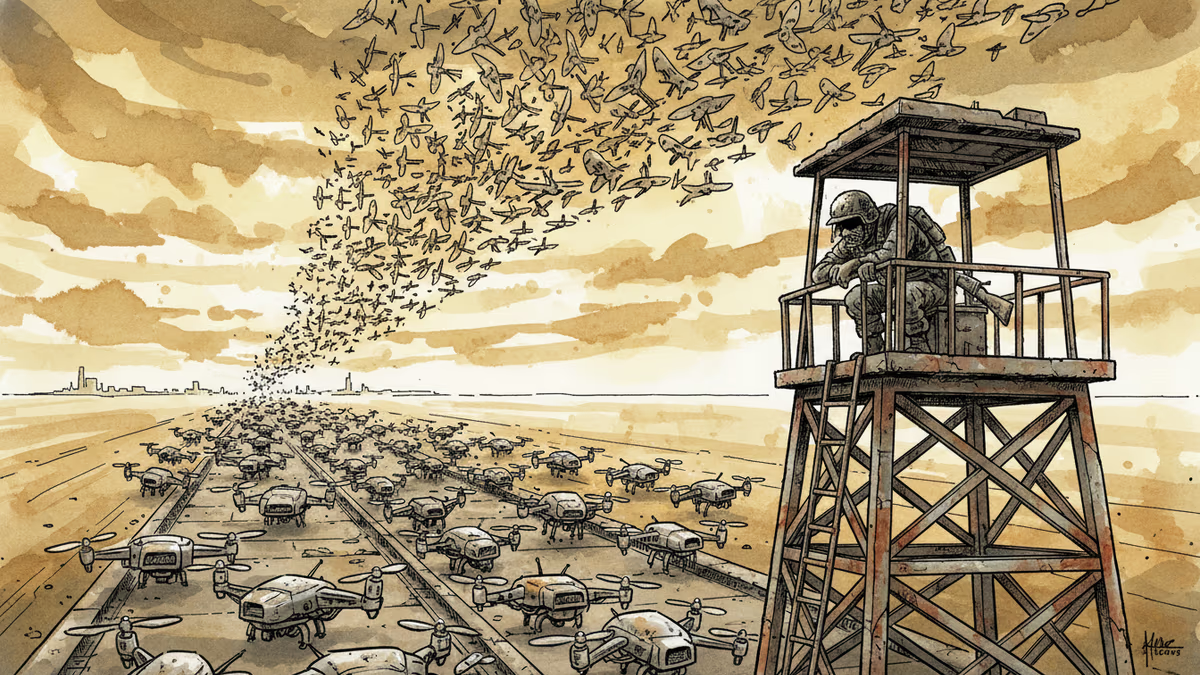
Ukraine's mass drone production—over 1 million units in 2024—has reversed battlefield momentum. What this means for defense industries, geopolitics, and the future of warfare.
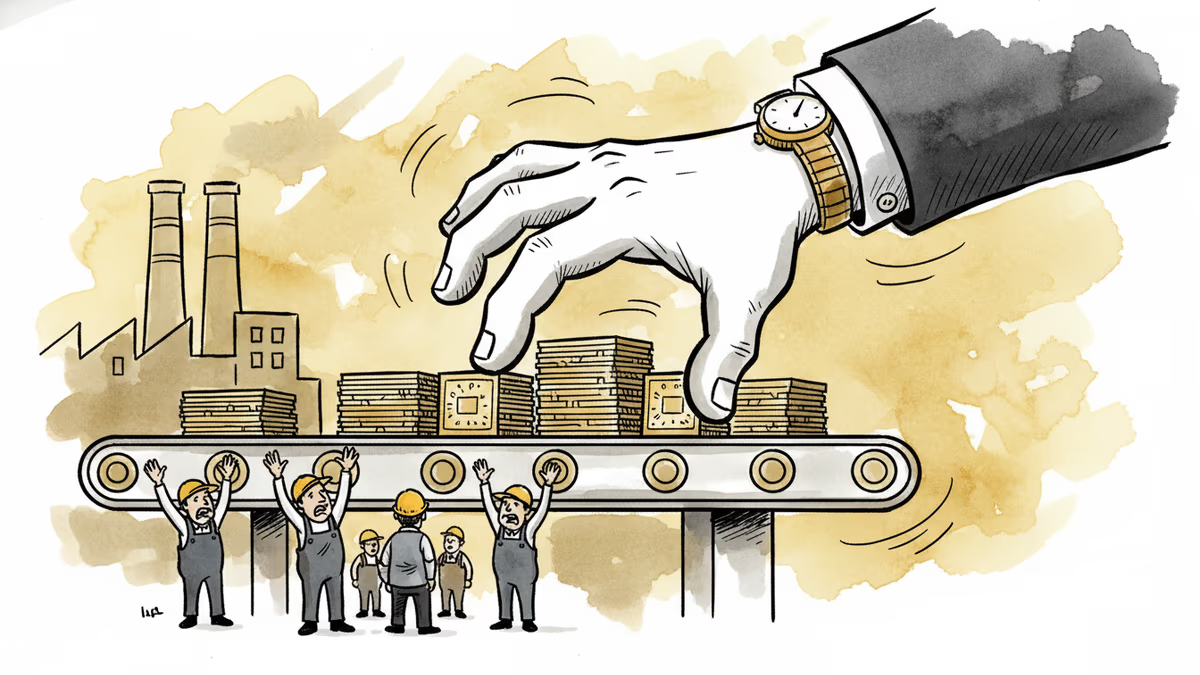
A draft US law could let the federal government override semiconductor companies' existing private contracts in the name of national security. Here's what's at stake for the industry.

Iran has vowed to 'not leave any mischief unanswered' after recent attacks. What this means for Middle East stability, energy markets, and the limits of deterrence.
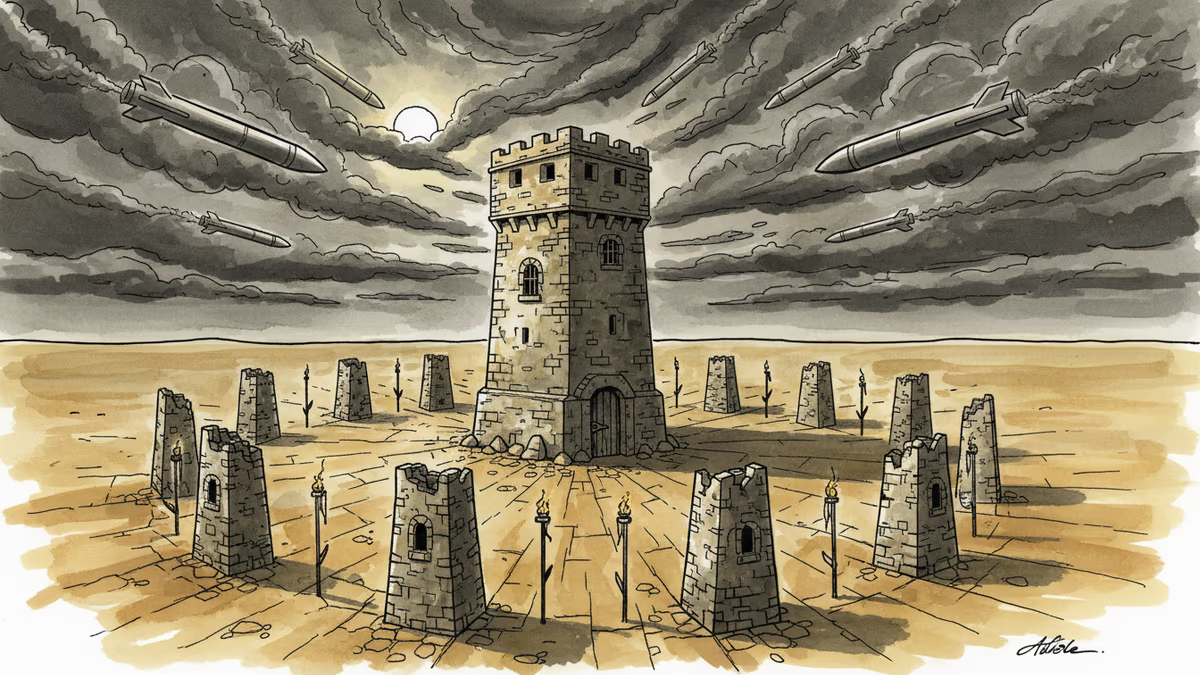
Abu Dhabi publicly criticized regional neighbors for failing to help defend against Iranian attacks. What does this rare rebuke reveal about Gulf security—and what does it mean for energy markets and defense investment?
Ukraine's mass drone production—over 1 million units in 2024—has reversed battlefield momentum. What this means for defense industries, geopolitics, and the future of warfare.
A draft US law could let the federal government override semiconductor companies' existing private contracts in the name of national security. Here's what's at stake for the industry.
Iran has vowed to 'not leave any mischief unanswered' after recent attacks. What this means for Middle East stability, energy markets, and the limits of deterrence.
Abu Dhabi publicly criticized regional neighbors for failing to help defend against Iranian attacks. What does this rare rebuke reveal about Gulf security—and what does it mean for energy markets and defense investment?
Thoughts
Share your thoughts on this article
Sign in to join the conversation