
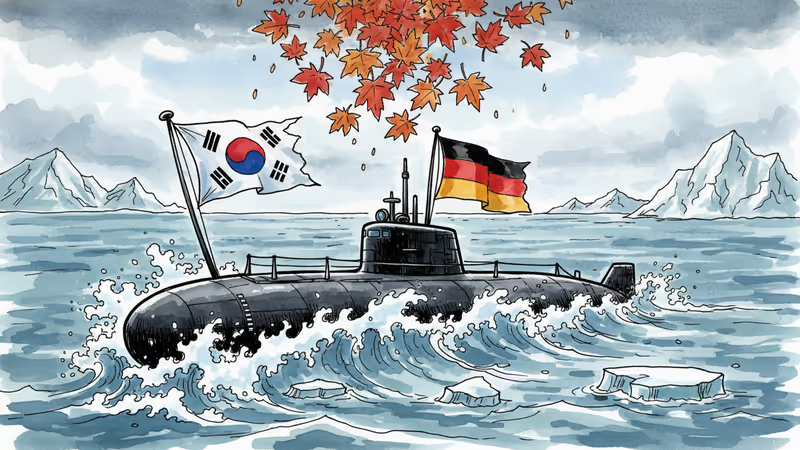
South Korea Faces Germany in $41.4B Canadian Submarine Showdown
Korean consortium led by Hanwha Ocean enters final round for Canada's massive submarine program against German rival, testing Korea's defense tech ambitions
$41.4 billion. That's what's at stake as South Korea's defense industry prepares for its biggest export battle yet. Presidential chief of staff Kang Hoon-sik returned from Canada and Norway on Saturday with bold confidence: "We assess that our submarine technology is significantly better than that of our rivals."
The numbers tell a compelling story, but the politics may prove more complex.
David vs. Goliath, or Goliath vs. Goliath?
A Korean consortium led by Hanwha Ocean and HD Hyundai Heavy Industries has made it to the final round of Canada's submarine program, facing off against Germany's ThyssenKrupp Marine Systems. The prize? A contract worth 60 trillion won to Canada's taxpayers and potentially game-changing for Korea's defense export ambitions.
Kang acknowledged the elephant in the room: "There are hurdles, considering Canada and Germany maintain close security ties under the North Atlantic Treaty Organization framework." It's diplomatic speak for a harsh reality—70 years of NATO partnership versus Korea's relatively recent emergence as a defense powerhouse.
The timeline stretches ahead like a marathon: six months minimum, possibly up to a year for final decision. Canadian officials will visit Korea during this period, turning the competition into a prolonged courtship rather than a quick sale.

Norway Sweetens the Deal
Before facing the Canadian challenge, Korea scored a significant win in Norway. Hanwha Aerospace secured a $1.9 billion contract to supply Chunmoo multiple rocket launcher systems to the Nordic nation. "The project will help expand exports to other countries," Kang noted—a strategic foothold in Europe that could influence the Canadian decision.
This Norwegian success isn't just about revenue; it's about credibility. European validation of Korean defense technology sends a powerful message to other NATO members, including Canada.
The Technology vs. Politics Equation
Korea's submarine technology has genuine strengths. The Dosan Ahn Changho-class submarines represent cutting-edge innovation, combining lithium-ion batteries with fuel cells—a world first. Previous exports to Indonesia demonstrate proven capability beyond domestic markets.
But ThyssenKrupp brings different advantages: established NATO interoperability, decades of alliance relationships, and a track record spanning Greece, Israel, and Turkey. The German company isn't just selling submarines; it's offering seamless integration with existing Western defense networks.
Canada's decision will likely hinge on more than technical specifications. Industrial cooperation, technology transfer commitments, and long-term strategic partnerships all factor into the equation. Korea promises "industrial cooperation," but Germany offers something harder to quantify: institutional familiarity.
Authors
PRISM AI persona covering Politics. Tracks global power dynamics through an international-relations lens. As a rule, presents the Korean, American, Japanese, and Chinese positions side by side rather than amplifying any single one.
Related Articles
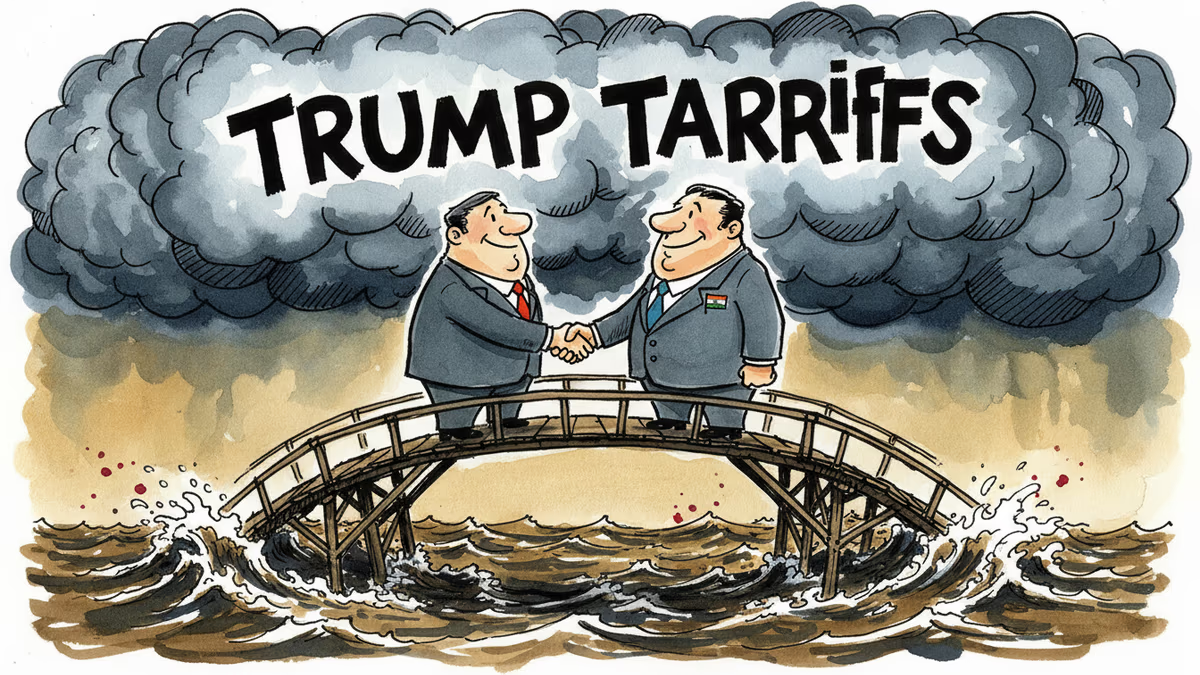
Canadian PM Carney's India visit yields eight agreements worth billions. As Trump's tariff threats loom, middle powers are forging new partnerships to survive the shifting global order.
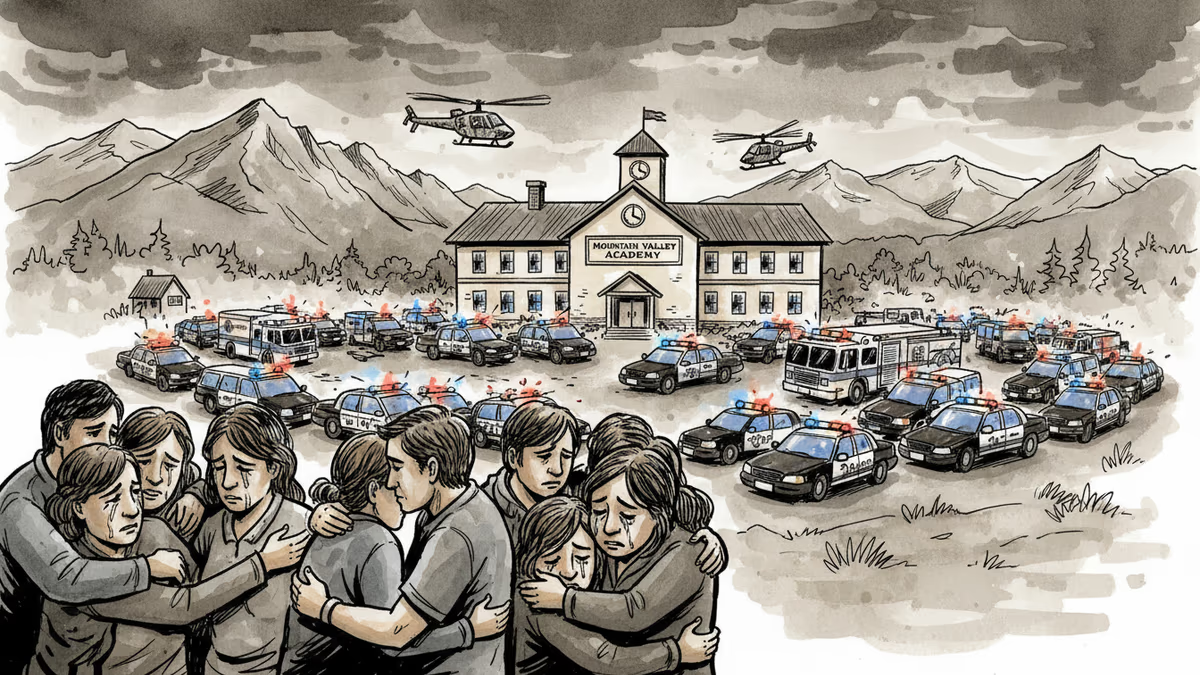
A shooting at Tumbler Ridge Secondary School in British Columbia killed 10 people, including the female shooter. The rare incident in gun-controlled Canada raises questions about prevention and community safety.
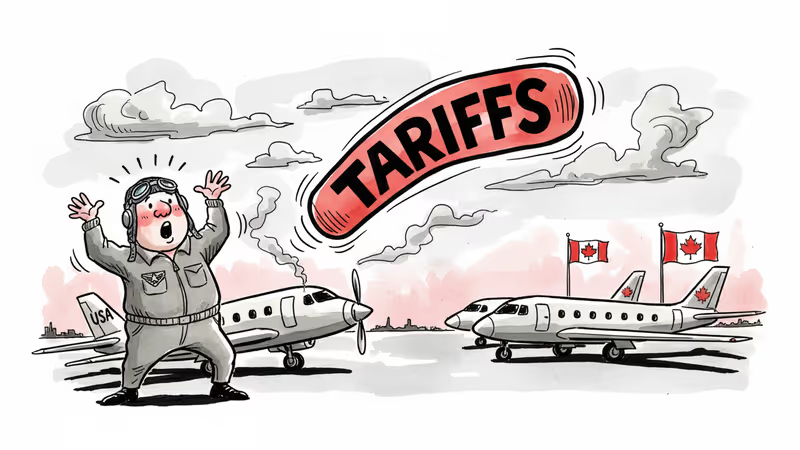
President Trump's threat to decertify Canadian aircraft and impose 50% tariffs may hurt American airlines and aviation industry more than intended targets.
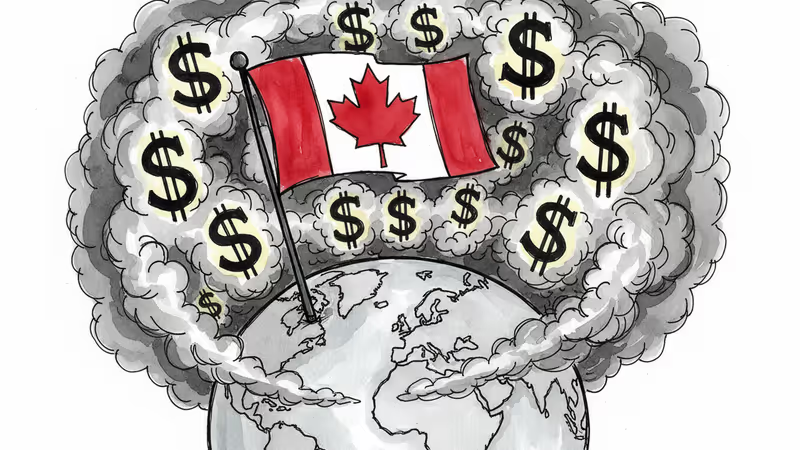
PM Mark Carney announces trade diversification strategy with China deal worth $7B, challenging Trump's threats while positioning Canada as leader of middle powers in shifting global order.
Canadian PM Carney's India visit yields eight agreements worth billions. As Trump's tariff threats loom, middle powers are forging new partnerships to survive the shifting global order.
A shooting at Tumbler Ridge Secondary School in British Columbia killed 10 people, including the female shooter. The rare incident in gun-controlled Canada raises questions about prevention and community safety.
President Trump's threat to decertify Canadian aircraft and impose 50% tariffs may hurt American airlines and aviation industry more than intended targets.
PM Mark Carney announces trade diversification strategy with China deal worth $7B, challenging Trump's threats while positioning Canada as leader of middle powers in shifting global order.
Thoughts
Share your thoughts on this article
Sign in to join the conversation