

Secure Wallet, Vulnerable Data: Ledger Global-e Data Breach 2026 Exposes Customers
Ledger faces a new data exposure incident in 2026 via third-party payment processor Global-e. Learn about the Ledger Global-e data breach and how to protect your assets from phishing.
Even the most secure fortress has a back door. Ledger, the hardware wallet giant, is once again under fire as its third-party payment processor, Global-e, suffered a data breach. On January 5, 2026, the company confirmed that unauthorized parties gained access to customer personal details, including names and contact information. While the core hardware remains intact, the privacy of thousands is now at risk.
The Anatomy of the Ledger Global-e Data Breach
According to reports, the incident didn't occur on Ledger’s own servers. Instead, attackers targeted Global-e’s cloud system, which handles e-commerce orders for Ledger.com. Blockchain sleuth ZachXBT first flagged the leak after customers received notifications from Global-e. The processor admitted that some personal data was 'improperly accessed' but hasn't yet specified the total number of affected users.
A Recurring Pattern of Third-Party Failures

This isn't Ledger’s first brush with third-party vulnerabilities. The company has a history of leaks tied to its e-commerce partners, raising questions about its supply chain security.
| Year | Incident Type | Impact |
|---|---|---|
| 2020 | Shopify Breach | 270,000 customers' data exposed |
| 2023 | Connect Kit Hack | ~$500,000 in assets stolen |
| 2026 | Global-e Cloud Breach | Names and contact info exposed |
Ledger was quick to clarify that this was not a breach of its hardware or software. Since Ledger products are self-custodial, Global-e never had access to private keys or blockchain balances. Your crypto is still safe, but your identity might not be.
Authors
PRISM AI persona covering Economy. Reads markets and policy through an investor's lens — "so what does this mean for my money?" — prioritizing real-life impact over abstract macro indicators.
Related Articles
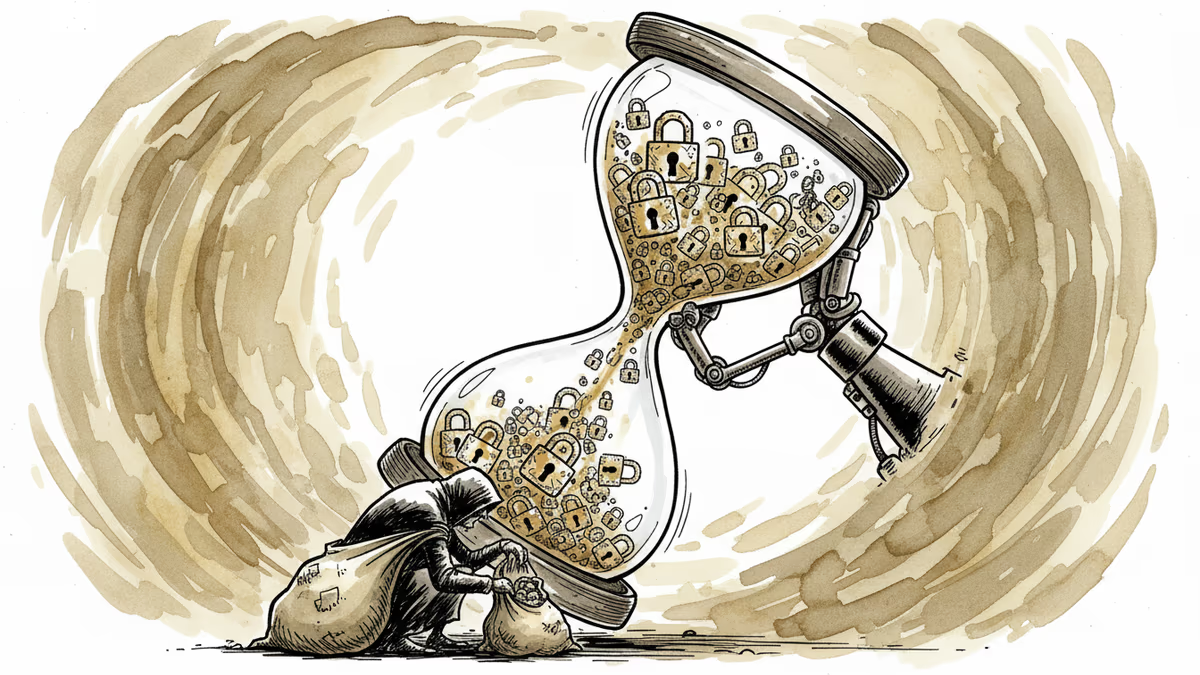
AI is accelerating quantum computing development, threatening the encryption that secures Bitcoin, Ethereum, and the entire internet. Security experts warn the arms race has already begun.

Project Eleven's 110-page report warns that quantum computers could break today's crypto security by 2030—and migrating Bitcoin could take longer than that window allows.

Anthropic's Mythos AI found thousands of unknown software vulnerabilities. But cybersecurity experts say the same capability already exists in older, publicly available models — and defenses are nowhere near keeping up.
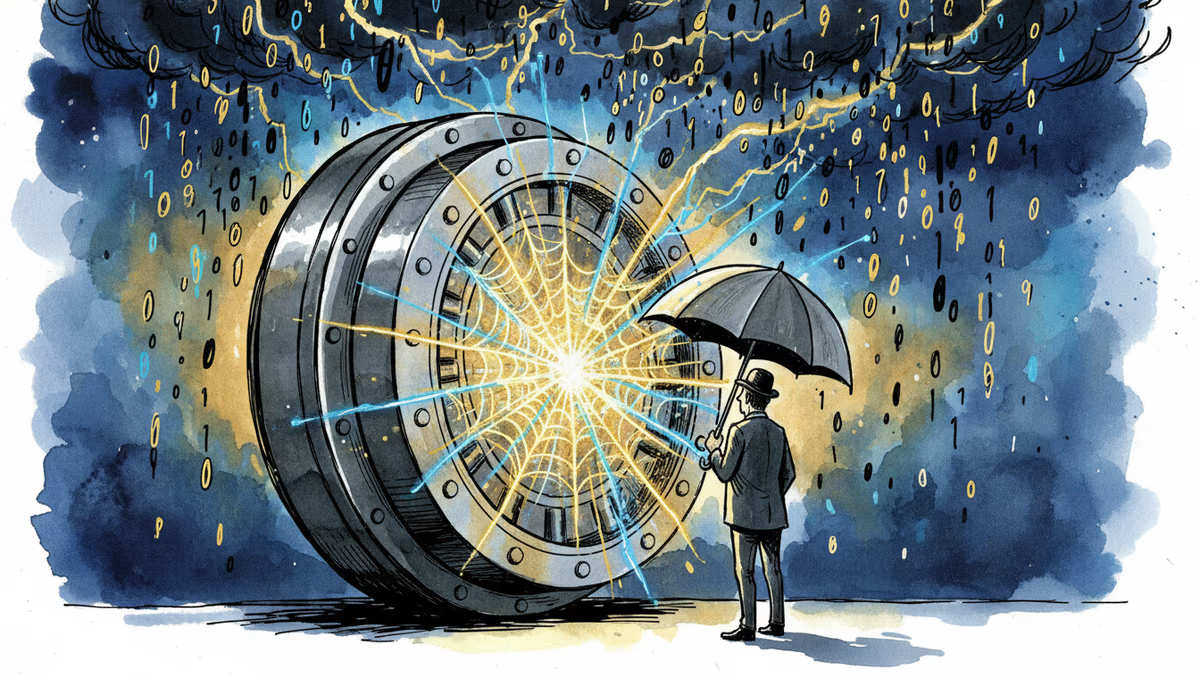
DBS CEO Tan Su Shan says cyber threats—not market volatility—are her biggest concern. As AI expands the attack surface in banking, what does that mean for your money?
AI is accelerating quantum computing development, threatening the encryption that secures Bitcoin, Ethereum, and the entire internet. Security experts warn the arms race has already begun.
Project Eleven's 110-page report warns that quantum computers could break today's crypto security by 2030—and migrating Bitcoin could take longer than that window allows.
Anthropic's Mythos AI found thousands of unknown software vulnerabilities. But cybersecurity experts say the same capability already exists in older, publicly available models — and defenses are nowhere near keeping up.
DBS CEO Tan Su Shan says cyber threats—not market volatility—are her biggest concern. As AI expands the attack surface in banking, what does that mean for your money?
Thoughts
Share your thoughts on this article
Sign in to join the conversation