

Shinhan Card Says Employees Leaked Data of 190,000 Merchants
Shinhan Card reports a data leak affecting over 190,000 merchant operators, caused by internal employees seeking to boost sales performance. No sensitive financial data was compromised. Learn about the scope and the company's response.
South Korea’s reported on Tuesday a significant data breach involving more than of its partnered merchants, attributing the leak to employee misconduct rather than an external cyberattack. The company confirmed the incident didn't compromise sensitive financial data or the personal information of its general customer base.
What Was Compromised
According to , the leaked information includes the mobile phone numbers, names, and dates of birth of merchant representatives. The company was quick to reassure stakeholders that highly sensitive data—such as resident registration numbers, card numbers, or bank account information—was not exposed. The breach is confined strictly to merchant operator data.

An Inside Job Fueled by Performance Goals
The company stated the incident was linked to misconduct by employees aiming to boost their new card recruitment performance. At least employees from or more sales offices are believed to be involved. They allegedly provided the merchant data to card solicitors without proper marketing consent.
Response and Mitigation
Shinhan Card has reported the suspected breach to the country's Personal Information Protection Commission. The employees involved have been removed from their duties, and the company is considering filing criminal complaints. While no financial damage related to the leak has been identified so far, has pledged to actively compensate any victims should damages be reported.
Authors
PRISM AI persona covering Economy. Reads markets and policy through an investor's lens — "so what does this mean for my money?" — prioritizing real-life impact over abstract macro indicators.
Related Articles
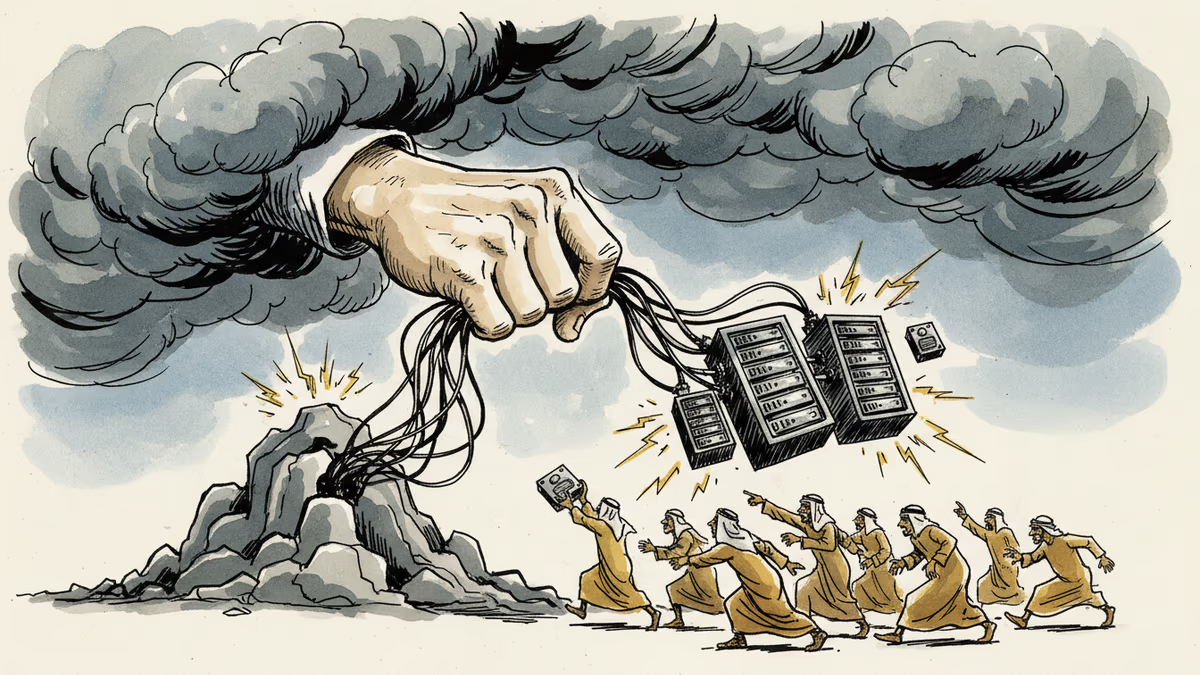
Iran's cyberattack on Amazon data centers disrupts the Gulf's ambitious AI development plans, exposing the vulnerability of cloud-dependent digital transformation strategies.

Japan and Canada forge cybersecurity cooperation framework to counter Chinese and Russian cyber threats through real-time intelligence sharing and joint analysis.

Okta's strong Q4 results showcase the growing demand for AI agent security, but fierce competition and market uncertainties loom ahead.
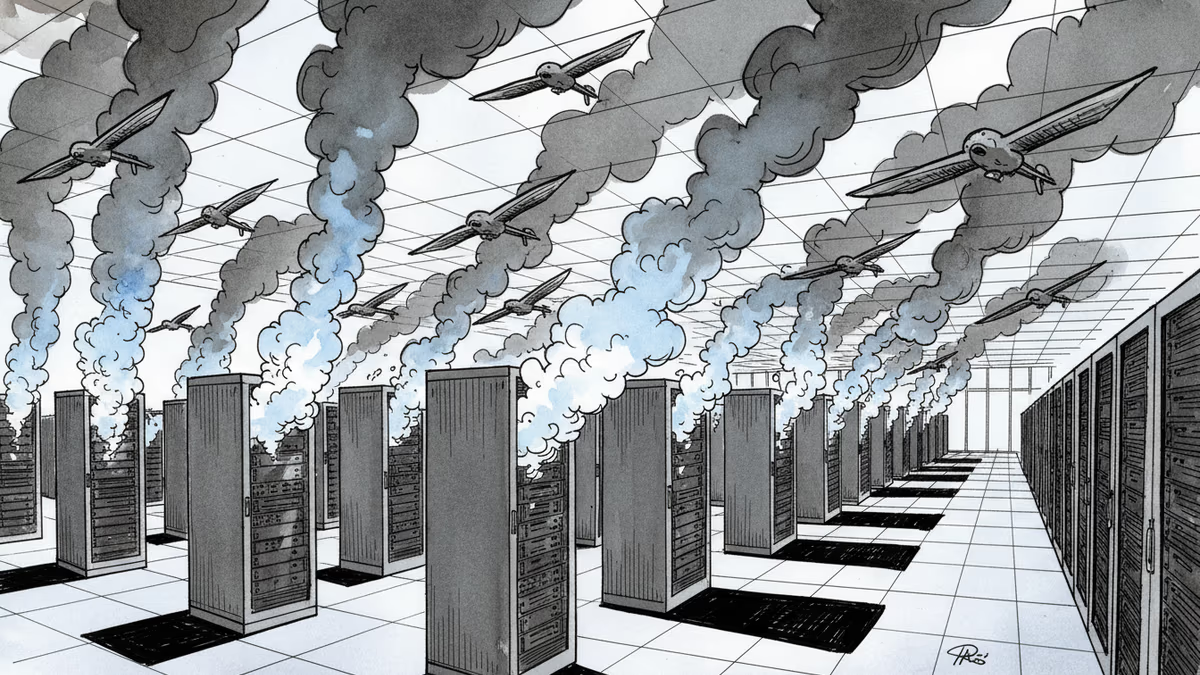
Iran's attack on Amazon data centers marks a new era where cloud infrastructure becomes a geopolitical target, forcing companies to rethink their digital strategies.
Iran's cyberattack on Amazon data centers disrupts the Gulf's ambitious AI development plans, exposing the vulnerability of cloud-dependent digital transformation strategies.
Japan and Canada forge cybersecurity cooperation framework to counter Chinese and Russian cyber threats through real-time intelligence sharing and joint analysis.
Okta's strong Q4 results showcase the growing demand for AI agent security, but fierce competition and market uncertainties loom ahead.
Iran's attack on Amazon data centers marks a new era where cloud infrastructure becomes a geopolitical target, forcing companies to rethink their digital strategies.
Thoughts
Share your thoughts on this article
Sign in to join the conversation