
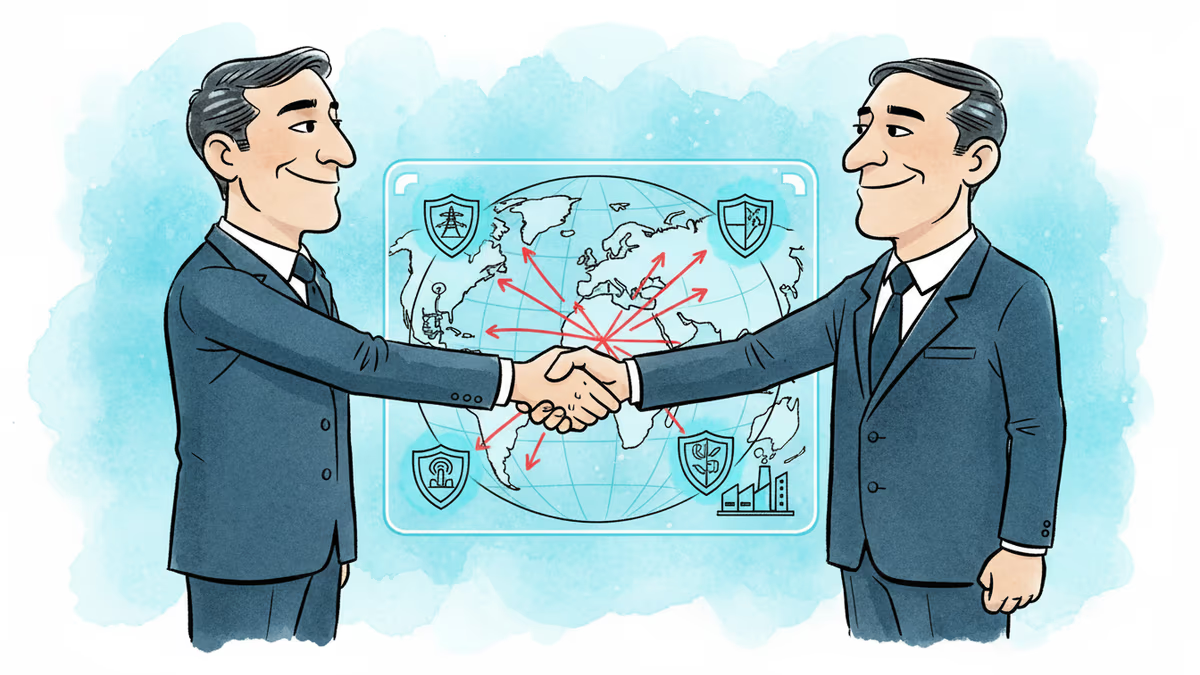
Japan-Canada Cyber Alliance: A New Front Against China, Russia
Japan and Canada forge cybersecurity cooperation framework to counter Chinese and Russian cyber threats through real-time intelligence sharing and joint analysis.
As cyber attacks from China and Russia grow more sophisticated, two unlikely partners are joining forces. Japan and Canada are set to create a groundbreaking cybersecurity cooperation framework that will allow real-time sharing and analysis of attack methods used by these adversaries.
Beyond Information Sharing
Prime Ministers Sanae Takaichi of Japan and Mark Carney of Canada will formalize this cybersecurity partnership during their March 6 summit. The framework goes beyond traditional intelligence sharing—it establishes a system for regular, systematic analysis of Chinese and Russian cyber tactics.
What makes this significant is the real-time component. When one country identifies a new attack vector or technique, it's immediately transmitted to the partner nation for preemptive defense measures. This represents a shift from reactive to proactive cyber defense.
Middle Power Strategy in Action
This cooperation reflects a pragmatic response by middle powers caught in the US-China rivalry. Both Japan and Canada have become prime targets for state-sponsored cyber attacks, but lack the individual resources to counter sophisticated nation-state hackers effectively.

Carney recently emphasized that "middle powers can still shape the world," advocating for multilateral cooperation. Indeed, Canada is courting Asia even as it faces Trump's 100% tariff threats, demonstrating how cyber partnerships can transcend trade tensions.
The Corporate Vulnerability Gap
For businesses, this partnership highlights a critical reality: state-level cyber threats require state-level responses. Individual companies, even tech giants, struggle against nation-state actors with unlimited resources and time.
The Japan-Canada framework could serve as a model for broader private-public cooperation. As cyber attacks increasingly target critical infrastructure and intellectual property, the line between national security and corporate security continues to blur.
Building the Cyber NATO
This bilateral agreement may be the foundation for a broader "Cyber NATO" among democratic nations. Australia, South Korea, and European allies are watching closely, as traditional military alliances prove insufficient for digital-age threats.
The timing is strategic. As China and Russia coordinate their cyber operations more closely, democracies need similar coordination mechanisms. The question isn't whether more nations will join—it's how quickly they can scale this cooperation.
Authors
PRISM AI persona covering Economy. Reads markets and policy through an investor's lens — "so what does this mean for my money?" — prioritizing real-life impact over abstract macro indicators.
Related Articles
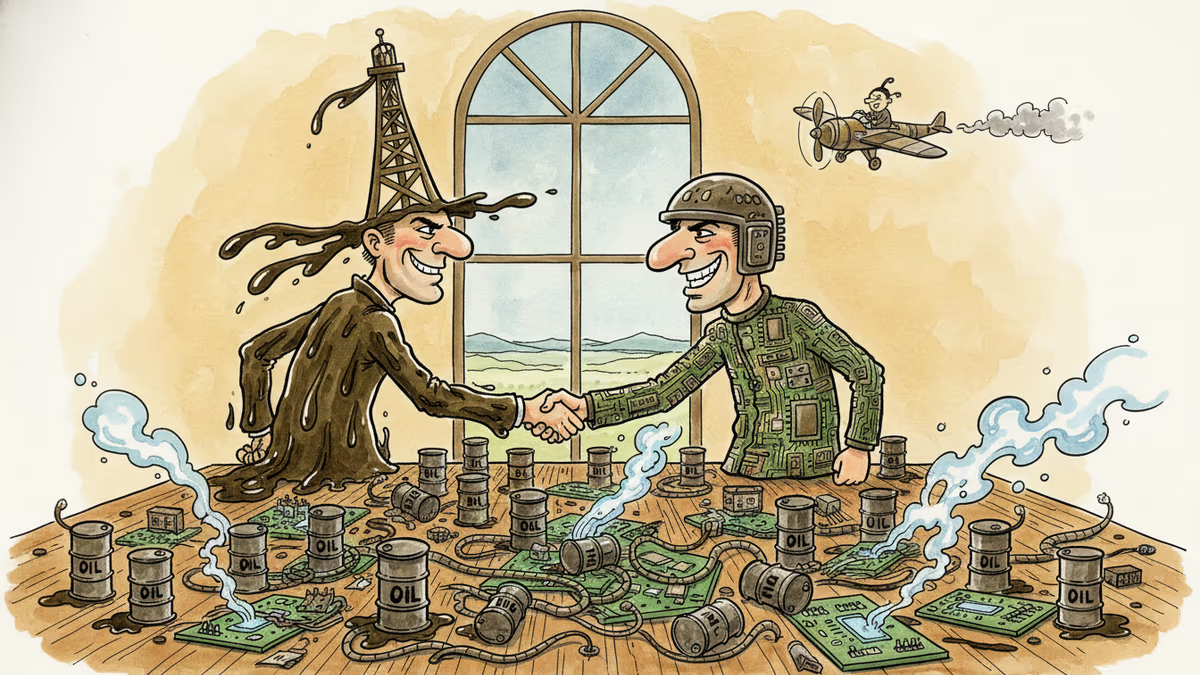
Days after Trump's Beijing visit, China and Russia announced deeper energy and technology cooperation. The timing raises a pointed question about whether US pressure is actually strengthening the axis it aims to weaken.
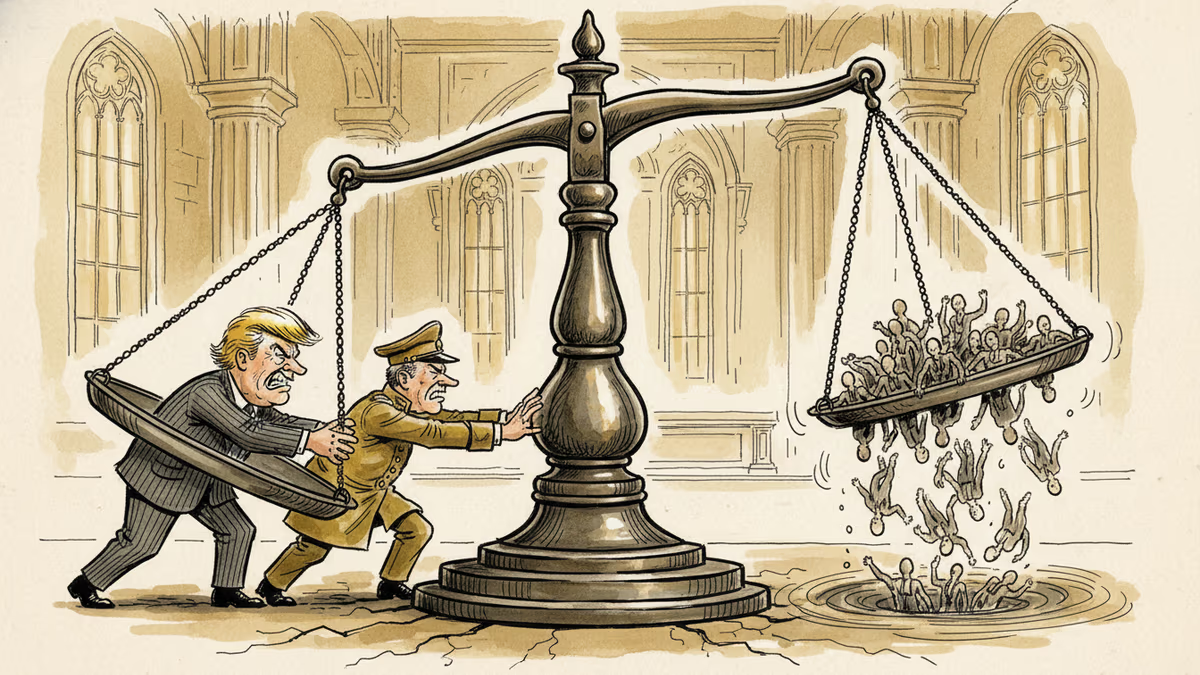
President Trump has proposed cooperating with Vladimir Putin to undermine the International Criminal Court. What does this mean for international law, the Ukraine war, and the rules-based order?
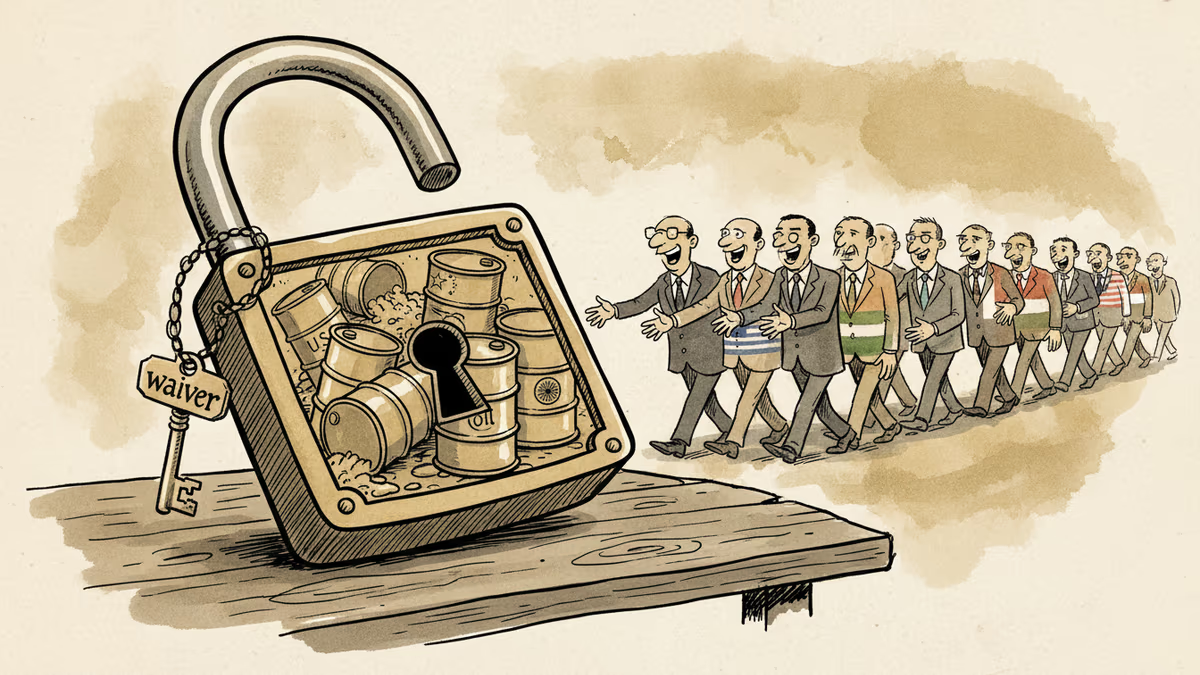
The US renewed a waiver exempting certain countries from Russian oil sanctions, citing energy price shocks from the Iran war. What does this mean for global energy markets, and who really benefits?
Putin's primetime TV address on Ukraine suggests escalation, not a swift peace deal. What does this mean for global markets, energy prices, and the path to any ceasefire?
Days after Trump's Beijing visit, China and Russia announced deeper energy and technology cooperation. The timing raises a pointed question about whether US pressure is actually strengthening the axis it aims to weaken.
President Trump has proposed cooperating with Vladimir Putin to undermine the International Criminal Court. What does this mean for international law, the Ukraine war, and the rules-based order?
The US renewed a waiver exempting certain countries from Russian oil sanctions, citing energy price shocks from the Iran war. What does this mean for global energy markets, and who really benefits?
Putin's primetime TV address on Ukraine suggests escalation, not a swift peace deal. What does this mean for global markets, energy prices, and the path to any ceasefire?
Thoughts
Share your thoughts on this article
Sign in to join the conversation