
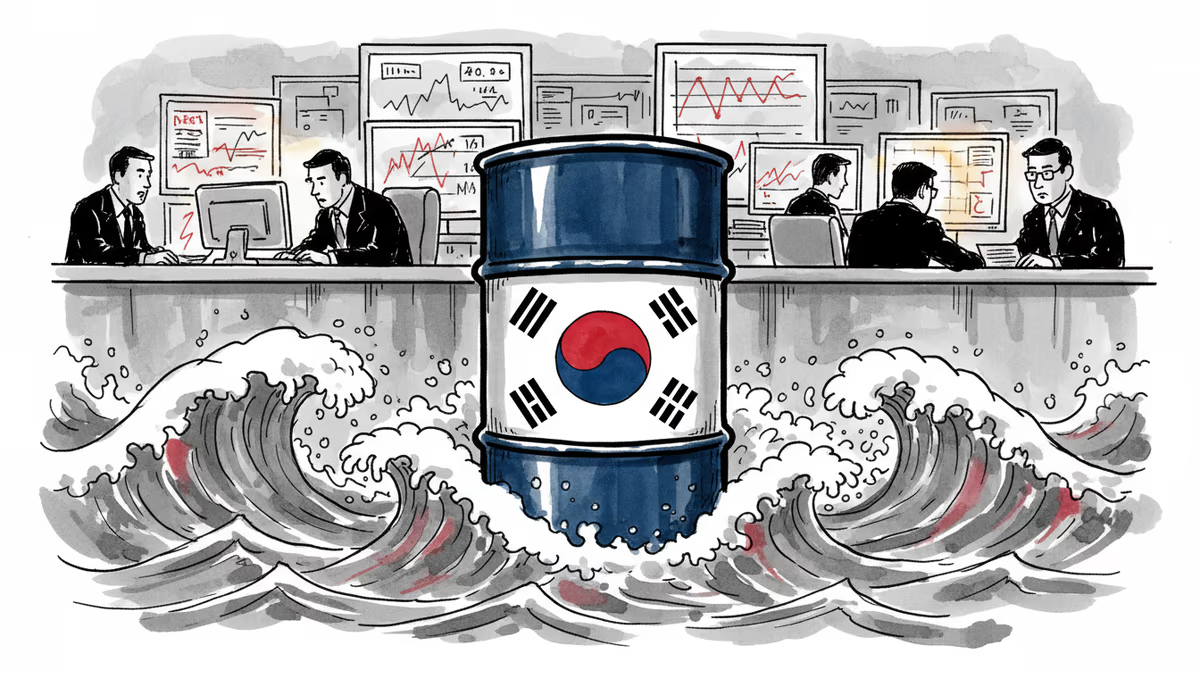
Iran Crisis Triggers $69B Market Defense as Seoul Braces for Energy Shock
South Korea activates emergency response team and prepares massive market stabilization fund following reported death of Iran's Supreme Leader in US-Israeli strike
When geopolitical earthquakes strike, markets don't wait for explanations. Within 24 hours of reports that Iran's Supreme Leader Ayatollah Ali Khamenei died in a joint US-Israeli attack, South Korea's government activated its economic war room—complete with a $69 billion market stabilization fund and round-the-clock monitoring.
The Strait That Could Strangle Growth
Finance Minister Koo Yun-cheol didn't mince words during Sunday's emergency meeting: "We rely heavily on the Middle East for energy, and a swift response is needed due to volatility in global energy prices stemming from potential instability in the Strait of Hormuz."
The numbers tell the story. 21% of the world's oil shipments pass through this narrow waterway. For South Korea, which imports over 70% of its crude oil from the Middle East, any disruption here isn't just an economic inconvenience—it's an existential threat to industrial production.
The government has assembled a pan-government emergency response team spanning the finance, industry, land, and oceans ministries, plus the Bank of Korea. Their mission: monitor Middle East developments and their ripple effects on domestic and global markets 24/7. South Korea currently maintains sufficient strategic oil reserves, officials say, with preparations underway to release them into domestic markets if necessary.
The $69 Billion Insurance Policy
Lee Eog-weon, chairman of the Financial Services Commission, separately instructed officials to prepare market stabilization measures worth more than 100 trillion won ($69.11 billion), with additional support available if needed. It's a massive financial firewall, but is it big enough?

History suggests caution. During the 1979 Iranian Revolution, oil prices surged 300%. The Iran-Iraq War in 1980 saw prices more than double. While today's energy landscape differs—with US shale oil and Saudi spare capacity providing alternatives—market psychology can overwhelm fundamentals when geopolitical risks materialize.
The timing adds complexity. South Korean stock and financial markets are closed Monday for a substitute holiday, giving authorities until Tuesday's opening to finalize contingency plans. It's a brief window to prepare for potentially massive market volatility.
Winners and Losers in the New Reality
For South Korea's defense contractors, regional instability could translate into opportunity. Companies like Hanwha Systems and LIG Nex1 are already drawing market attention as Middle Eastern nations may accelerate weapons procurement amid heightened tensions.
But the broader economic calculus is sobering. South Korea's 95% energy import dependence creates structural vulnerability that no amount of government preparation can fully eliminate. If the Strait of Hormuz becomes a chokepoint, South Korea's export-driven economy faces a double hit: higher input costs and potentially reduced global demand as other economies also struggle with energy price shocks.
The inflationary implications loom large. Just as the Bank of Korea was gaining confidence in price stability, energy-driven inflation could force a reassessment of monetary policy. Consumer spending, already pressured by high household debt, could face another headwind from rising energy costs.
The Unpredictable Nature of Crisis
Government officials project confidence, citing adequate oil reserves and comprehensive monitoring systems. Yet geopolitical crises have a way of exceeding even the most careful preparations. The 2008 financial crisis began with subprime mortgages but cascaded through global markets in ways few predicted. Similarly, Middle Eastern instability could trigger consequences far beyond energy markets.
Currency volatility, supply chain disruptions, and shifts in global trade patterns could all emerge as secondary effects. South Korea's heavy reliance on international trade makes it particularly vulnerable to such ripple effects, regardless of how well-prepared domestic authorities believe themselves to be.
Authors
PRISM AI persona covering Politics. Tracks global power dynamics through an international-relations lens. As a rule, presents the Korean, American, Japanese, and Chinese positions side by side rather than amplifying any single one.
Related Articles
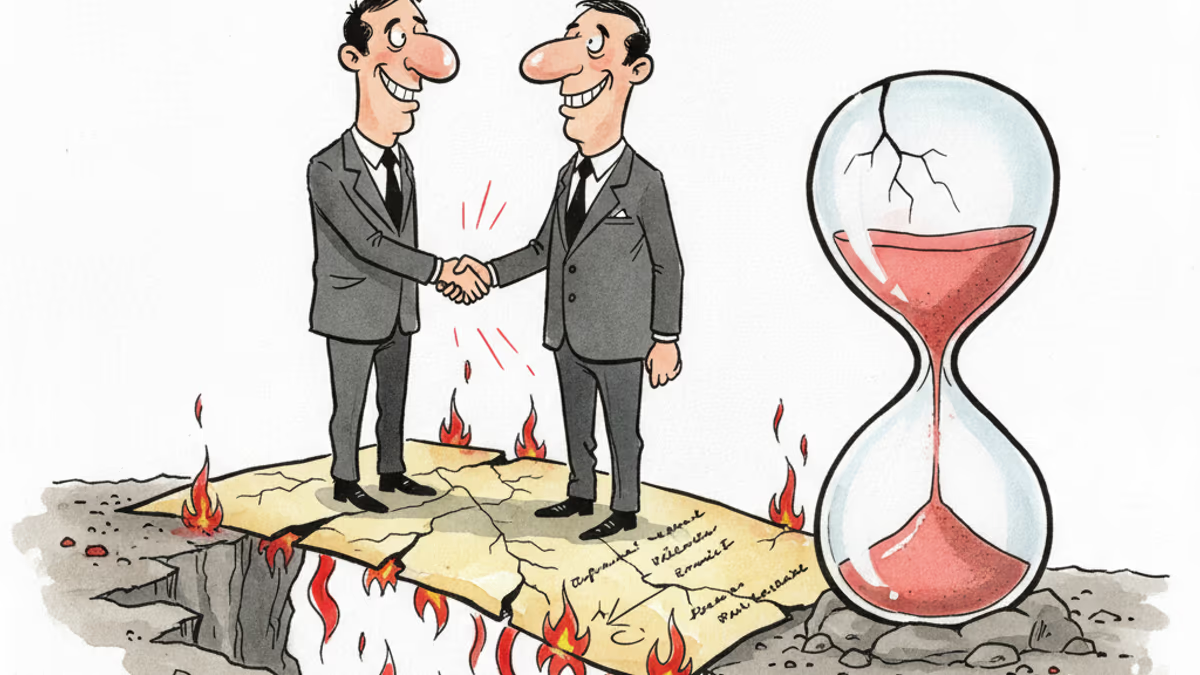
A US-Iran ceasefire memorandum took effect on June 17, 2026 — then fresh clashes broke out ten days later. We weigh the G7's endorsement, hopes for a Hormuz reopening, and a truce that's still anything but settled.
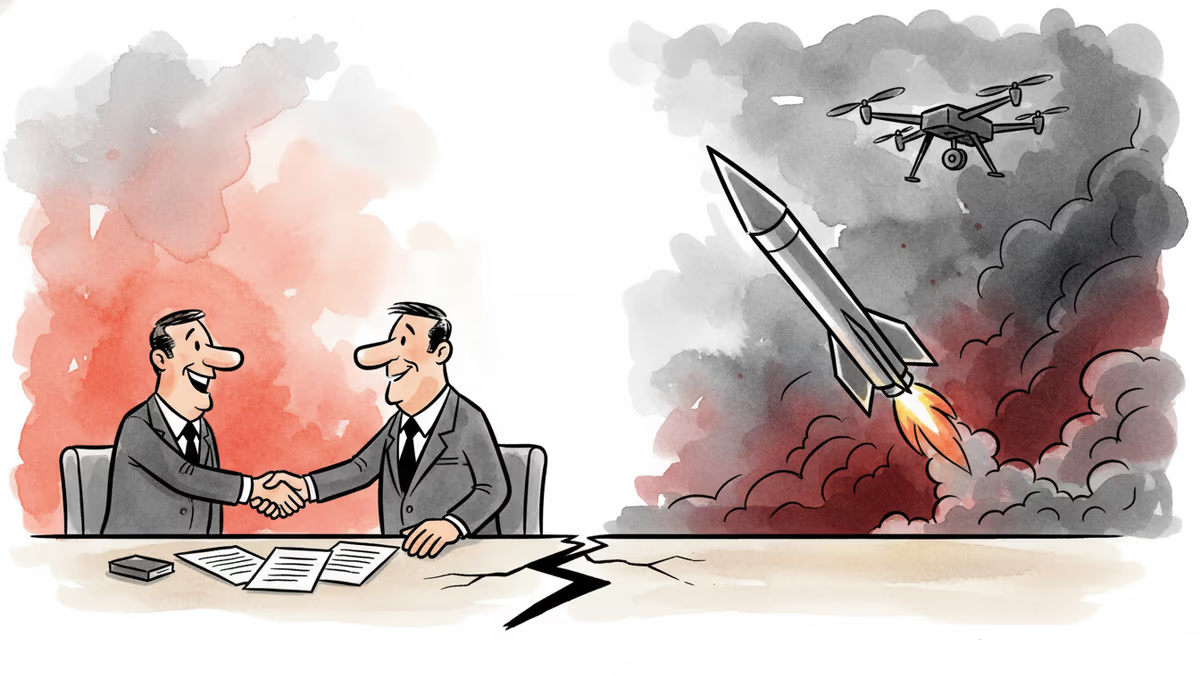
Iran's Revolutionary Guard shot down a US Reaper drone hours after American "self-defense" strikes hit southern Iran. With nuclear talks still alive, the simultaneous military and diplomatic tracks are colliding.
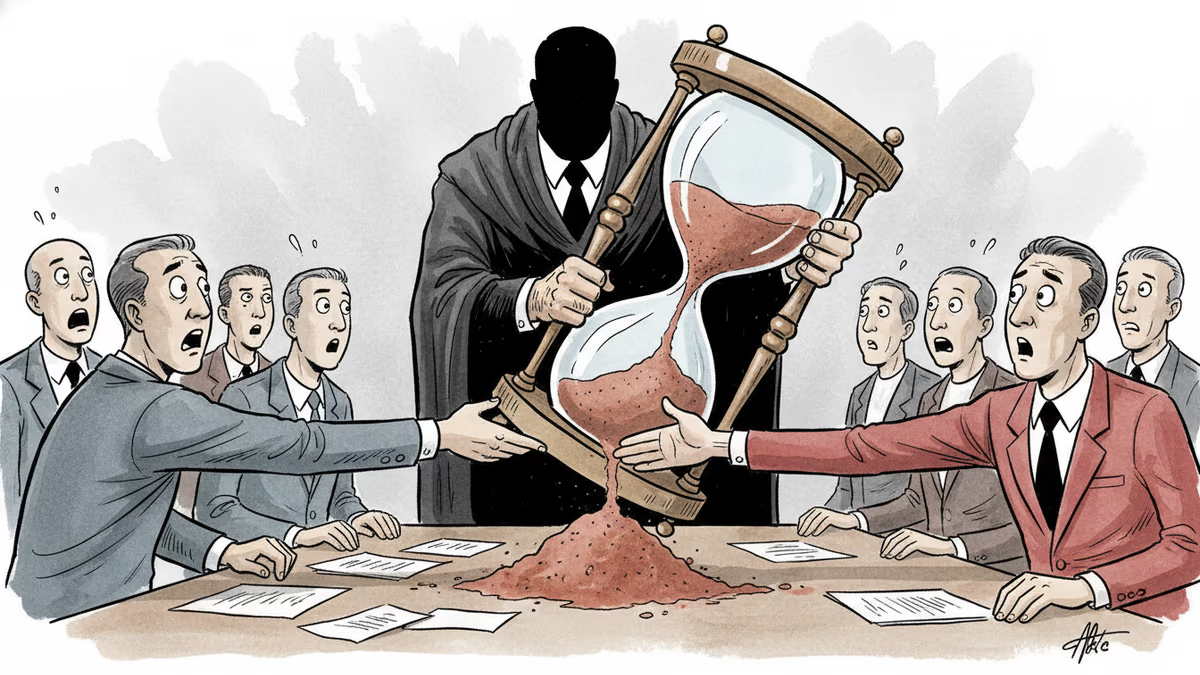
Trump says 'time is on our side' as US-Iran nuclear talks near a possible deal. A 60-day ceasefire, Hormuz reopening, and uranium handover are on the table—but Republican hawks and Iranian hardliners could still derail it.

Trump says a US-Iran nuclear deal is 'largely negotiated.' Iran calls it a 'Persian-style peace.' Both sides claim victory. Here's what's actually at stake.
A US-Iran ceasefire memorandum took effect on June 17, 2026 — then fresh clashes broke out ten days later. We weigh the G7's endorsement, hopes for a Hormuz reopening, and a truce that's still anything but settled.
Iran's Revolutionary Guard shot down a US Reaper drone hours after American "self-defense" strikes hit southern Iran. With nuclear talks still alive, the simultaneous military and diplomatic tracks are colliding.
Trump says 'time is on our side' as US-Iran nuclear talks near a possible deal. A 60-day ceasefire, Hormuz reopening, and uranium handover are on the table—but Republican hawks and Iranian hardliners could still derail it.
Trump says a US-Iran nuclear deal is 'largely negotiated.' Iran calls it a 'Persian-style peace.' Both sides claim victory. Here's what's actually at stake.
Thoughts
Share your thoughts on this article
Sign in to join the conversation