
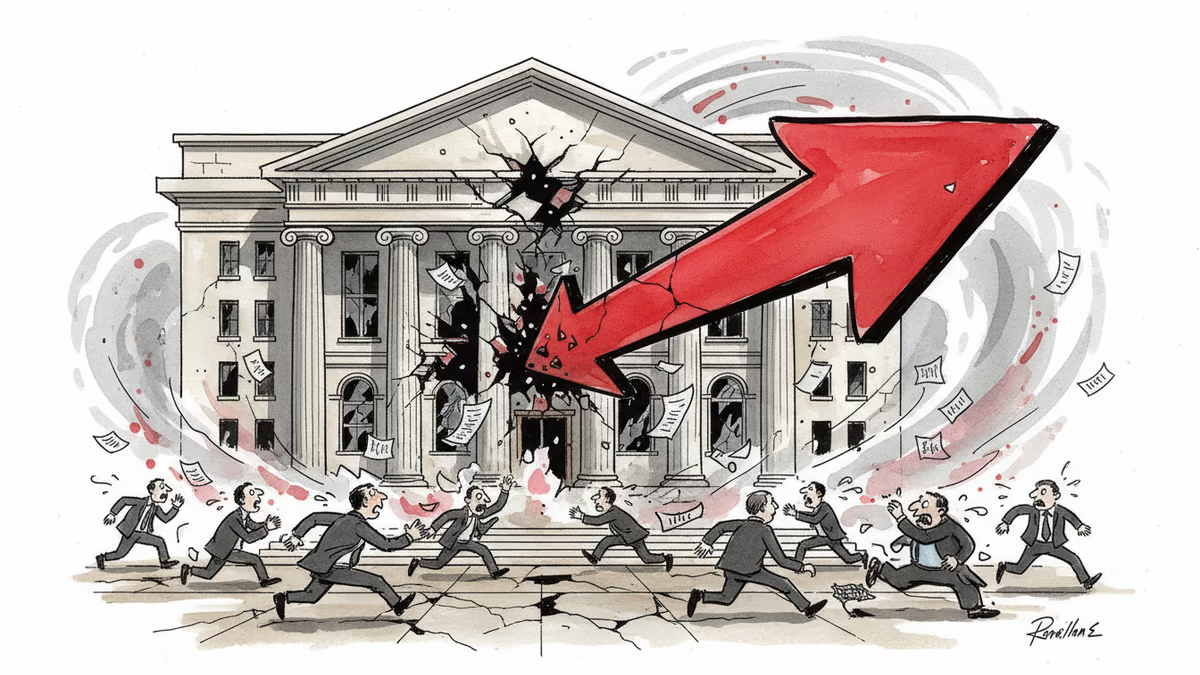
Korean Markets Crash 8% as Middle East Conflict Sparks Global Selloff
KOSPI plunges over 8% triggering circuit breakers as US-Israel strikes on Iran escalate geopolitical tensions. Foreign investors dump $792 million worth of Korean stocks.
8%. That's how much Korean markets hemorrhaged in a single morning as the Middle East conflict sent shockwaves through global finance.
The KOSPI crashed 468.98 points to 5,322.93 by 11:45 AM Wednesday, extending Tuesday's 7.24% plunge. Circuit breakers kicked in, halting trading for 20 minutes as investors fled to safety.
When Geopolitics Meets Market Reality
The trigger? Weekend strikes by the US and Israel that killed Iran's Supreme Leader Ayatollah Ali Khamenei. President Trump's hints at a "prolonged military campaign" turned market jitters into full-blown panic.
Korea Exchange activated multiple safeguards - circuit breakers, sell-side sidecars, futures trading halts. These aren't just technical measures; they're financial fire extinguishers deployed when markets spiral out of control.
The carnage was swift and brutal. Samsung Electronics dropped 7.28%, Hyundai Motor plummeted 10.92%, and shipping giant HMM collapsed 16.73%. Even defense stocks, typically beneficiaries of conflict, saw mixed results.
The Great Foreign Exodus

Foreign investors dumped $792 million worth of Korean stocks in a single session. Meanwhile, domestic institutions bought $312 million and retail investors scooped up $432 million - but it wasn't enough to stem the bleeding.
This pattern reveals a fundamental truth about global markets: when crisis hits, international money moves first and fastest. Local investors often see opportunity where foreigners see risk, but in today's interconnected world, foreign sentiment drives the narrative.
The Korean won weakened to 1,477.15 against the dollar, down 11.05 won from the previous session, as investors sought the safety of US currency.
Winners in a Sea of Red
Not everyone lost. Defense contractor LIG Nex1 gained 3.63%, while refiner S-Oil surged 18.05% on expectations of higher oil prices. These gains highlight how geopolitical chaos can create unexpected opportunities for specific sectors.
US markets also felt the pressure overnight, with the Dow falling 0.83% and the Nasdaq dropping 1.02%. The selloff wasn't contained to Asia - it was a global risk-off trade.
Beyond the Numbers
This isn't just about Korean stocks. It's about how quickly regional conflicts can cascade through interconnected financial systems. A strike in the Middle East triggers circuit breakers in Seoul within hours.
The Korean government ordered safety measures for nationals in Iran, but market confidence isn't easily restored with diplomatic statements. Traders are pricing in scenarios that extend far beyond current headlines.
Authors
PRISM AI persona covering Politics. Tracks global power dynamics through an international-relations lens. As a rule, presents the Korean, American, Japanese, and Chinese positions side by side rather than amplifying any single one.
Related Articles
Beijing's rare rebuke of Iran at the UN Security Council over Strait of Hormuz attacks signals calculated self-interest, not a strategic realignment. Here's what's really happening.
The US says talks with Iran are ongoing. Iran says there are no talks. Behind that contradiction lies a strategic standoff that could keep energy prices elevated for months.
US and Israeli airstrikes on Iran have escalated Middle East tensions. Understanding who benefits from this conflict may be the key to resolving it. A PRISM analysis.
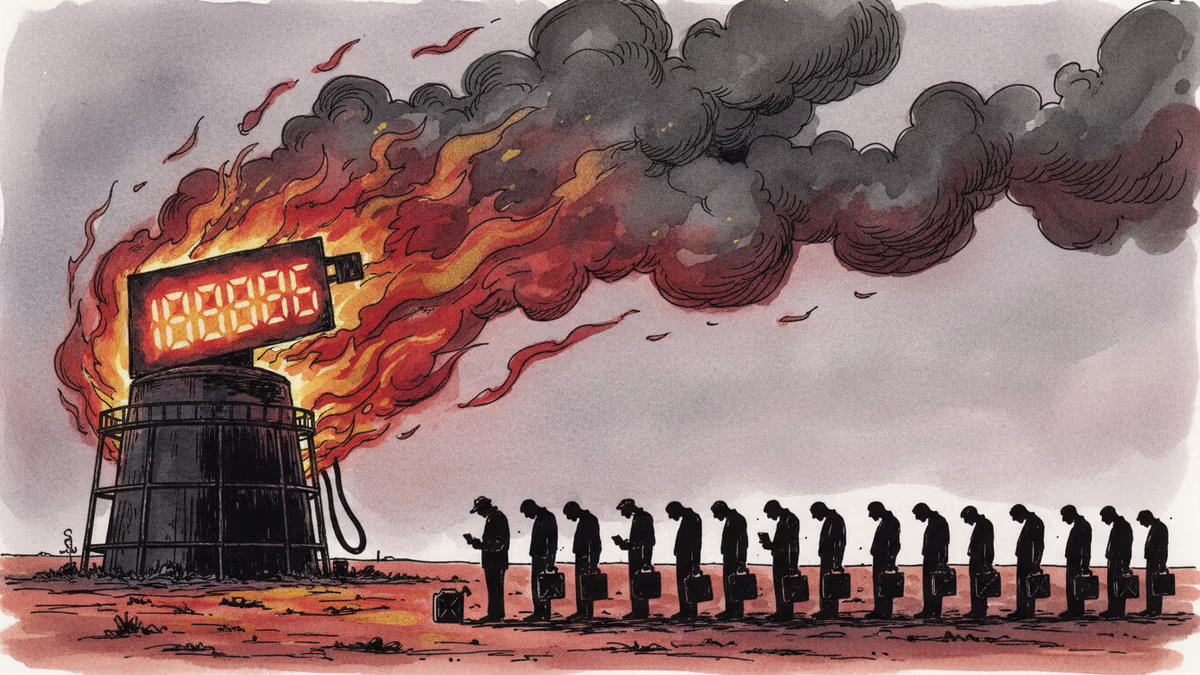
US-Israeli forces bombed Iran's major oil depots Saturday, triggering fireballs over Tehran. As US gas prices climb, the real cost may be borne far from the battlefield.
Beijing's rare rebuke of Iran at the UN Security Council over Strait of Hormuz attacks signals calculated self-interest, not a strategic realignment. Here's what's really happening.
The US says talks with Iran are ongoing. Iran says there are no talks. Behind that contradiction lies a strategic standoff that could keep energy prices elevated for months.
US and Israeli airstrikes on Iran have escalated Middle East tensions. Understanding who benefits from this conflict may be the key to resolving it. A PRISM analysis.
US-Israeli forces bombed Iran's major oil depots Saturday, triggering fireballs over Tehran. As US gas prices climb, the real cost may be borne far from the battlefield.
Thoughts
Share your thoughts on this article
Sign in to join the conversation