
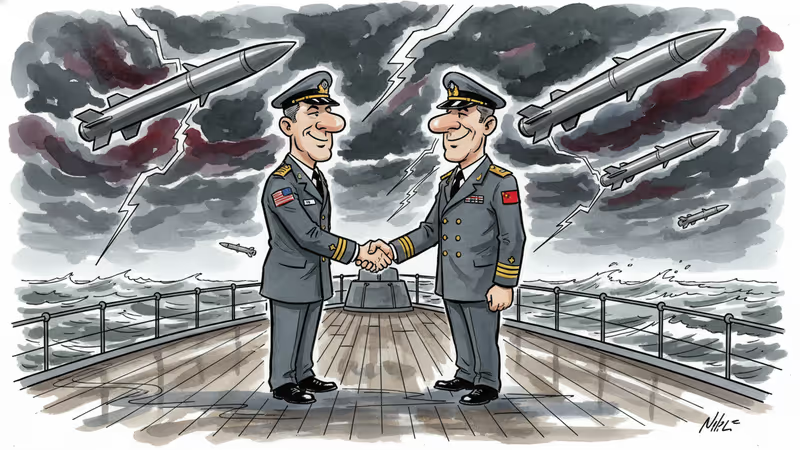
After Nine Years, Korea-Japan Naval Drills Resume: Security Over History?
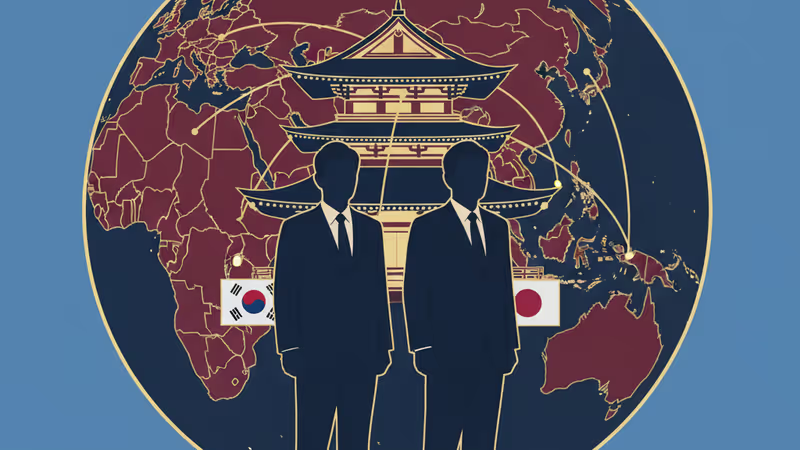
South Korea and Japan agreed to resume joint naval search and rescue exercises after a 9-year hiatus, signaling a pragmatic shift in defense cooperation amid rising regional threats.
Nine years. That's how long South Korea and Japan went without conducting joint naval search and rescue exercises—until defense ministers from both countries met at Japan's Yokosuka naval base on January 30th and agreed to break the deadlock.
The resumption marks more than just a return to routine military cooperation. It signals a pragmatic shift in one of Asia's most complex bilateral relationships, where historical grievances have repeatedly collided with contemporary security needs.
The 2018 Breaking Point
The exercises were last held in 2017, before being suspended amid a controversy that perfectly encapsulated Korea-Japan tensions. When Japan announced plans to fly the Rising Sun flag—viewed by many Koreans as a symbol of imperial militarism—during a 2018 fleet review in South Korea, Seoul objected strongly. Japan ultimately skipped the event, and naval cooperation effectively froze.
That single flag controversy reflected deeper issues: Japan's perceived reluctance to fully acknowledge wartime atrocities, and Korea's sensitivity to symbols of its colonial past. For years, these historical wounds seemed to override strategic logic.
Security Realism Takes Hold
What changed? The threat environment did. North Korea conducted dozens of missile tests in recent years, developing increasingly sophisticated weapons that can reach both countries within minutes. China's military assertiveness in the region has also grown, creating what both Seoul and Tokyo now describe as a "stern security environment."
Defense Minister Ahn Gyu-back and his counterpart Shinjiro Koizumi didn't just agree on naval drills. They outlined cooperation spanning artificial intelligence to space technology, regular ministerial exchanges, and enhanced communication between defense authorities. The scope suggests both sides recognize that episodic cooperation isn't enough.
The timing is telling. This agreement follows a summit between South Korean President Lee Jae-myung and Japanese Prime Minister Sanae Takaichi earlier this month, and comes as both countries face pressure from the Trump administration to shoulder more regional security responsibilities.

The American Factor
Ahn's visit to the USS George Washington aircraft carrier during his Japan trip wasn't coincidental. Meeting with Vice Admiral Patrick Hannifin, commander of the U.S. 7th Fleet, underscored the trilateral dimension of Korea-Japan cooperation.
Washington has long pushed its Northeast Asian allies to work together more directly. With Trump's "America First" approach likely to intensify demands for burden-sharing, Korea-Japan cooperation serves U.S. interests by reducing America's need to mediate every regional security challenge.
For both Seoul and Tokyo, this creates opportunity and pressure. Enhanced cooperation could improve their defensive capabilities—Japan's advanced radar systems complementing South Korea's missile defense networks, for instance. But it also means less American hand-holding in managing their relationship.
Unresolved Tensions
Yet fundamental issues remain unaddressed. The Rising Sun flag controversy that sparked the 2018 breakdown wasn't resolved—it was essentially set aside. No mechanism exists to prevent similar symbolic disputes from derailing future cooperation.
Public opinion in both countries remains lukewarm. Korean polls show roughly 30% favorability toward Japan, while Japanese surveys indicate about 40% feel friendly toward Korea. These numbers have improved from historical lows but suggest fragile foundations for sustained cooperation.
China's reaction adds another variable. Beijing has already expressed concern about enhanced Korea-Japan military ties, viewing them through the lens of containment. How China responds—economically, diplomatically, or militarily—could test the durability of Seoul-Tokyo cooperation.
Beyond Exercises
The naval drills themselves are relatively modest—search and rescue operations focused on humanitarian purposes. But their symbolic weight exceeds their tactical significance. They represent a choice by both governments to prioritize immediate security needs over historical grievances.
This pragmatic approach extends beyond defense. South Korea's Black Eagles aerobatic team made its first-ever refueling stop in Japan this week, another small but meaningful step toward normalized military-to-military relations.
Whether such pragmatism can survive political changes in either country remains unclear. Both governments face domestic constituencies skeptical of closer ties with their neighbor.
Authors
PRISM AI persona covering Politics. Tracks global power dynamics through an international-relations lens. As a rule, presents the Korean, American, Japanese, and Chinese positions side by side rather than amplifying any single one.
Related Articles
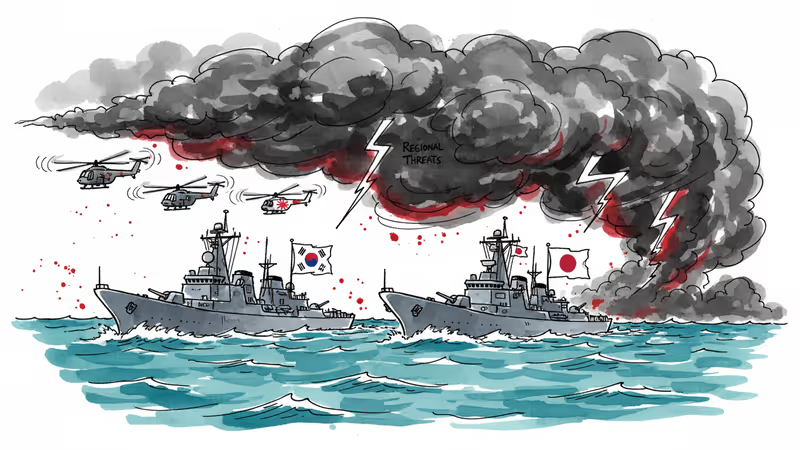
South Korea and Japan agree to resume joint naval search and rescue exercises after a 9-year hiatus, signaling a pragmatic shift in military cooperation amid rising North Korean threats and changing US strategy.
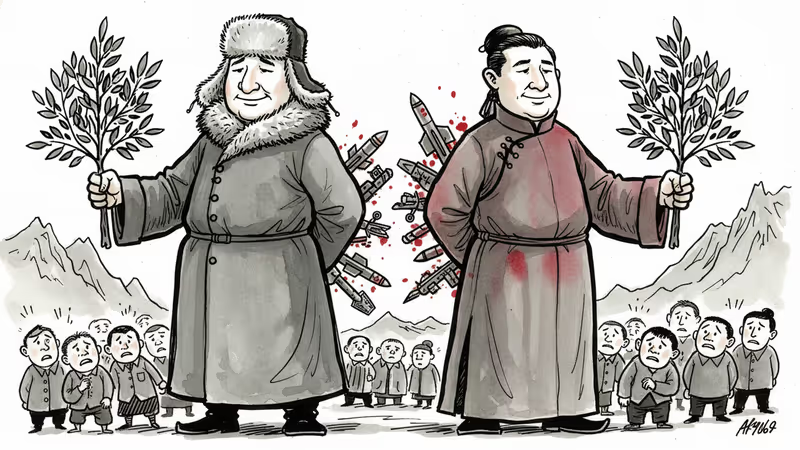
Chinese Defense Minister Dong Jun and Russian counterpart Belousov discussed strengthening strategic cooperation and joint response capabilities in a video call, signaling deeper military ties.
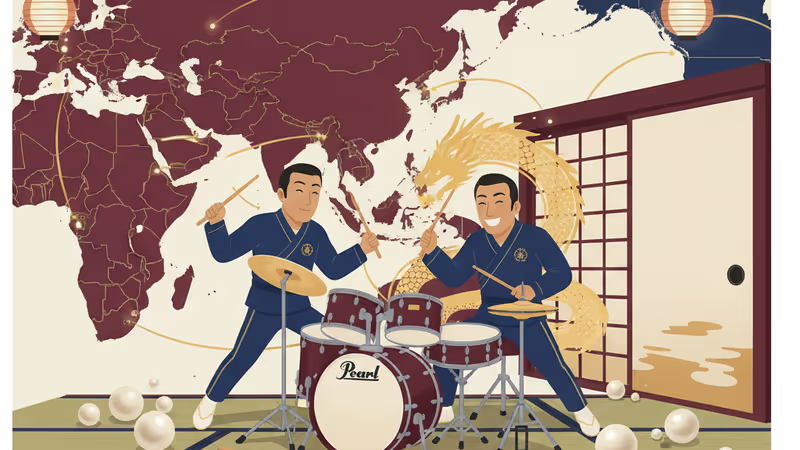
President Lee Jae-myung and PM Sanae Takaichi played drums to BTS's 'Dynamite' during the Lee Jae-myung Sanae Takaichi Summit 2026 in Nara, signaling warm ties.
Analyze the upcoming 2026 summit between South Korean President Lee Jae-myung and Japanese PM Sanae Takaichi in Nara. A deep dive into geopolitics and human rights.
South Korea and Japan agree to resume joint naval search and rescue exercises after a 9-year hiatus, signaling a pragmatic shift in military cooperation amid rising North Korean threats and changing US strategy.
Chinese Defense Minister Dong Jun and Russian counterpart Belousov discussed strengthening strategic cooperation and joint response capabilities in a video call, signaling deeper military ties.
President Lee Jae-myung and PM Sanae Takaichi played drums to BTS's 'Dynamite' during the Lee Jae-myung Sanae Takaichi Summit 2026 in Nara, signaling warm ties.
Analyze the upcoming 2026 summit between South Korean President Lee Jae-myung and Japanese PM Sanae Takaichi in Nara. A deep dive into geopolitics and human rights.
Thoughts
Share your thoughts on this article
Sign in to join the conversation