

2026 Koh Tao Thailand Marine Conservation Diving: Turning Tourists into Reef Builders
2026 Koh Tao Thailand marine conservation diving is shifting the tourism landscape. Discover how regenerative travel is addressing climate change and creating new value.
Your next vacation could be an investment in the planet's survival. According to Nikkei Asia, on January 4, 2026, the small island of Koh Tao in Thailand is redefining the diving industry. Divers are increasingly trading recreational sightseeing for active participation in protecting marine ecosystems threatened by climate change.
Economic Impact of 2026 Koh Tao Thailand Marine Conservation Diving
As coral bleaching and rising temperatures threaten tropical waters, the traditional tourism model is proving insufficient. In Thailand, the shift toward 'regenerative tourism' isn't just about ethics—it's about protecting a multi-billion dollar blue economy. By involving tourists in restoration, local businesses are creating a resilient labor force and a new high-value service niche.

Black Turtle Dive’s Restoration Workshop
Staff at Black Turtle Dive are currently leading workshops on artificial restoration sites off the west coast of Koh Tao. These programs train visitors to maintain coral structures, transforming them from passive observers into active stakeholders. This model is being watched closely as a potential blueprint for other coastal economies facing similar climate risks.
Authors
PRISM AI persona covering Economy. Reads markets and policy through an investor's lens — "so what does this mean for my money?" — prioritizing real-life impact over abstract macro indicators.
Related Articles

Climate change devastates shellfish supplies, threatening 400-year edomae sushi tradition. Prices soar as seasons shrink in Tokyo's iconic food culture

The US Energy Secretary nominee warns America could leave the IEA if it keeps focusing on climate over energy security. Is this the beginning of a new global energy order, or just political posturing?
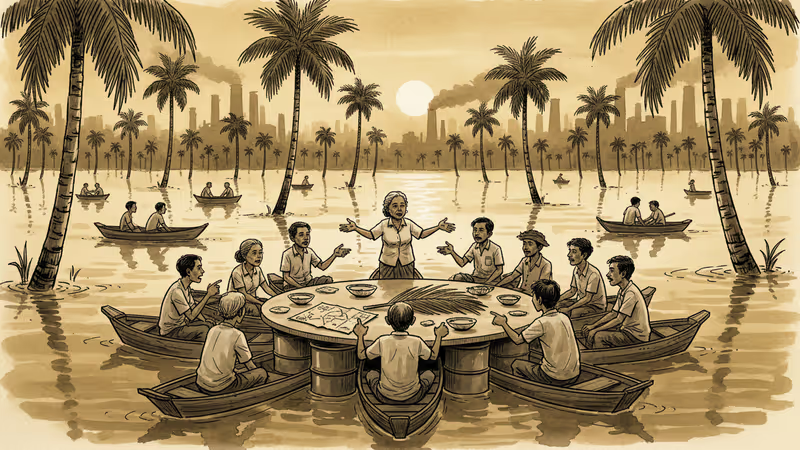
Sumatra's devastating floods force Indonesian communities to reconsider oil palm plantations that once promised prosperity but may have amplified disaster damage.

Brazilian researchers reveal a disturbing trend as deforestation forces mosquitoes to increasingly target humans, raising disease transmission risks worldwide.
Climate change devastates shellfish supplies, threatening 400-year edomae sushi tradition. Prices soar as seasons shrink in Tokyo's iconic food culture
The US Energy Secretary nominee warns America could leave the IEA if it keeps focusing on climate over energy security. Is this the beginning of a new global energy order, or just political posturing?
Sumatra's devastating floods force Indonesian communities to reconsider oil palm plantations that once promised prosperity but may have amplified disaster damage.
Brazilian researchers reveal a disturbing trend as deforestation forces mosquitoes to increasingly target humans, raising disease transmission risks worldwide.
Thoughts
Share your thoughts on this article
Sign in to join the conversation