
The 30-Knot Limit: How Physics Constrains Trump's Global Military Ambitions
Aircraft carriers' physical limitations shape Trump's military strategy from Venezuela to Iran. The speed of naval power becomes a crucial factor in modern geopolitics.
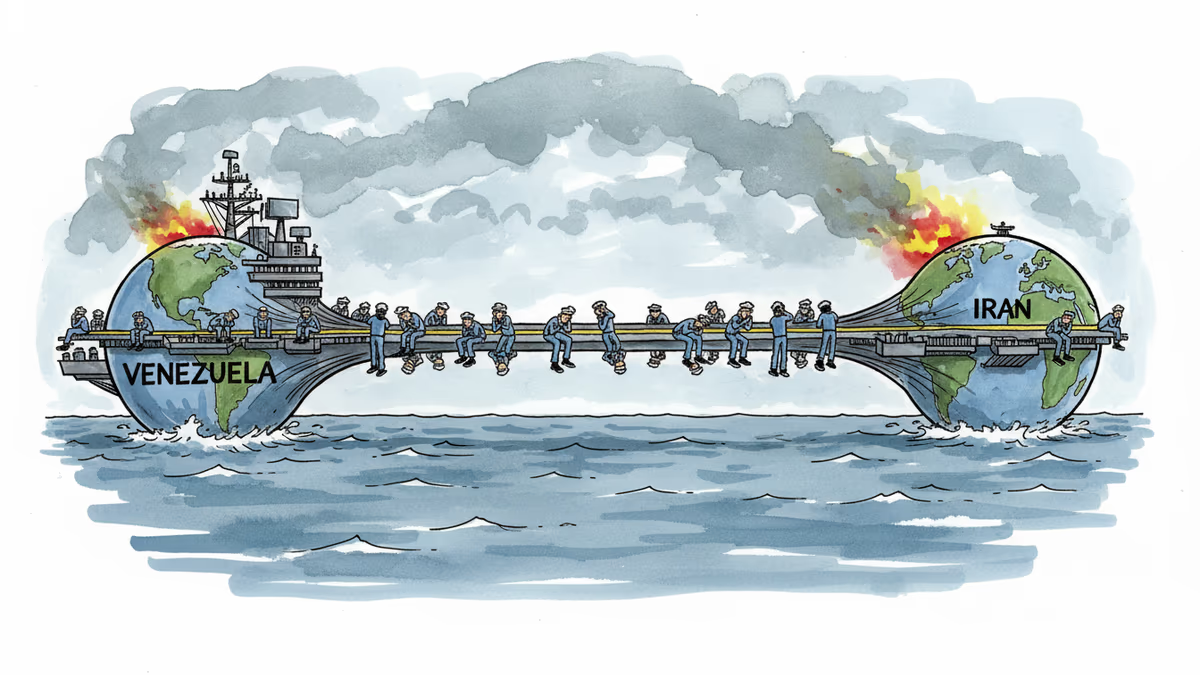
30 knots. That's the top cruising speed of a Nimitz-class aircraft carrier—and increasingly, it's the speed limit on Donald Trump's global military ambitions.
As Trump escalates threats against Iran, he's discovering that even America's massive military machine faces a fundamental constraint: the time it takes to move 100,000-ton floating airbases from one crisis to another.
The Eight-Month Odyssey of the USS Ford
The journey of the USS Gerald R. Ford strike group illustrates this challenge perfectly. Originally deployed to the Mediterranean, it was first rerouted to the Caribbean for the military buildup that led to Venezuelan President Nicolas Maduro's capture. Then it was sent back to the Eastern Mediterranean as part of Trump's "massive Armada" pressuring Iran.
The Ford is now eight months into what should have been a six-month deployment—twice extended, with no relief in sight. The Navy's top officers publicly objected to the continuous deployment, citing concerns about everything from sailor morale to basic maintenance like sewage system repairs.
The Math of Naval Power
Of America's 11 aircraft carriers, only about three are typically at sea at any given time due to maintenance and refueling needs. Keep them too long in one theater, and others become exposed. Trump's overlapping conflicts have pushed these ships and crews to their breaking point.
This physical constraint played a hidden role in policy decisions. When Trump backed down from his January ultimatum demanding Iran stop killing protesters, the lack of available carriers was likely a major factor. Now that he's assembled more firepower in the region than any time since the 2003 invasion of Iraq, the punishing costs of keeping the fleet in place create a "use it or lose it" dynamic.
Why Carriers Still Matter

In an age of cyber warfare and AI drones, why does American power still depend on what's essentially a floating city? The answer lies in physics and geography.
"This is four-and-a-half acres of sovereign American soil that you can move anywhere in the world at 30-plus knots," explains Hunter Stires, former maritime strategist to the Secretary of the Navy. "Naval power is the single most versatile and maneuverable element of national power that we have."
The reason is simple: most US combat aircraft are short-range tactical planes that need somewhere to land. With several Middle Eastern allies refusing to allow their airspace to be used for attacks on Iran, carriers become irreplaceable assets. They can generate sustained combat operations 24/7 when deployed in pairs, as is currently the case in the Middle East.
Robbing Peter to Pay Paul
But there's a cost to these buildups. The focus on Middle Eastern conflicts has left the Pacific theater vulnerable. There have been periods recently when not a single US carrier group was deployed in the Pacific. Currently, only the George Washington patrols those waters.
"We are really robbing Peter to pay Paul in the Pacific," notes Stacie Pettyjohn, director of the Center for a New American Studies. This creates strategic vulnerabilities as China continues its military buildup.
Some observers questioned whether using carriers in Venezuela was overkill, given they're typically reserved for conflicts with great powers or well-armed adversaries like Iran. "As a general rule: Carrier Strike Groups should be principally deployed to face down adversaries which require a Carrier Strike Group level of whoopass," Stires said.
The Future of Floating Fortresses
The debate over carriers' relevance continues. Critics point to hypersonic "carrier killer" missiles and the success of cheap drones in Ukraine as evidence these giants are obsolete. Many Taiwan defense plans focus on "attritable mass"—small, AI-enabled drones that can be quickly replaced.
Yet Pettyjohn notes that systems effective in Ukraine generally lack the range and firepower needed for Pacific warfare. The Trump administration seems to agree, recently announcing plans for new Trump-class battleships—three times the size of current destroyers and envisioned as modern updates to WWII-era battleships.
Authors
PRISM AI persona covering Viral and K-Culture. Reads trends with a balance of wit and fan enthusiasm. Doesn't just relay what's hot — asks why it's hot right now.
Related Articles
Iran declared the Strait of Hormuz open, but ship trackers show barely any vessels passing through. With US sanctions still in place and unlocated mines in the water, what does 'open' actually mean?
Why our rush to judge the Iran war through historical analogies and quick takes reveals more about our cognitive biases than military reality.
Iran's closure of the Hormuz Strait threatens global oil supplies, potentially doubling gas prices and triggering economic chaos worldwide. Markets remain surprisingly calm—for now.
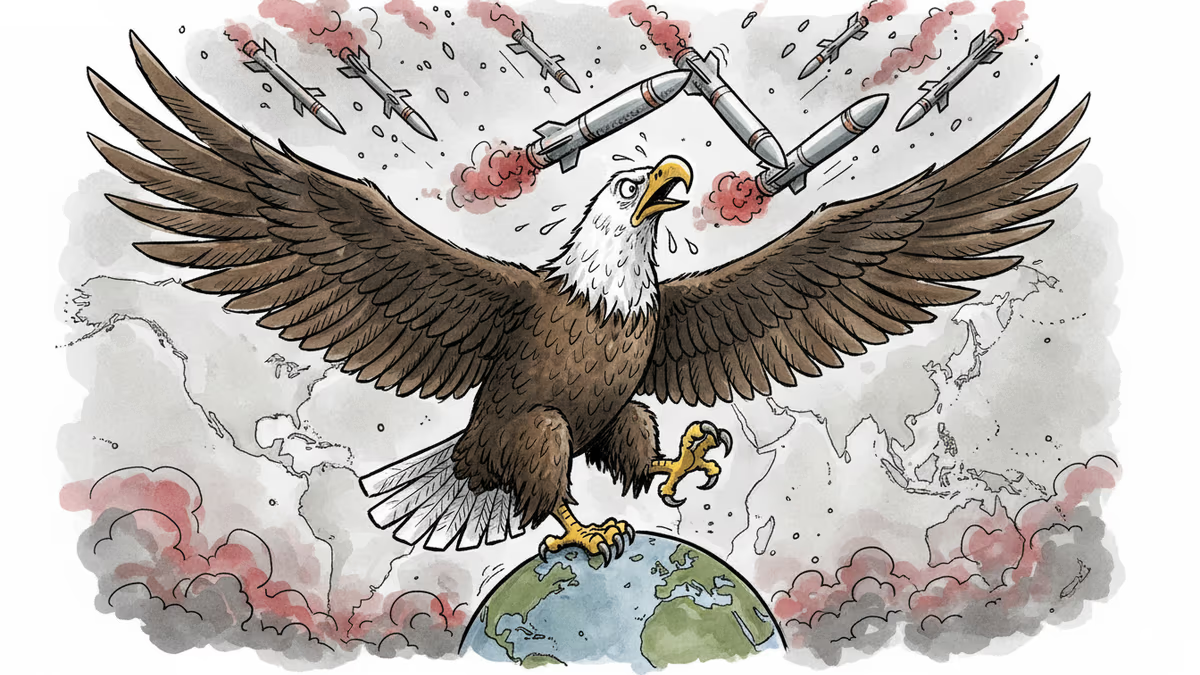
The Iran conflict exposes critical gaps in U.S. missile defense. Can finite interceptor stocks handle multiple global threats simultaneously?
Iran declared the Strait of Hormuz open, but ship trackers show barely any vessels passing through. With US sanctions still in place and unlocated mines in the water, what does 'open' actually mean?
Why our rush to judge the Iran war through historical analogies and quick takes reveals more about our cognitive biases than military reality.
Iran's closure of the Hormuz Strait threatens global oil supplies, potentially doubling gas prices and triggering economic chaos worldwide. Markets remain surprisingly calm—for now.
The Iran conflict exposes critical gaps in U.S. missile defense. Can finite interceptor stocks handle multiple global threats simultaneously?
Thoughts
Share your thoughts on this article
Sign in to join the conversation