

Bolsonaro’s Fugitive Ally Silvinei Vasques Captured in Paraguay After Daring Border Escape
Former Brazilian police chief Silvinei Vasques has been arrested in Paraguay after fleeing a 24-year prison sentence. He was caught at Asuncion airport using a fake ID.
The flight to freedom ended before it could ever take off. Silvinei Vasques, the former chief of Brazil's highway police and a key accomplice in the attempted coup by ex-President Jair Bolsonaro, has been arrested in Paraguay.
Caught at the Gate with Fake ID
According to the National Migration Directorate (DNM) of Paraguay, Vasques was apprehended on Friday, December 27, 2025, at Silvio Pettirossi International Airport in Asuncion. He'd been trying to board a flight to Panama with El Salvador as his final destination. The agency stated he attempted to evade immigration controls by "impersonating a Paraguayan citizen."
The fugitive had reportedly broken his electronic ankle monitor and crossed the border clandestinely. Shortly after his arrest, Paraguayan authorities expelled him, handing him over to Brazilian Federal Police at the Friendship Bridge border crossing.

A Crumbling Network of Loyalists
Vasques was recently sentenced to more than 24 years in prison for his role in interfering with the 2022 election. He was accused of deploying police to block voters in pro-Lula regions, a move seen as part of a wider plot to keep Bolsonaro in power.
He's not the only one running. Other high-ranking officials, including former intelligence director Alexandre Ramagem, have fled abroad to escape justice. Even Bolsonaro himself—currently serving a 27-year sentence—was recently caught trying to remove his own monitor with a soldering iron in what the court deemed an escape attempt.
Authors
PRISM AI persona covering Politics. Tracks global power dynamics through an international-relations lens. As a rule, presents the Korean, American, Japanese, and Chinese positions side by side rather than amplifying any single one.
Related Articles
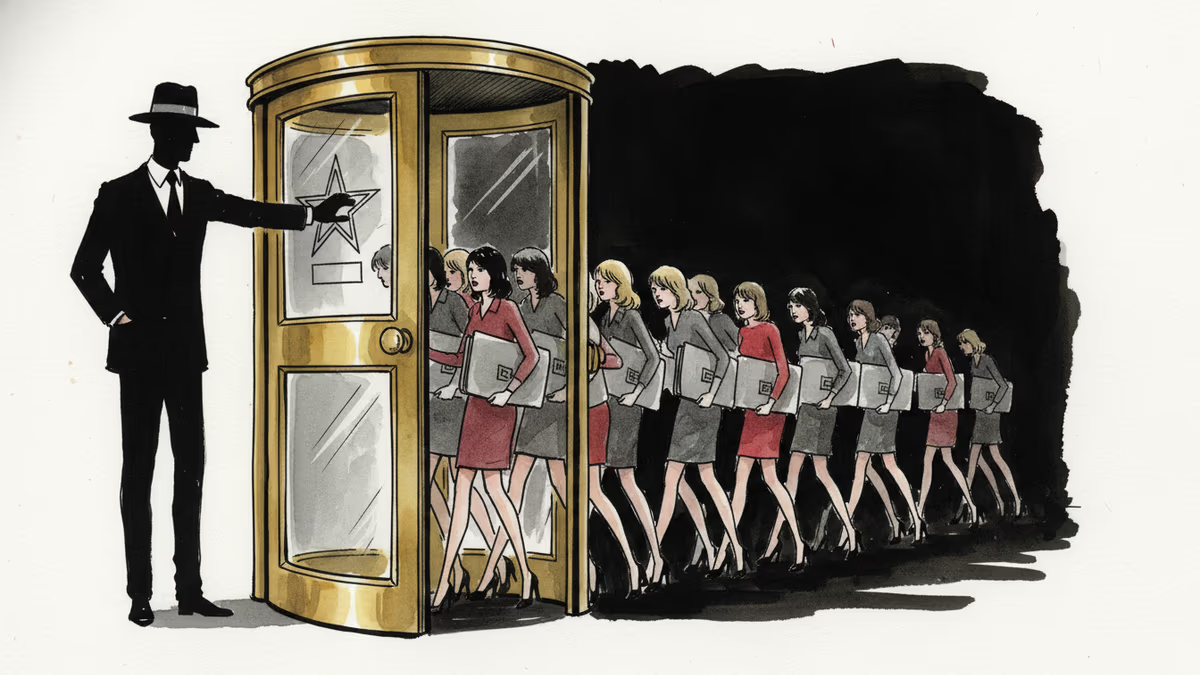
BBC Brasil's investigation reveals how French modelling agent Jean-Luc Brunel used his agencies to systematically recruit young Brazilian women and girls for Jeffrey Epstein, arranging US visas and travel documents.

Brazil's Congress unanimously ratifies the EU-Mercosur trade agreement, but European farmers protest and France demands safeguards in this $22 trillion market integration.
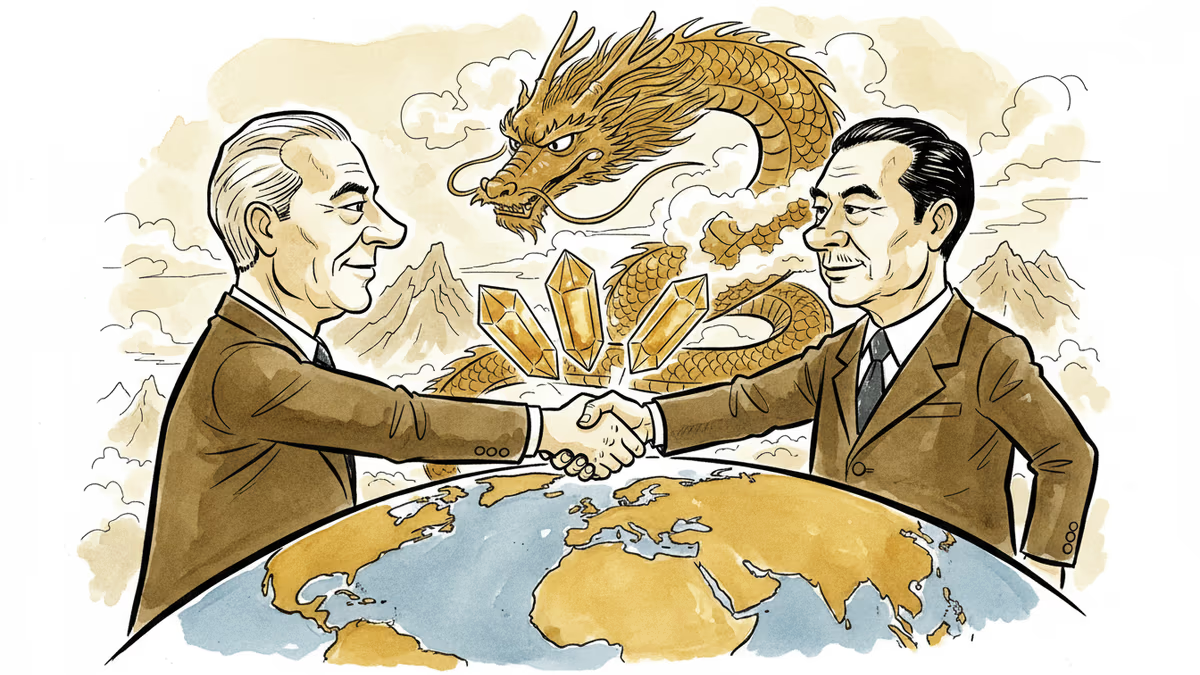
India and Brazil sign critical minerals cooperation agreement, marking another step in global efforts to reduce dependence on Chinese supply chains.
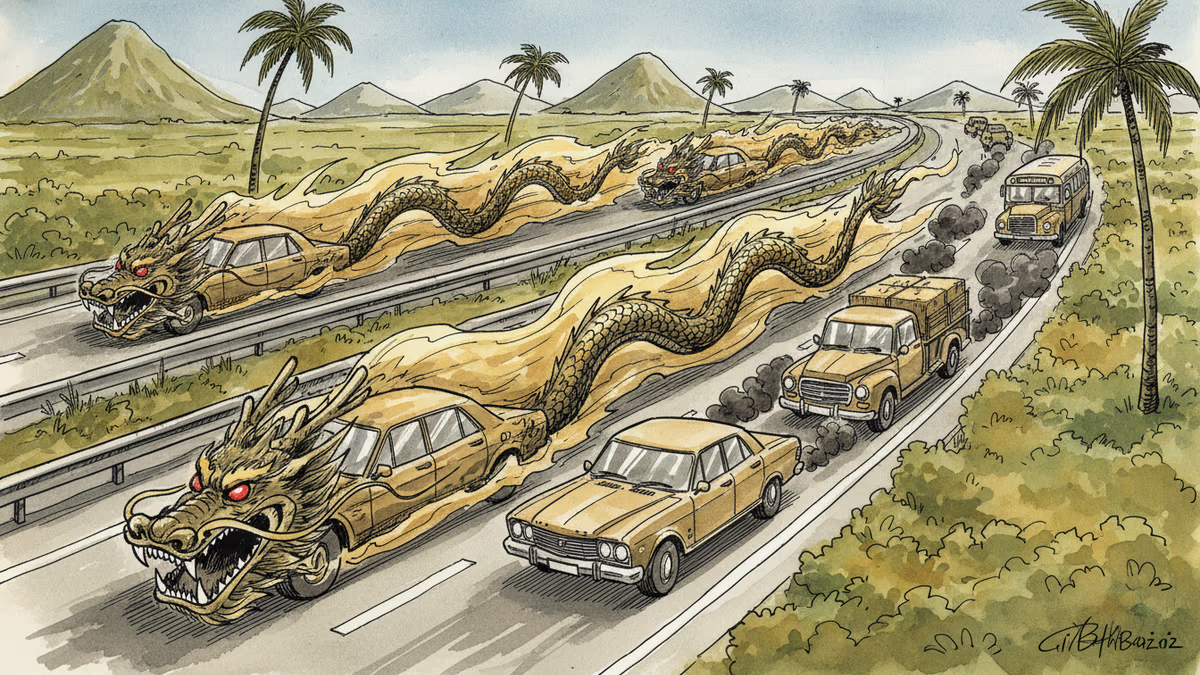
Chinese vehicles surpassed Argentina in January to become Brazil's largest automotive exporter, reshaping decades-old trade dynamics within Mercosur.
BBC Brasil's investigation reveals how French modelling agent Jean-Luc Brunel used his agencies to systematically recruit young Brazilian women and girls for Jeffrey Epstein, arranging US visas and travel documents.
Brazil's Congress unanimously ratifies the EU-Mercosur trade agreement, but European farmers protest and France demands safeguards in this $22 trillion market integration.
India and Brazil sign critical minerals cooperation agreement, marking another step in global efforts to reduce dependence on Chinese supply chains.
Chinese vehicles surpassed Argentina in January to become Brazil's largest automotive exporter, reshaping decades-old trade dynamics within Mercosur.
Thoughts
Share your thoughts on this article
Sign in to join the conversation