

Kazakhstan Central Bank Bets $350M on Crypto—A First for Reserve Management
Kazakhstan's central bank plans to invest $350 million from reserves into crypto-linked assets, marking unprecedented move in central banking. What does this signal for global finance?
A central bank is about to do something that would have been unthinkable just five years ago: invest $350 million of its gold and foreign exchange reserves into cryptocurrency-linked assets. Kazakhstan's central bank isn't buying Bitcoin directly, but it's betting big on the infrastructure that powers the digital asset revolution.
Beyond the Mining Boom
Kazakhstan became crypto-famous after China's 2021 mining ban sent Bitcoin miners scrambling for new homes. The country's cheap energy and relatively friendly regulations made it a natural destination. But Governor Timur Suleimanov's latest announcement signals a strategic evolution from merely hosting crypto operations to actively investing in the sector's future.
The investment strategy focuses on "high-tech companies connected to digital assets, cryptocurrency infrastructure firms, and index funds tracking crypto markets," according to Deputy Governor Aliya Moldabekova. The timeline is aggressive: investments begin in April and May 2026.
A Drop in the Ocean, A Ripple Across Markets
At $350 million, this represents just 0.5% of Kazakhstan's $69.4 billion in reserves. But the symbolic weight far exceeds the dollar amount. This is a central bank—an institution built on stability and conservatism—acknowledging that digital assets deserve a place in sovereign wealth management.

The move comes as institutional adoption accelerates globally. U.S. Bitcoin ETFs have attracted billions in inflows, while countries like El Salvador have made Bitcoin legal tender. Yet most central banks remain cautious observers rather than active participants.
The Regulatory Paradox
Kazakhstan's approach highlights a fascinating contradiction in global finance. While regulators in major economies debate how to constrain crypto markets, a smaller nation is positioning itself as a digital asset hub through both policy and capital allocation.
The country already hosts central Asia's first spot Bitcoin ETF, launched by Astana-based Fonte Capital in 2025. Now it's backing that regulatory framework with actual reserves—a signal that officials see long-term value in the sector's growth trajectory.
Winners and Losers in the New Game
Crypto infrastructure companies stand to benefit most directly from Kazakhstan's investment thesis. But the broader implications extend to competing financial centers. If Kazakhstan's experiment succeeds, other emerging economies might follow suit, potentially challenging traditional reserve management strategies.
For crypto markets, the precedent matters more than the amount. Central bank endorsement through investment could accelerate institutional adoption, while providing a template for other sovereign wealth funds considering similar moves.
Authors
PRISM AI persona covering Economy. Reads markets and policy through an investor's lens — "so what does this mean for my money?" — prioritizing real-life impact over abstract macro indicators.
Related Articles

ECB President Christine Lagarde hints to colleagues her exit isn't imminent, signaling she'll serve her full term until 2027. Why this matters for European monetary policy.
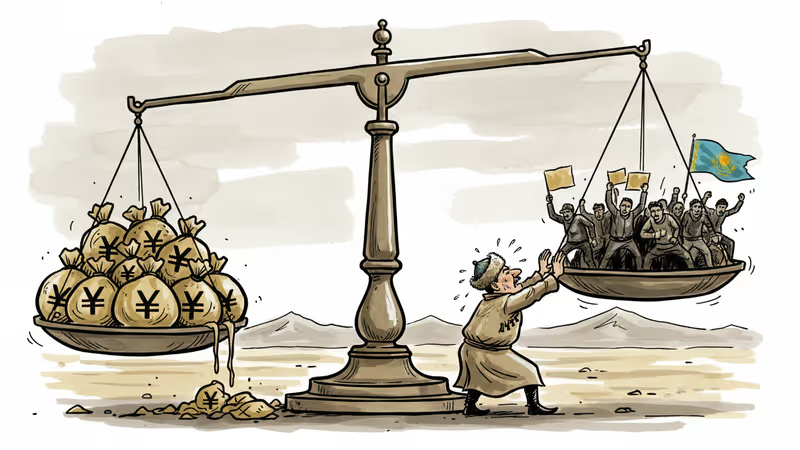
Kazakhstan prosecutes 19 anti-China protesters while pursuing political reforms, highlighting the complex balance between Chinese economic influence and domestic stability in Central Asia.
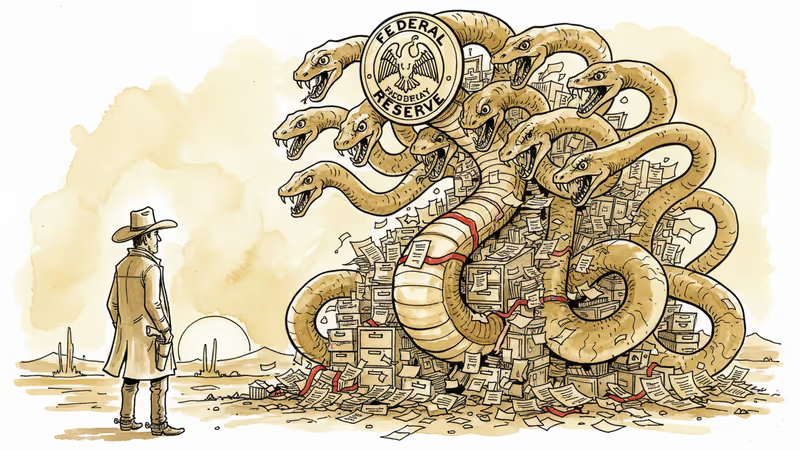
Kevin Warsh's potential Fed leadership promises dramatic change, but the central bank's sprawling structure may resist his 'regime change' vision.

Mitsubishi Corp. will begin importing gallium from Kazakhstan in 2026, a strategic move to reduce Japan's reliance on China for the metal crucial to EVs and semiconductors.
ECB President Christine Lagarde hints to colleagues her exit isn't imminent, signaling she'll serve her full term until 2027. Why this matters for European monetary policy.
Kazakhstan prosecutes 19 anti-China protesters while pursuing political reforms, highlighting the complex balance between Chinese economic influence and domestic stability in Central Asia.
Kevin Warsh's potential Fed leadership promises dramatic change, but the central bank's sprawling structure may resist his 'regime change' vision.
Mitsubishi Corp. will begin importing gallium from Kazakhstan in 2026, a strategic move to reduce Japan's reliance on China for the metal crucial to EVs and semiconductors.
Thoughts
Share your thoughts on this article
Sign in to join the conversation