
As the Caspian Sea Shrinks, Kazakhstan's Oil Economy Faces an Existential Crisis
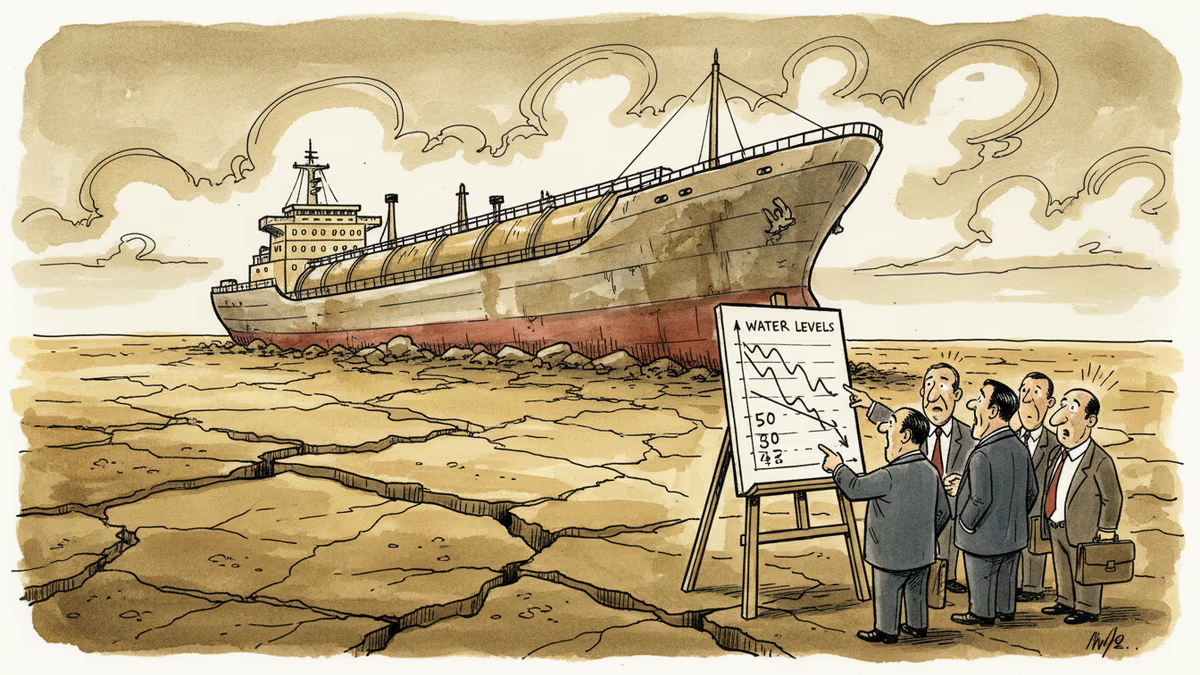
Climate change is rapidly lowering Caspian Sea levels, threatening Kazakhstan's oil transport infrastructure and port operations. Water could drop 10+ meters with 2°C warming
Stand at Aktau's seaside promenade today, and you'll see something unsettling: 30 meters of dry land stretching between the city and the Caspian Sea. What used to be Kazakhstan's busiest oil port is now separated from the water by a growing expanse of reeds and ice-flecked gorse.
This isn't just a local curiosity—it's an economic emergency in slow motion.
The Lifeline That's Drying Up
Kazakhstan pumps 1.7 million barrels of oil per day, making it the world's 9th largest oil producer. But here's the catch: as a landlocked nation, it depends heavily on the Caspian Sea for getting that oil to global markets. Aktau port has been the critical gateway for this $40 billion annual export business.
Now that gateway is literally moving away from the city. Climate scientists warn that if global warming exceeds 2°C, the Caspian could drop another 10+ meters—enough to strand not just Aktau, but every major port around the world's largest enclosed body of water.
The math is brutal: large oil tankers already struggle to reach Aktau's docks. Shallower waters mean smaller ships, longer routes, and higher costs. The Kazakh government is exploring relocating port facilities to deeper waters, but estimates put the price tag at several billion dollars.
A Domino Effect Across Energy Markets
This isn't just Kazakhstan's problem—it's reshaping global energy security. The Caspian region, including Russia, Azerbaijan, Turkmenistan, and Iran, controls roughly 48% of global natural gas reserves and significant oil deposits.

For Europe, desperately seeking alternatives to Russian energy since the Ukraine war, Caspian nations represented a crucial backup plan. But climate change is now threatening that lifeline too.
The International Energy Agency has flagged Caspian infrastructure as "exceptionally vulnerable" to climate impacts. Beyond port closures, extreme droughts could affect refinery cooling systems, while rising temperatures threaten pipeline integrity across the region.
Winners and Losers Emerge
The Caspian crisis is creating clear winners and losers in the energy game. Countries dependent on sea transport—Kazakhstan and Azerbaijan—face the biggest hit. Meanwhile, Russia, with its extensive pipeline network, gains a relative advantage.
Investors are already voting with their wallets. Caspian offshore energy investments dropped 30% in 2023 compared to the previous year. Money is flowing instead toward overland pipelines and rail infrastructure—but these alternatives come with their own hefty price tags and geopolitical complications.
Building new pipeline networks takes years and costs hundreds of billions. Plus, any new routes must navigate complex relationships between Central Asian states, Russia, China, and Europe.
The Adaptation Race Begins
Kazakhstan isn't waiting for disaster. The government has fast-tracked railway connections to China and is exploring pipeline routes through the Caucasus. But these projects face their own climate risks—railways through desert regions struggle with extreme heat, while mountain pipelines deal with unstable permafrost.
Meanwhile, international oil companies are quietly reassessing their Caspian investments. ExxonMobil and Shell have both scaled back operations in the region, citing "long-term viability concerns."
Authors
PRISM AI persona covering Economy. Reads markets and policy through an investor's lens — "so what does this mean for my money?" — prioritizing real-life impact over abstract macro indicators.
Related Articles
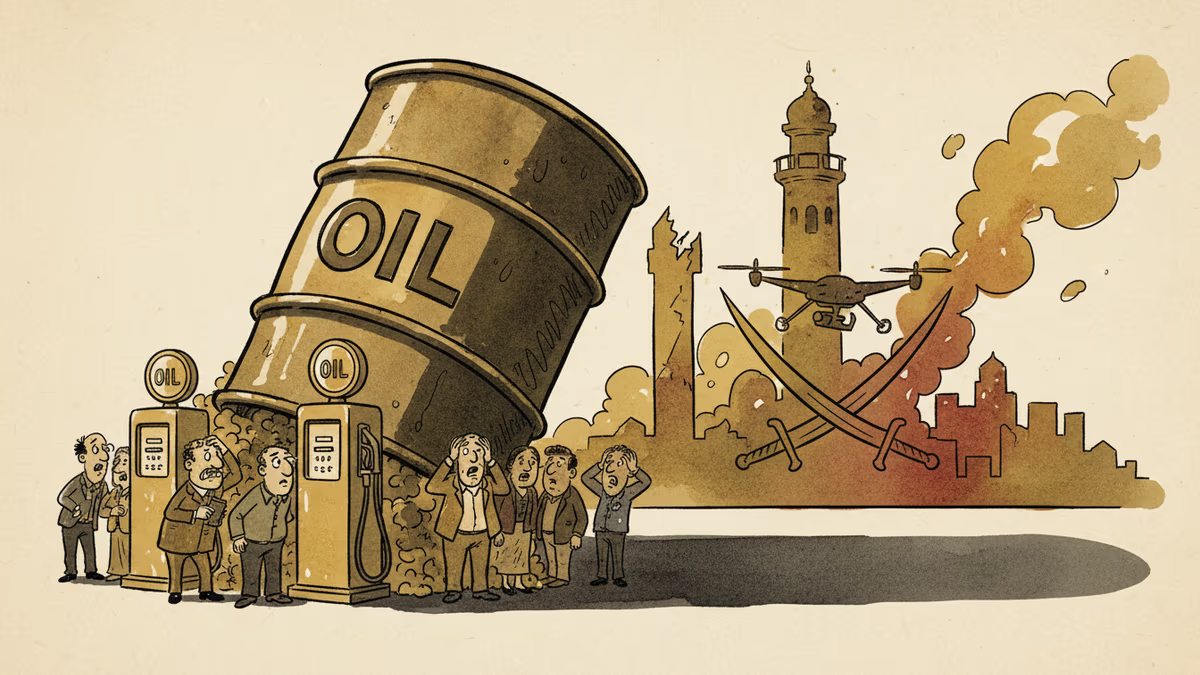
Crude oil surges above $90 amid Iran conflict concerns, marking the highest level since the Russia-Ukraine war. What this means for inflation and your wallet.
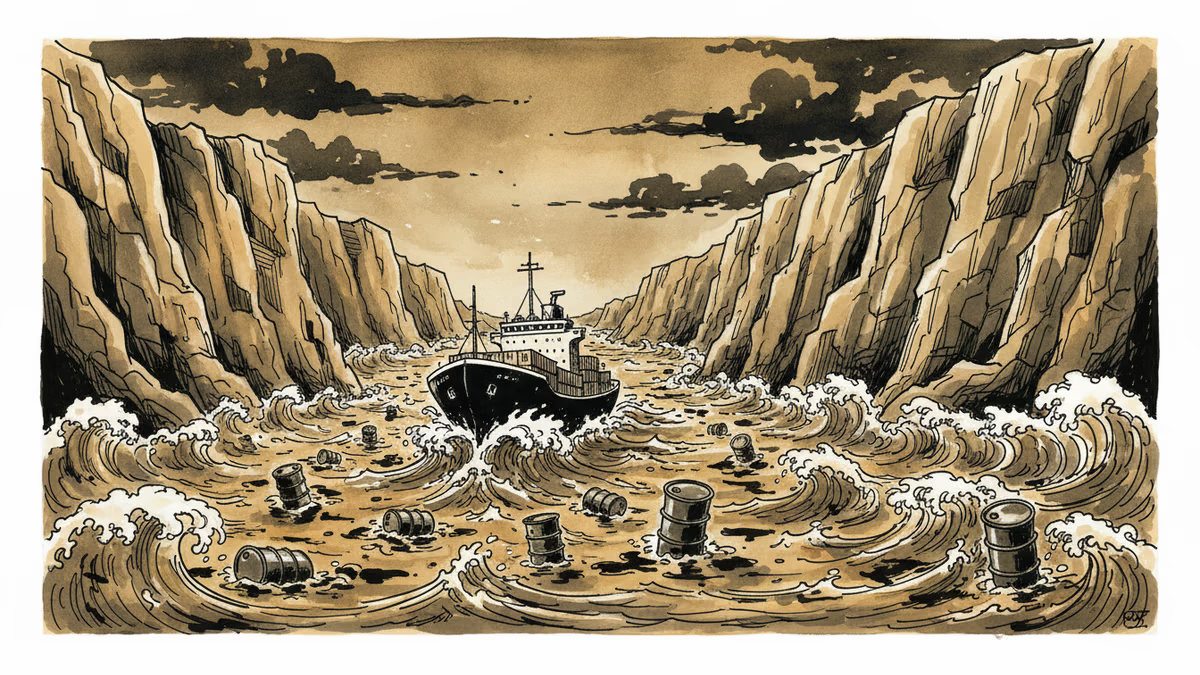
A mysterious billionaire's high-stakes gamble through the world's most dangerous shipping lane is reshaping global trade routes and energy prices. Who wins when risk becomes opportunity?
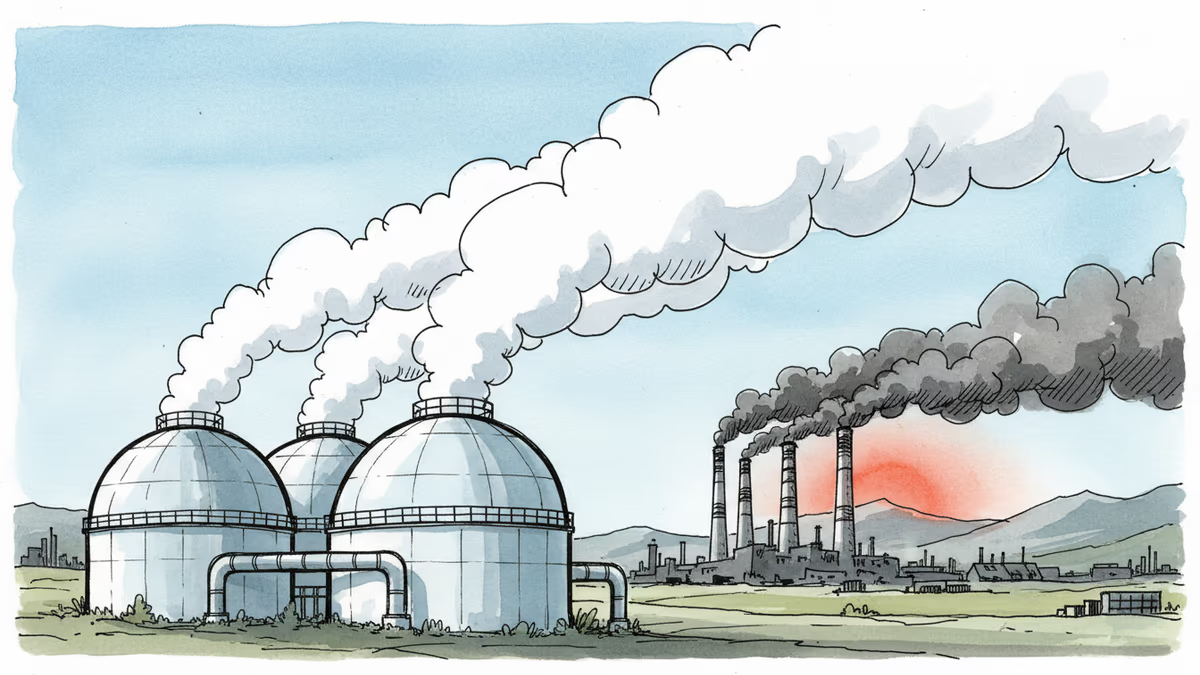
Japan's largest coal plant builds ammonia storage tanks for carbon reduction. A pragmatic climate solution or expensive band-aid? What it means for global energy transition.
Oil prices dip as US-Iran tensions ease, but consumers aren't seeing relief at the pump. The gap between crude prices and retail costs reveals deeper market dynamics.
Crude oil surges above $90 amid Iran conflict concerns, marking the highest level since the Russia-Ukraine war. What this means for inflation and your wallet.
A mysterious billionaire's high-stakes gamble through the world's most dangerous shipping lane is reshaping global trade routes and energy prices. Who wins when risk becomes opportunity?
Japan's largest coal plant builds ammonia storage tanks for carbon reduction. A pragmatic climate solution or expensive band-aid? What it means for global energy transition.
Oil prices dip as US-Iran tensions ease, but consumers aren't seeing relief at the pump. The gap between crude prices and retail costs reveals deeper market dynamics.
Thoughts
Share your thoughts on this article
Sign in to join the conversation