

Symbolic.ai News Corp AI Journalism Deal: A 90% Efficiency Leap
News Corp partners with Symbolic.ai to boost Dow Jones Newswires' productivity by 90%. Discover how this AI journalism deal transforms news production in 2026.
Can AI really slash research time by 90%? That's the bold claim as News Corp, the media empire owned by Rupert Murdoch, signs a major deal with a relatively underground startup called Symbolic.ai. According to reports from TechCrunch, this isn't just another tech experiment; it's a strategic move to integrate AI directly into the heart of financial journalism.
Symbolic.ai News Corp Deal Details
News Corp, which controls powerhouses like The Wall Street Journal and MarketWatch, will deploy Symbolic’s AI platform within its financial news hub, Dow Jones Newswires. While the company famously signed a multi-year licensing deal with OpenAI back in 2024, this new partnership focuses on internal productivity rather than external data licensing.

Symbolic.ai, co-founded by former eBay CEO Devin Wenig and Ars Technica's Jon Stokes, claims its platform assists in producing "quality journalism." The tool tackles tedious tasks like newsletter creation, audio transcription, fact-checking, and headline optimization.
The Shift from Data Licensing to Operational AI
The conglomerate's willingness to embrace AI has been evident for years. Last November, News Corp signaled it was looking to branch out its AI partnerships. By adopting Symbolic.ai, they're aiming for 90% productivity gains in complex research—a move that could redefine the cost structure of professional newsrooms.
Authors
Related Articles

OpenAI's new image editing AI commoditizes photorealistic manipulation, challenging the future of media, trust, and the very concept of photographic proof.
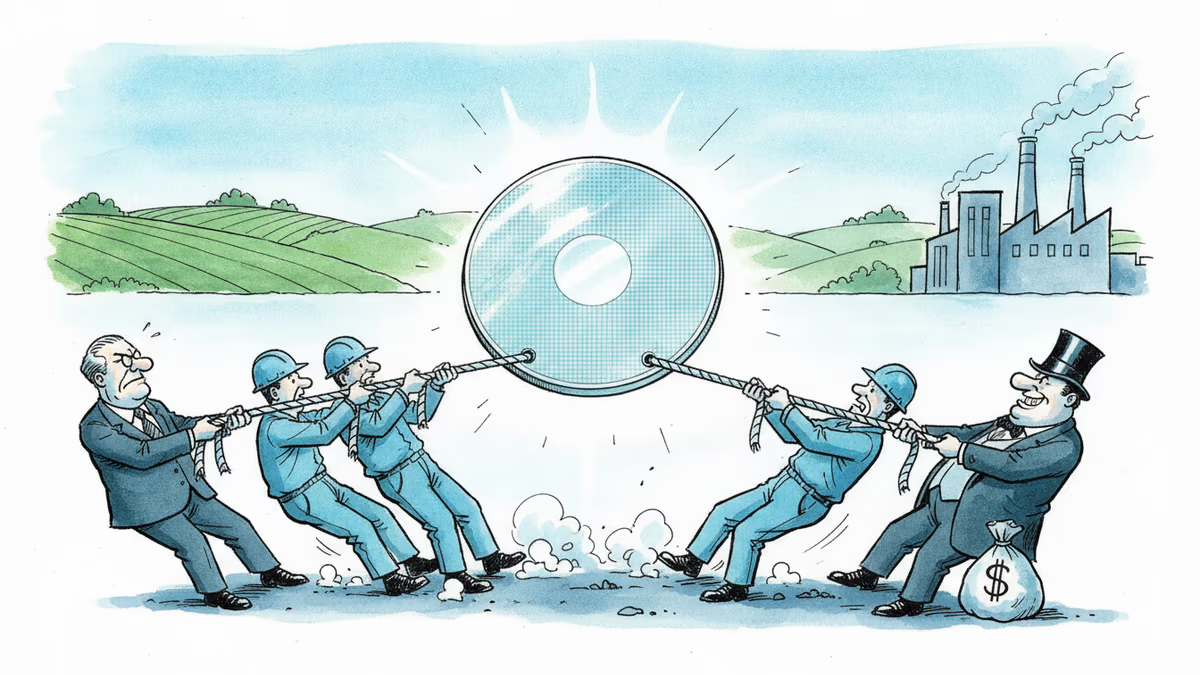
Samsung Electronics' union branch revealed that 84% of survey respondents oppose the government's roughly $290 billion (₩400 trillion) semiconductor megaproject in Gwangju. Government, management, the union and shareholders are all reading the same national project in sharply different ways.
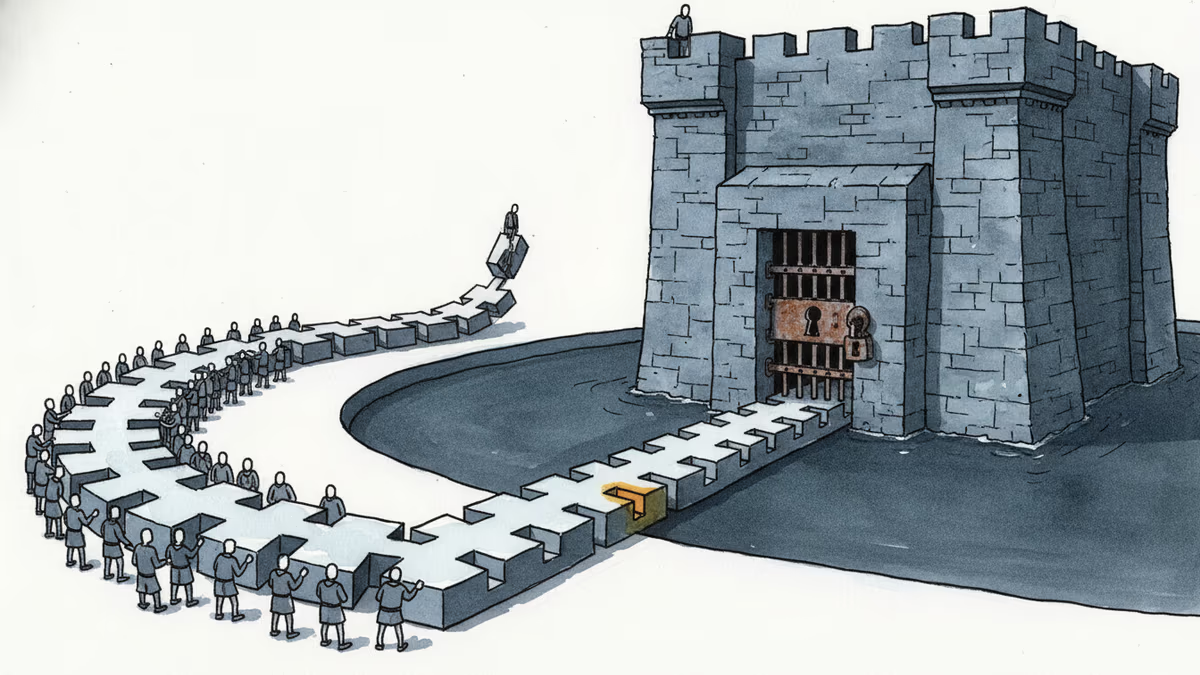
Nvidia shipped roughly a billion RISC-V cores in 2024, then announced it would run CUDA on the open standard. We break down how royalty-free instruction sets and open software stacks are trying to route around CUDA's lock-in. Part 2 of the Semiconductor Sovereignty series.
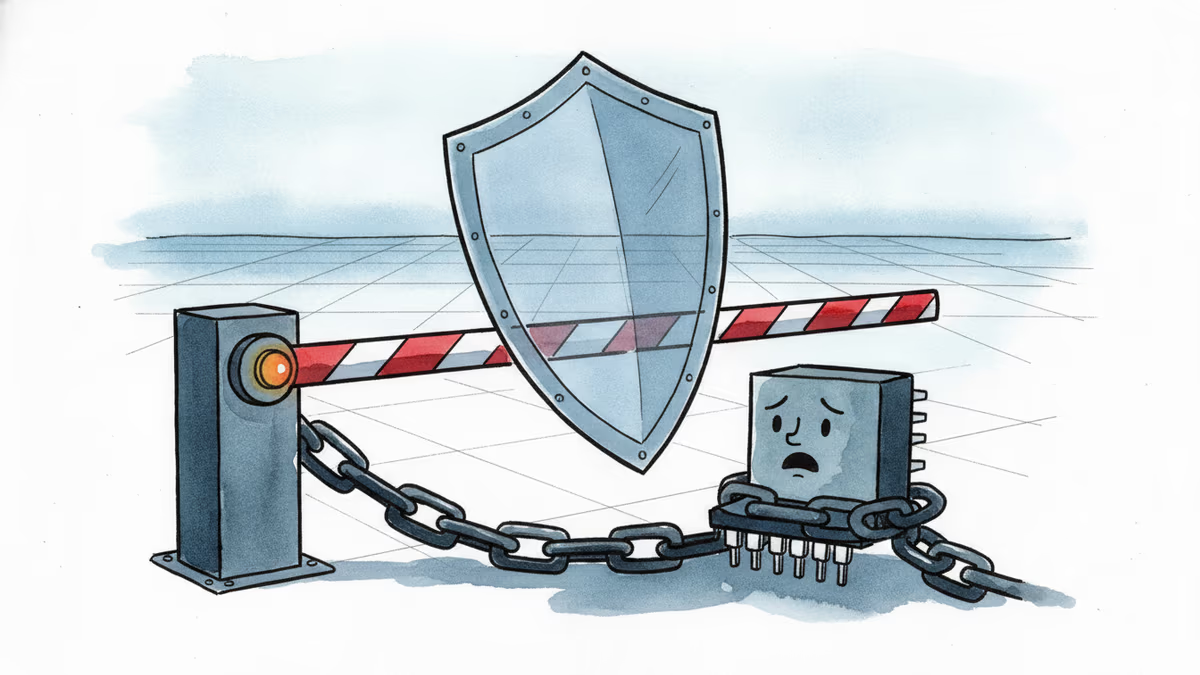
US AI-chip export controls split into three layers in the first half of 2026 — January easing, a May crackdown on circumvention, and a pending bill. Nvidia erased China from its guidance and still posted a record $81.6 billion quarter. A look at the export policy that both shields and cages it.
OpenAI's new image editing AI commoditizes photorealistic manipulation, challenging the future of media, trust, and the very concept of photographic proof.
Samsung Electronics' union branch revealed that 84% of survey respondents oppose the government's roughly $290 billion (₩400 trillion) semiconductor megaproject in Gwangju. Government, management, the union and shareholders are all reading the same national project in sharply different ways.
Nvidia shipped roughly a billion RISC-V cores in 2024, then announced it would run CUDA on the open standard. We break down how royalty-free instruction sets and open software stacks are trying to route around CUDA's lock-in. Part 2 of the Semiconductor Sovereignty series.
US AI-chip export controls split into three layers in the first half of 2026 — January easing, a May crackdown on circumvention, and a pending bill. Nvidia erased China from its guidance and still posted a record $81.6 billion quarter. A look at the export policy that both shields and cages it.
Thoughts
Share your thoughts on this article
Sign in to join the conversation