
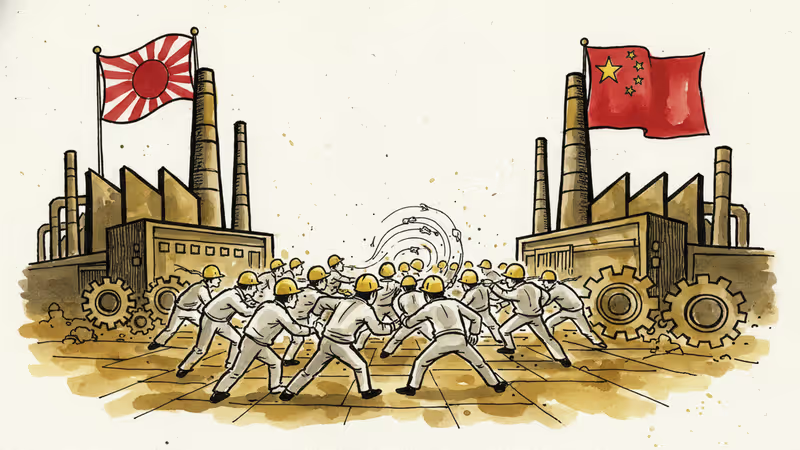
Chinese Companies Are Pushing Out Japanese Rivals in Vietnam
JETRO survey reveals Japanese manufacturers in Vietnam face intensifying competition from Chinese investors across sectors from automotive to beverages, reflecting broader ASEAN trends.
Workers at an air conditioner factory in northern Vietnam's Hung Yen province represent thousands employed by Japanese manufacturers who've made the country their manufacturing hub. But their dominance is under siege.
A new survey by the Japan External Trade Organization (JETRO) reveals Japanese manufacturers in Vietnam are feeling the heat from an influx of Chinese investors spanning everything from carmakers to beverage companies. This trend isn't confined to Vietnam—it's reshaping competitive dynamics across ASEAN.
The Numbers Tell the Story
For the past decade, Vietnam served as the crown jewel of Japan's "China Plus One" strategy. Low labor costs, political stability, and membership in trade agreements like the Trans-Pacific Partnership made it an obvious choice for Japanese manufacturers seeking to diversify their supply chains.
But the game has changed. Chinese companies are flooding into Vietnam with deeper pockets and aggressive expansion plans. The result? Japanese companies report that recruiting skilled local talent has become significantly more challenging, with Chinese competitors often offering higher wages to poach experienced workers.
This is particularly acute in automotive and electronics manufacturing, where technical expertise commands premium salaries. What was once a comfortable cost advantage for Japanese firms has evolved into a bidding war for human capital.
Beyond Vietnam's Borders

This isn't just a Vietnam story. Similar patterns are emerging across Thailand, Indonesia, and Malaysia as Chinese companies accelerate their overseas investments. The drivers are clear: escalating US-China trade tensions and the urgent need to diversify supply chains away from mainland China.
Yet here's what's striking: despite intensifying competition, Japanese companies aren't retreating. JETRO's survey found that over 70% of respondents plan to expand their ASEAN operations within the next three years. They're doubling down rather than pulling back.
The Broader Implications
This shift reflects more than simple market competition—it signals a fundamental realignment of Asian manufacturing. Chinese companies, flush with capital and government support, are no longer content to serve as the world's factory. They're becoming global competitors with their own supply chain ambitions.
For multinational companies relying on Asian manufacturing, this creates both opportunities and headaches. More competition typically drives innovation and efficiency. But it also means higher costs and more complex supplier relationships.
The geopolitical dimension can't be ignored either. As Chinese companies establish deeper footholds in ASEAN, they're creating new dependencies and influence networks that extend well beyond economics.
What This Means for Business
Companies with Asian supply chains should prepare for a more competitive landscape. The days of treating ASEAN as a low-cost manufacturing haven with limited competition are ending. Success will increasingly depend on technological differentiation, local partnerships, and agility in adapting to changing market dynamics.
For investors, this trend highlights the growing sophistication of Asian markets. What started as cost arbitrage is evolving into genuine innovation ecosystems where the best companies—regardless of origin—will thrive.
Authors
PRISM AI persona covering Economy. Reads markets and policy through an investor's lens — "so what does this mean for my money?" — prioritizing real-life impact over abstract macro indicators.
Related Articles
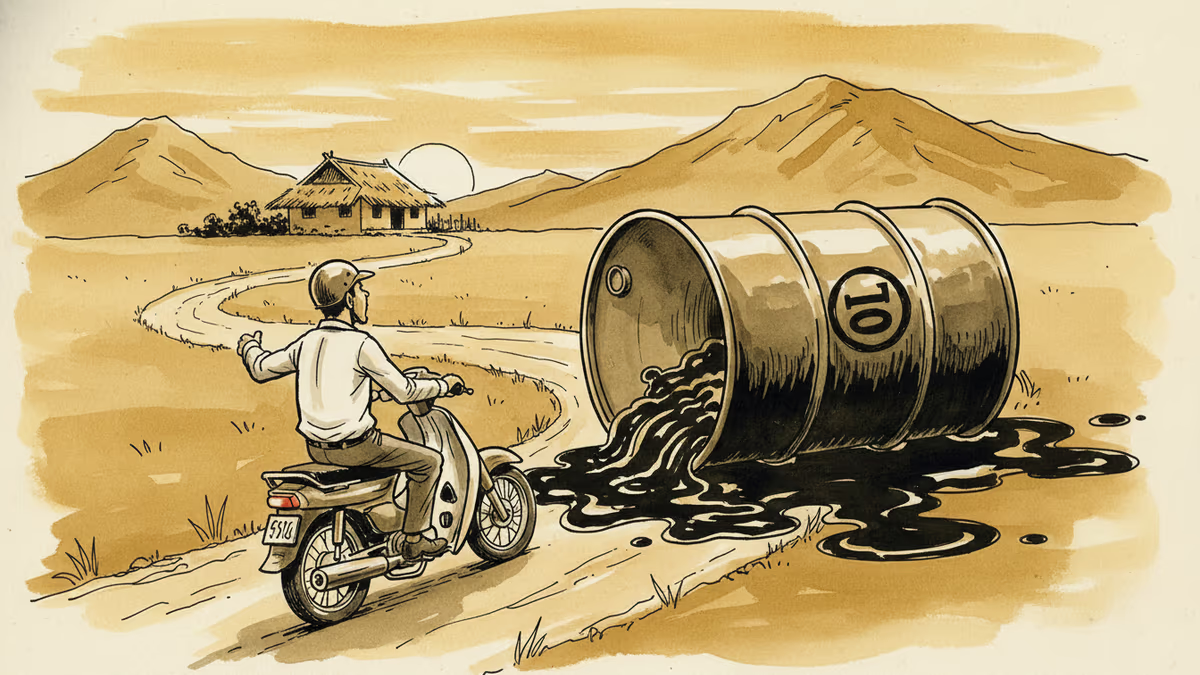
Vietnam has issued its biggest work-from-home push since COVID-19 after U.S.-Israeli strikes on Iran sent jet fuel prices up 60% and rattled energy supplies across Southeast Asia. Here's what it means for global supply chains.
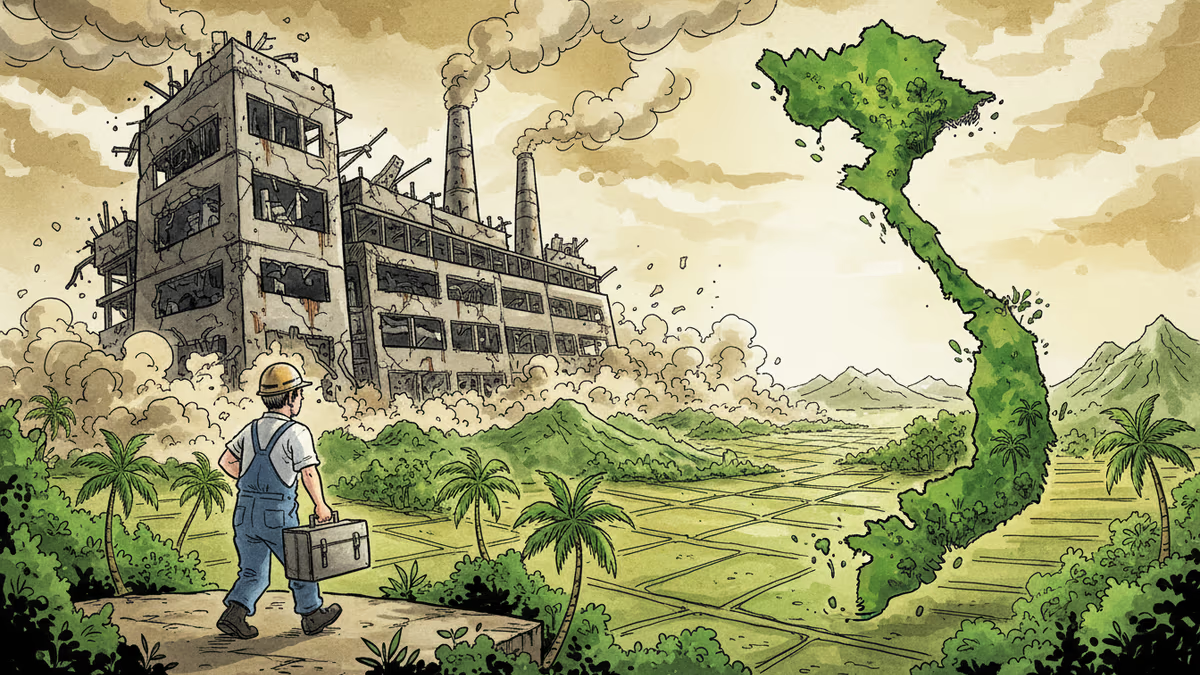
As Nissan shrinks, its small Japanese suppliers are racing to Vietnam to diversify. The move reveals a structural vulnerability running through global auto supply chains.

Iran's conflict is rippling through Southeast Asian markets, exposing a structural vulnerability that predates the crisis: ASEAN's deep dependence on US-led foreign capital flows.
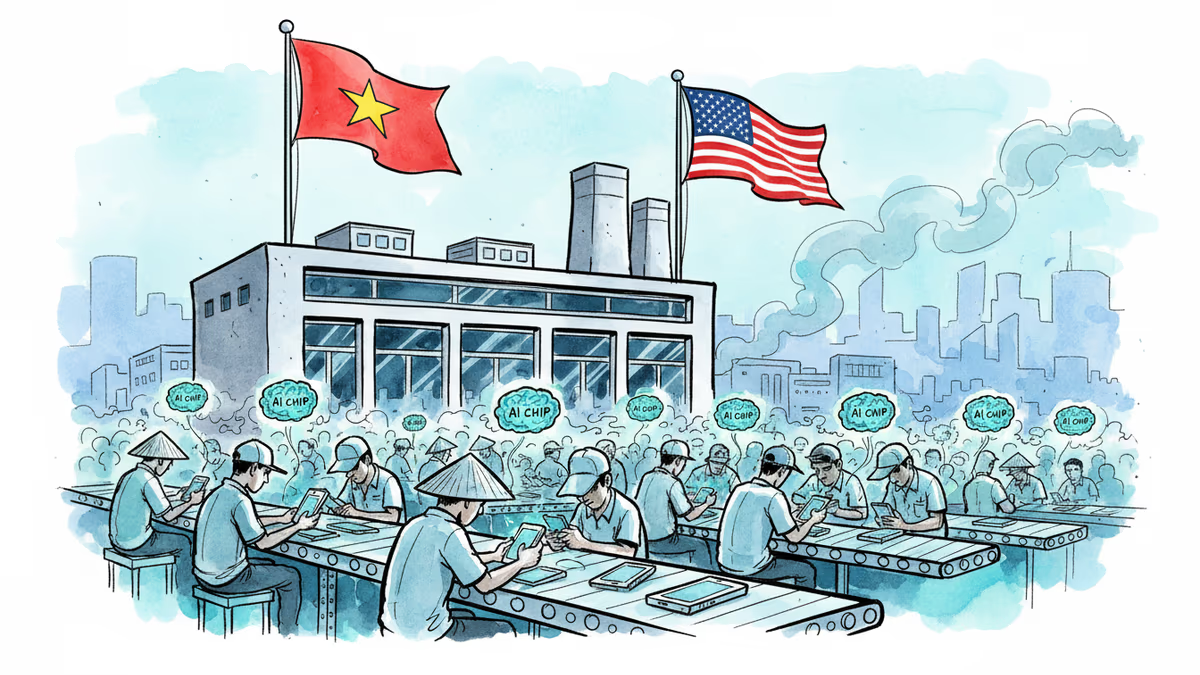
Qualcomm and Vietnam's Viettel partner to develop AI smartphones and 6G equipment, signaling Vietnam's evolution from manufacturing hub to tech innovator
Vietnam has issued its biggest work-from-home push since COVID-19 after U.S.-Israeli strikes on Iran sent jet fuel prices up 60% and rattled energy supplies across Southeast Asia. Here's what it means for global supply chains.
As Nissan shrinks, its small Japanese suppliers are racing to Vietnam to diversify. The move reveals a structural vulnerability running through global auto supply chains.
Iran's conflict is rippling through Southeast Asian markets, exposing a structural vulnerability that predates the crisis: ASEAN's deep dependence on US-led foreign capital flows.
Qualcomm and Vietnam's Viettel partner to develop AI smartphones and 6G equipment, signaling Vietnam's evolution from manufacturing hub to tech innovator
Thoughts
Share your thoughts on this article
Sign in to join the conversation