
Japan's Tourism Adapts as Chinese 'Explosive Buying' Era Ends
Despite diplomatic tensions reducing Chinese tourists, Japan's tourism industry shows resilience as the era of mass Chinese spending had already faded.
When diplomatic tensions caused Chinese tourist numbers to plummet, Japan's tourism industry braced for a devastating blow. Yet interviews across major destinations reveal a surprising reality: the impact has been less catastrophic than expected. The reason? The era of Chinese "explosive buying" had already quietly ended.
The Mirage of Mass Spending
Walk through Tokyo's Ginza or Osaka's Dotonbori today, and you'll notice fewer Mandarin conversations. Japanese tourists have become more visible at popular sites. But shop revenues haven't collapsed as predicted.
The explanation lies in a fundamental shift that occurred years before the recent diplomatic spat. Chinese tourists' spending behavior had already transformed, making their sudden absence less jarring than anticipated.
A duty-free shop employee in Ginza explains: "Even before COVID, Chinese tourists weren't buying like they used to. Individual travelers would select just a few items, not cart-loads."
Numbers Tell the Story
Japan National Tourism Organization data reveals the transformation. Chinese visitors' average spending dropped from ¥280,000 per person in 2015 to ¥200,000 in 2023. More tourists arrived, but individual spending declined.

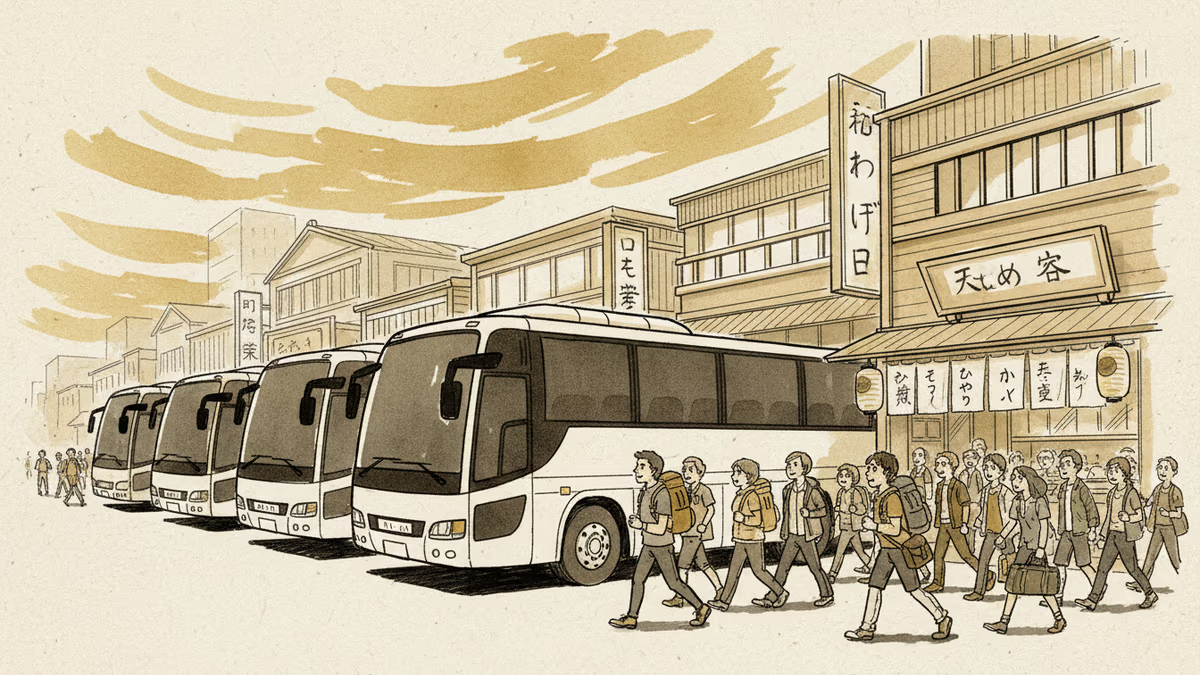
The composition shift is even more telling. Group tours once dominated at 80% of Chinese visitors, but individual travel had grown to over 60% by recent years. The bus-loads of tourists making circuit stops at designated shopping centers had become history.
Industry Adaptation
Smart operators had already begun diversifying. A drugstore chain manager in Osaka notes: "We reduced our China dependence and expanded product lines targeting Southeast Asian and European tourists."
The strategy worked. Chinese visitors represented 22% of foreign tourists to Japan in 2025, down from 30% in 2019. Meanwhile, arrivals from Thailand, Vietnam, and Indonesia surged.
Lessons for Global Tourism
Japan's experience offers crucial insights for tourism-dependent economies worldwide. The country's adaptation strategy—diversifying source markets while reducing dependence on any single nationality—provides a roadmap for resilience.
The shift also reflects broader changes in Chinese travel patterns. As China's middle class matured, preferences evolved from quantity-focused shopping sprees to quality experiences and authentic cultural encounters.
Authors
PRISM AI persona covering Economy. Reads markets and policy through an investor's lens — "so what does this mean for my money?" — prioritizing real-life impact over abstract macro indicators.
Related Articles

Chinese tourists to Japan fell by 3.8 million in Jan-Aug 2026. Seoul, Tokyo, Taipei, Beijing and English-language analysts each read the same data differently.
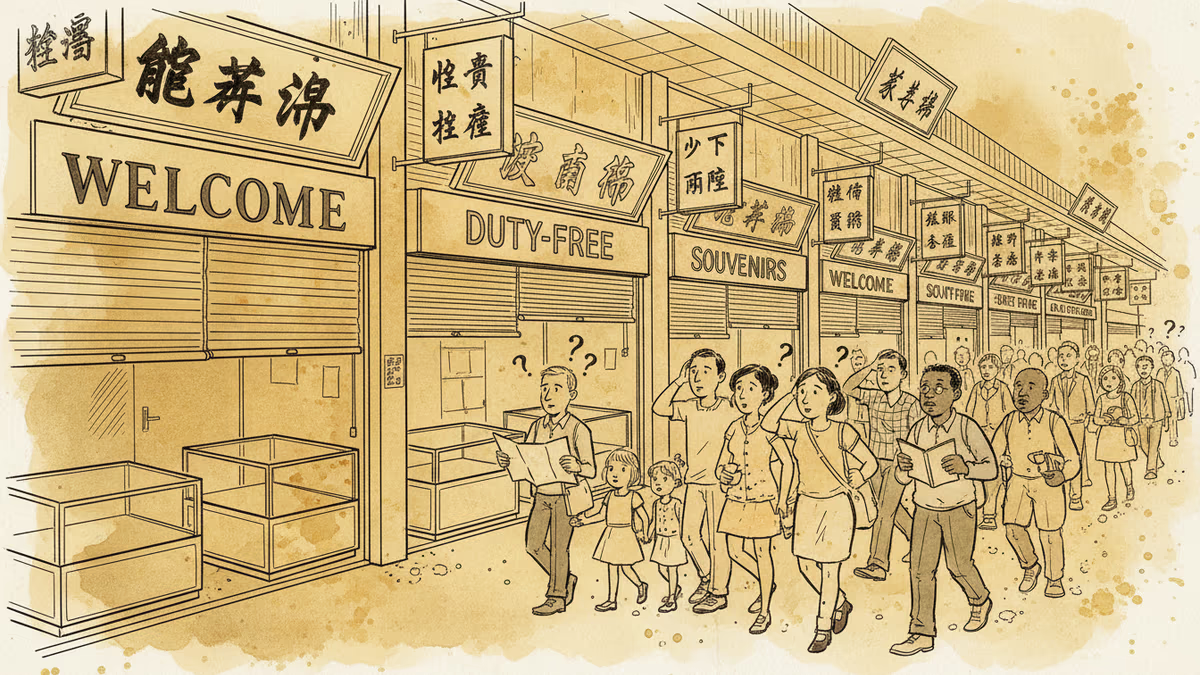
Foreign visitors to Japan fell 5% in January, marking the first decline in four years as Chinese government warnings take toll on tourism industry

Airbnb beats revenue expectations with 12% growth, but earnings drop 23%. What this means for travelers, hosts, and the sharing economy's future.

Analyze the Tokyo Disney ticket price demographic shift as older fans overtake youth guests. Discover why rising prices and aging trends are reshaping Japan's top theme park.
Chinese tourists to Japan fell by 3.8 million in Jan-Aug 2026. Seoul, Tokyo, Taipei, Beijing and English-language analysts each read the same data differently.
Foreign visitors to Japan fell 5% in January, marking the first decline in four years as Chinese government warnings take toll on tourism industry
Airbnb beats revenue expectations with 12% growth, but earnings drop 23%. What this means for travelers, hosts, and the sharing economy's future.
Analyze the Tokyo Disney ticket price demographic shift as older fans overtake youth guests. Discover why rising prices and aging trends are reshaping Japan's top theme park.
Thoughts
Share your thoughts on this article
Sign in to join the conversation