

Japan to Urge Large Firms to Cover Supply Chain Cybersecurity Costs as Attacks Mount
Japan's government is urging large companies to shoulder cybersecurity costs across their supply chains. The move follows major hacks and aims to bolster defenses for financially strained SMEs.
Who pays when your smallest supplier gets hacked? In Japan, the answer may soon be everyone in the supply chain. The Japanese government plans to urge large corporations to pass on and share the costs of cybersecurity across their entire networks, a direct response to a wave of attacks that exploited vulnerabilities at smaller partner firms.
The Weakest Link Problem
According to a Nikkei report on December 25, 2025, Tokyo's policy shift is driven by the growing realization that small and midsize enterprises (SMEs) have become the soft underbelly of Japan's industrial ecosystem. Lacking the financial resources to keep up with sophisticated cyber threats, these SMEs are seen as a primary entry point for attackers. High-profile incidents, such as the breaches at beverage giant Asahi and office-supply retailer Askul, which reportedly stemmed from their supply chains, have highlighted the urgent need for a new approach.
A New Standard for Shared Responsibility
The government intends to establish a new standard for cybersecurity preparedness. This framework is expected to go beyond individual company audits and encourage—or pressure—large corporations to take financial responsibility for the security posture of their smaller suppliers. In essence, it treats supply chain cybersecurity as a form of collective insurance.
For major companies, this could mean new operational costs and oversight burdens. However, the long-term benefit is a more resilient supply chain, shielding them from the massive financial and reputational damage a single breach can cause. For SMEs, it offers a financial lifeline but will likely come with new compliance obligations to meet the standards set by their larger partners.
This content is AI-generated based on source articles. While we strive for accuracy, errors may occur. We recommend verifying with the original source.
Related Articles

South Korea's LS Eco Energy is investing $19 million in Vietnam's rare-earth sector, a strategic move to diversify critical mineral supply chains away from China for EVs and robotics.
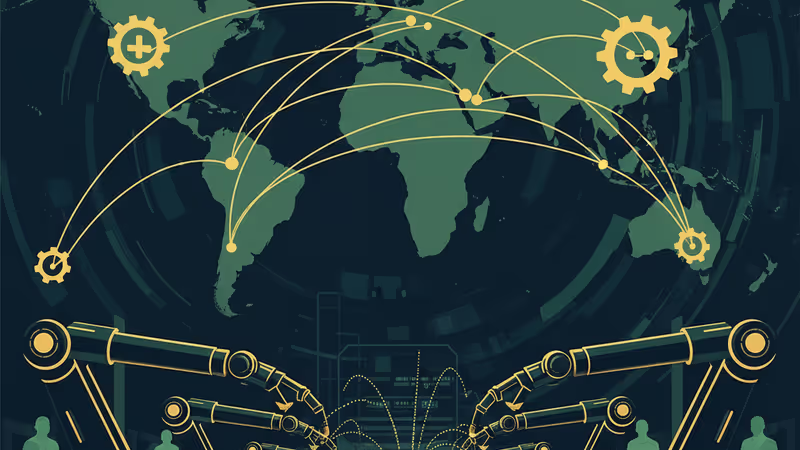
The fallout from President Donald Trump's "reciprocal" tariffs is hitting footwear manufacturers in Vietnam and Indonesia hard. Canceled investments and shrinking margins signal growing distress in the global supply chain.

In the shadow of the AI chip war, Chinese exports of power and cooling equipment for data centers are surging. According to Nikkei Asia, the global AI boom is creating a major opportunity for these suppliers despite geopolitical tensions.
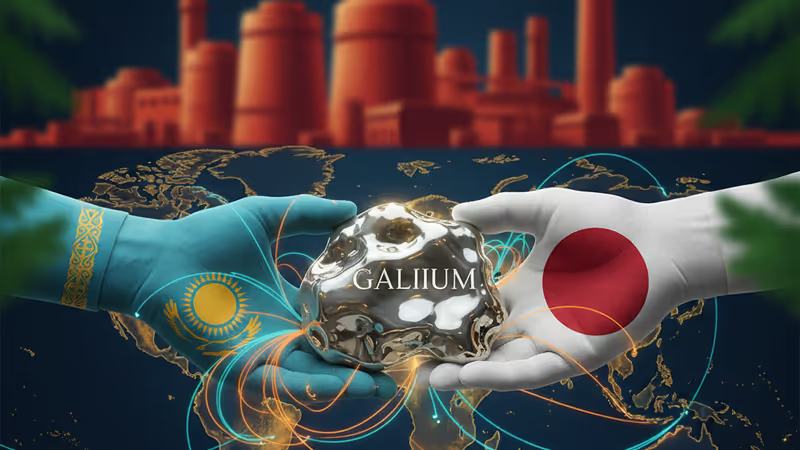
Mitsubishi Corp. will begin importing gallium from Kazakhstan in 2026, a strategic move to reduce Japan's reliance on China for the metal crucial to EVs and semiconductors.
South Korea's LS Eco Energy is investing $19 million in Vietnam's rare-earth sector, a strategic move to diversify critical mineral supply chains away from China for EVs and robotics.
The fallout from President Donald Trump's "reciprocal" tariffs is hitting footwear manufacturers in Vietnam and Indonesia hard. Canceled investments and shrinking margins signal growing distress in the global supply chain.
In the shadow of the AI chip war, Chinese exports of power and cooling equipment for data centers are surging. According to Nikkei Asia, the global AI boom is creating a major opportunity for these suppliers despite geopolitical tensions.
Mitsubishi Corp. will begin importing gallium from Kazakhstan in 2026, a strategic move to reduce Japan's reliance on China for the metal crucial to EVs and semiconductors.