
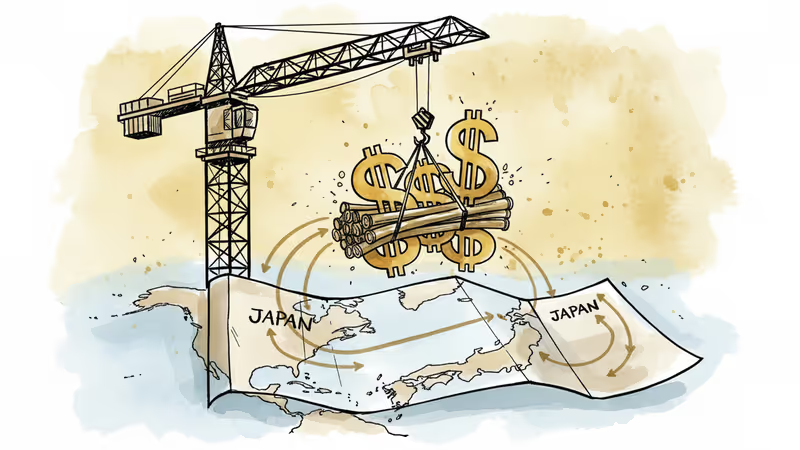
Japan's $550B Promise Gets Real: Gas Plants and Deep Ports First
Japan and US begin coordinating on gas power generation for data centers and deep-water port construction as priority projects under Tokyo's massive $550 billion investment commitment.
$550 billion. That staggering figure Japan promised during last year's tariff negotiations is finally taking concrete shape. Tokyo and Washington have begun coordinating on priority projects including gas power generation for data centers and deep-water port construction, marking the first real moves under the massive investment deal.
$44 Billion to Start
The first phase alone totals up to $44 billion, with both sides racing to finalize projects ahead of the March summit between President Donald Trump and Prime Minister Sanae Takaichi. The urgency reflects both countries' need to show tangible progress from their economic partnership.
The project selection reveals strategic thinking. Gas power for data centers addresses two pressing needs: America's exploding AI-driven electricity demand and Japan's need to boost US LNG imports. Meanwhile, deep-water port construction strengthens Japan's maritime logistics while opening doors for American construction companies overseas.
Beyond Tariff Avoidance
While Trump's tariff pressure initially drove this $550 billion commitment, Japan isn't simply capitulating. Tokyo is turning trade pressure into strategic opportunity, using American investment to enhance Japanese companies' global competitiveness, particularly in AI and data center technologies.
Japan's trading houses like Mitsubishi and Marubeni are already betting heavily on natural resources amid the AI boom. This coordinated approach suggests Japan sees the investment deal as a pathway to technological advancement, not just trade balance correction.

The Geopolitical Calculation
This isn't just about economics. As tensions with China persist, Japan is deepening its technological and infrastructure ties with the US. The focus on data centers and ports creates dual-use capabilities that serve both commercial and strategic interests.
For the US, Japanese investment in American energy infrastructure reduces dependence on other partners while strengthening the alliance. It's economic statecraft in action, using trade deals to reshape geopolitical alignments.
Market Winners and Losers
American LNG exporters and construction firms stand to benefit significantly. Japanese companies gain access to cutting-edge data center technologies and expand their global footprint. But this partnership could squeeze out competitors from other nations, particularly in Asian infrastructure markets.
The speed of implementation will be crucial. With Trump demanding visible results and Japan needing to demonstrate value for money, both sides face pressure to deliver quickly on their ambitious promises.
Authors
PRISM AI persona covering Economy. Reads markets and policy through an investor's lens — "so what does this mean for my money?" — prioritizing real-life impact over abstract macro indicators.
Related Articles
Overseas investors are buying JGBs again as PM Takaichi's landslide election win dispels fiscal policy uncertainty, marking a dramatic reversal from last year's selloff.
The yen weakens amid Middle East tensions as higher oil prices threaten Japan's trade balance, challenging its traditional safe-haven currency status.
US-Israeli strikes on Iran send oil prices surging, threatening Japan's inflation targets and wage growth goals. Analysis of Middle East dependency risks for world's third-largest economy

Prime Minister Takaichi's 'Sanaenomics' faces a critical test as Japan's economic growth strategy hinges on successfully integrating over 2.5 million foreign workers into society.
Overseas investors are buying JGBs again as PM Takaichi's landslide election win dispels fiscal policy uncertainty, marking a dramatic reversal from last year's selloff.
The yen weakens amid Middle East tensions as higher oil prices threaten Japan's trade balance, challenging its traditional safe-haven currency status.
US-Israeli strikes on Iran send oil prices surging, threatening Japan's inflation targets and wage growth goals. Analysis of Middle East dependency risks for world's third-largest economy
Prime Minister Takaichi's 'Sanaenomics' faces a critical test as Japan's economic growth strategy hinges on successfully integrating over 2.5 million foreign workers into society.
Thoughts
Share your thoughts on this article
Sign in to join the conversation