
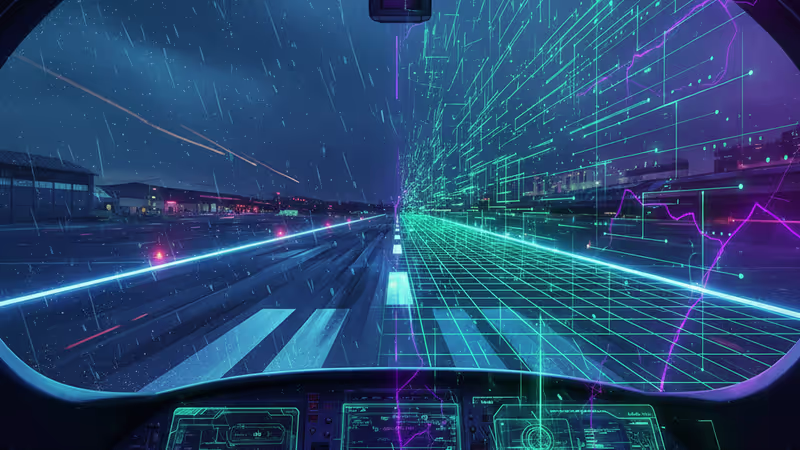
Japan's Air Force Adopts VR Simulators for Next-Gen Pilot Training Amid Defense Spending Surge
Japan's Air Self-Defense Force is adopting VR flight simulators from Kanematsu as part of a national defense spending increase, signaling a shift to next-gen pilot training technology.
Japanese trading house Kanematsu is set to deliver ground-based training systems, including virtual reality (VR) flight simulators, to Japan's Air Self-Defense Force (JASDF). The move comes as Japanese companies increasingly seek to capitalize on the nation's stepped-up defense spending.
According to a report from Nikkei, the VR systems will be supplied alongside new T-6 trainer aircraft. The JASDF chose the T-6, developed by U.S.-based Textron Aviation Defense, for its next generation of trainers. This integrated approach combines physical aircraft with advanced virtual training environments.
The deal is part of a broader trend where Japanese corporations are proposing advanced solutions, from AI to drones, to meet the country's modernizing defense needs. With the government increasing its defense budget, it’s creating a significant new market for the nation’s tech sector.
**PRISM Insight:** This isn't just about modernizing equipment; it's a strategic pivot in military readiness. By integrating VR, the JASDF can train pilots for complex, high-risk scenarios at a fraction of the cost and risk of live flights. This shift from pure hardware acquisition to data-driven, simulation-based training acts as a force multiplier, allowing Japan to develop more proficient pilots faster and more efficiently.
This content is AI-generated based on source articles. While we strive for accuracy, errors may occur. We recommend verifying with the original source.
Related Articles

A wave of cyberattacks hits Japan, impacting giants like Asahi, ASKUL, and Huis Ten Bosch. The breach exposed data of over 2.3 million people and caused a 20% sales drop for Asahi, signaling a new era of operational sabotage.
Japan's H3 rocket failed to deliver the Michibiki No. 5 geolocation satellite into orbit on Monday after a second-stage engine failure. The setback deals a blow to JAXA's plan for a sovereign navigation system to enhance GPS.

Japan's next-generation H3 rocket failed 30 minutes after its December 22 launch, following a second-stage engine malfunction. The setback impacts Japan's commercial space launch ambitions.
Japan's seventh attempt to launch its next-generation H3 rocket has failed. JAXA reported a 'premature end of engine burn' in the second stage, leading to the mission's failure. The incident is a significant setback for Japan's space program.