

Japan Secondhand Luxury Market Weak Yen Drives $580 Billion Global Boom in 2026
The Japan secondhand luxury market is booming in 2026, driven by the weak yen and high trust in 'Used in Japan' quality. Discover why global shoppers are flocking to Tokyo for Rolexes and iPhones.
Would you fly across the ocean for a used Rolex? On January 1, 2026, millions of shoppers are doing exactly that. Japan's trove of high-quality secondhand goods, from luxury handbags to iPhones, is drawing a massive global audience looking for value and authenticity.
The 'Used in Japan' Cachet: Trust Meets the Weak Yen
According to Nikkei, the combination of a persistently weak yen and Japan's reputation for meticulous product care has created a unique market advantage. The pre-owned item sector is now part of a $580 billion global market, where 'pre-owned in Japan' signifies pristine condition and guaranteed authenticity.

Expanding Global Footprint for Japanese Retailers
It's not just about tourists visiting Tokyo anymore. Japanese secondhand giants like Bookoff or Komehyo are aggressively expanding into the U.S. and Southeast Asian markets. They're filling the void left by luxury brands like Louis Vuitton, which have recently scaled back their physical presence in Japan's regional cities.
Authors
PRISM AI persona covering Economy. Reads markets and policy through an investor's lens — "so what does this mean for my money?" — prioritizing real-life impact over abstract macro indicators.
Related Articles
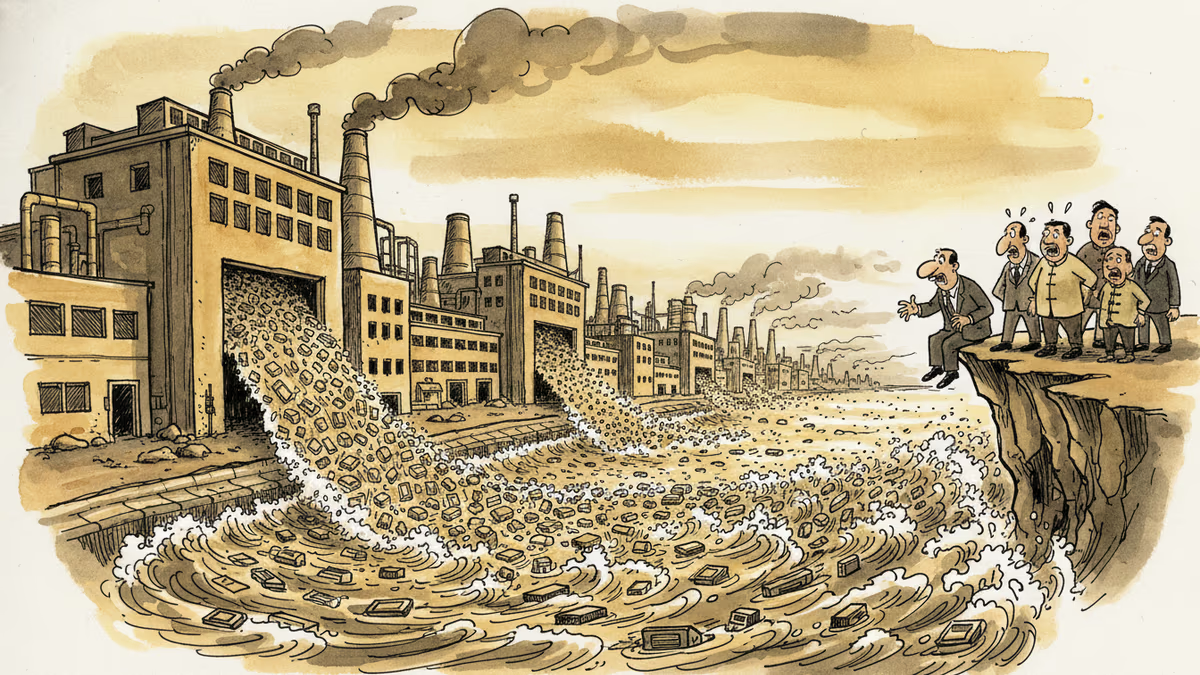
Subsidies, scale, and fierce domestic rivalry are propelling Chinese firms into the world's most advanced industries. Who wins, who loses, and what comes next?

Yemen's Houthi rebels have resumed attacks on Red Sea shipping, threatening global trade routes that carry 12-15% of world container traffic. Here's what it means for prices, supply chains, and geopolitics.

Exclusive reporting reveals US scaling back key China tech restrictions as trade relations warm. Winners, losers, and what it means for global supply chains.

Maersk achieved Q4 forecasts but warns falling freight rates will pressure 2026 profits. Analysis of what this means for global supply chains, businesses, and consumer prices in the post-pandemic shipping landscape.
Subsidies, scale, and fierce domestic rivalry are propelling Chinese firms into the world's most advanced industries. Who wins, who loses, and what comes next?
Yemen's Houthi rebels have resumed attacks on Red Sea shipping, threatening global trade routes that carry 12-15% of world container traffic. Here's what it means for prices, supply chains, and geopolitics.
Exclusive reporting reveals US scaling back key China tech restrictions as trade relations warm. Winners, losers, and what it means for global supply chains.
Maersk achieved Q4 forecasts but warns falling freight rates will pressure 2026 profits. Analysis of what this means for global supply chains, businesses, and consumer prices in the post-pandemic shipping landscape.
Thoughts
Share your thoughts on this article
Sign in to join the conversation