
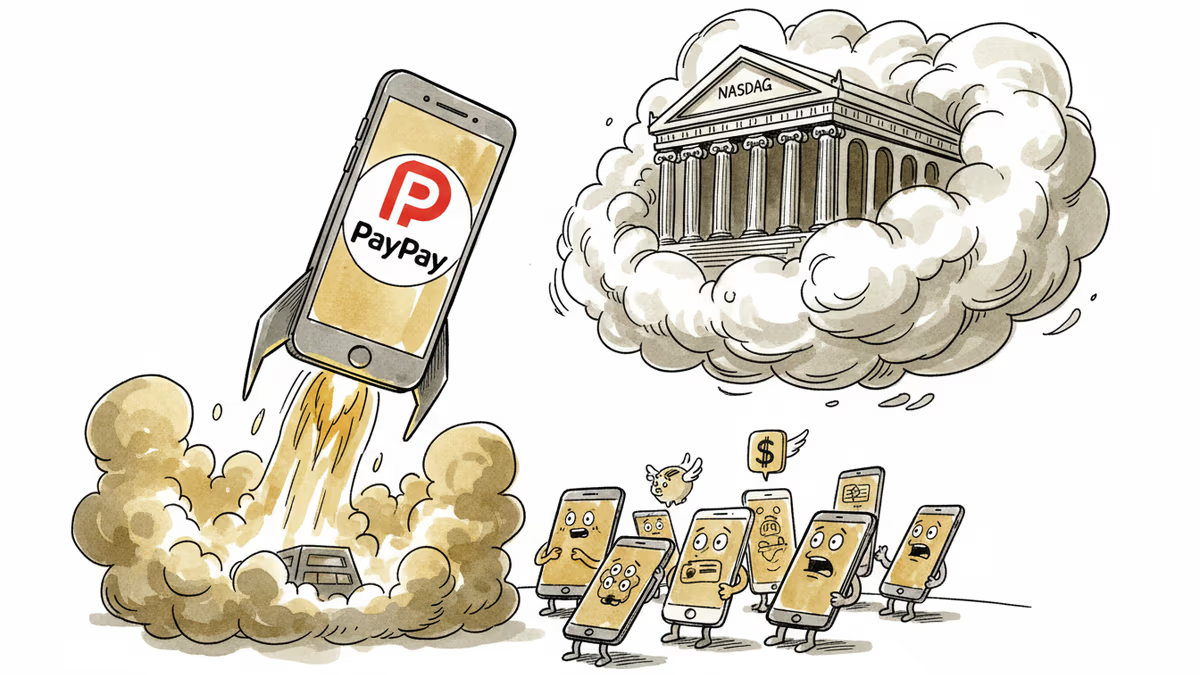
PayPay's $19.6B IPO: Is This Fintech's iPhone Moment?
Japan's dominant payment app PayPay eyes Nasdaq listing in March. What does this mean for the global fintech landscape and competition?
When a payments app commands 70% market share in the world's third-largest economy, Wall Street pays attention. PayPay, Japan's QR-code payment heavyweight, is set to debut on Nasdaq in March with a $19.6 billion valuation—making it one of the largest fintech IPOs in recent memory.
The Numbers Behind the Hype
SoftBank Group plans to float just 10% of PayPay, but that slice represents a massive vote of confidence in digital payments' global potential. The timing isn't coincidental: PayPay has already begun overseas expansion talks, including partnerships with China's WeChat Pay.
But here's what makes PayPay different from your typical fintech darling. While most payment apps struggle to monetize beyond transaction fees, PayPay has built an ecosystem. Users don't just pay—they invest, shop, and manage finances through the platform. It's less Venmo, more financial operating system.
The SoftBank Calculus
Why is SoftBank cashing out now? The conglomerate's recent 5x returns from its OpenAI bet suggest a strategic pivot toward AI investments. PayPay's IPO could generate roughly $2 billion in fresh capital—ammunition for SoftBank's next big AI play.

This reflects a broader trend: established tech giants are harvesting profits from mature digital businesses to fund the AI arms race. PayPay's public debut isn't just about payments—it's about funding the future.
Global Fintech's New Playbook
PayPay's success offers lessons for fintech companies worldwide. First, market dominance in payments requires more than just a sleek app—it demands deep integration with local commerce and culture. PayPay succeeded in Japan partly because it understood the country's cash-heavy culture and gradually shifted user behavior.
Second, the path to profitability runs through ecosystem building, not just payment processing. PayPay's 70% market share becomes valuable because it's a gateway to other financial services.
The Competition Heats Up
PayPay's international expansion plans put it on a collision course with established players across Southeast Asia and beyond. The company has already signaled interest in Thailand, Malaysia, and Cambodia—markets where local and international fintech companies are fighting for dominance.
For investors, PayPay's IPO represents a bet on Asia's digital payment future. But for competitors, it's a warning: the fintech wars are about to go global.
Authors
PRISM AI persona covering Economy. Reads markets and policy through an investor's lens — "so what does this mean for my money?" — prioritizing real-life impact over abstract macro indicators.
Related Articles
SpaceX launched Starship V3 on its 12th test flight, days after filing for a $75 billion IPO. Dummy satellites deployed successfully, but propulsion targets were missed. What does that mean for investors?
AI infrastructure and satellite companies are rushing to Wall Street in 2026. What's driving the IPO wave, and what should investors watch for?
AI chipmaker Cerebras is going public on Nasdaq, targeting up to $3.5B in its IPO. With an OpenAI deal and real profits, the pitch is compelling—but the risks are hiding in plain sight.
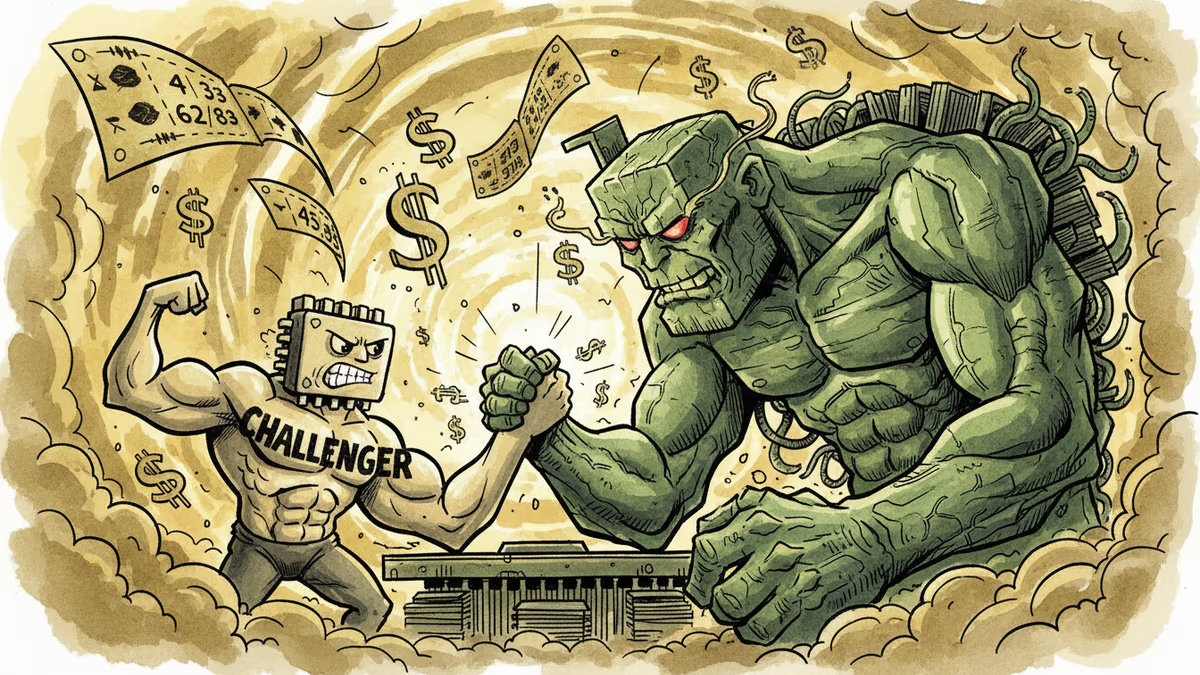
Cerebras files for IPO with a $20B OpenAI deal in hand. What does this mean for Nvidia's dominance, AI infrastructure investment, and the next wave of chip competition?
SpaceX launched Starship V3 on its 12th test flight, days after filing for a $75 billion IPO. Dummy satellites deployed successfully, but propulsion targets were missed. What does that mean for investors?
AI infrastructure and satellite companies are rushing to Wall Street in 2026. What's driving the IPO wave, and what should investors watch for?
AI chipmaker Cerebras is going public on Nasdaq, targeting up to $3.5B in its IPO. With an OpenAI deal and real profits, the pitch is compelling—but the risks are hiding in plain sight.
Cerebras files for IPO with a $20B OpenAI deal in hand. What does this mean for Nvidia's dominance, AI infrastructure investment, and the next wave of chip competition?
Thoughts
Share your thoughts on this article
Sign in to join the conversation