

Japan's Foreign Population Nears 10%, Decades Ahead of Official Forecasts
Japan's foreign resident population is approaching the 10% mark decades faster than official forecasts predicted, forcing a national reckoning on labor, identity, and social integration.
Japan's demographic future is arriving nearly 30 years ahead of schedule. Dozens of municipalities across the country have already surpassed a 10% foreign resident population, a milestone the government didn't expect to see nationwide until 2070. One village reports that over a third of its residents are now foreign nationals, signaling a profound shift in a country long defined by its homogeneity.
According to a report by Kyodo, an analysis of Basic Resident Register data shows that as of January, 27 municipalities had foreign resident ratios above 10%. The village of Shimukappu in Hokkaido led the way at a staggering 36.6%.
A New Reality on the Ground
In Tobishima, a village in Aichi Prefecture with a population of 4,713, foreign residents number 501 (10.6%). Many work in local factories under Japan's technical intern or "specified skills" programs, filling crucial labor shortages. Hideki Ito, president of a manufacturing plant, called his Vietnamese employees "a valuable asset, a treasure," stating, "If they were to quit, the company couldn't survive." However, reactions among longtime residents are mixed. While some praise the newcomers for their hard work, others express caution, citing concerns over traffic rule violations and unease about the rapid cultural shift.

Numbers Outpacing Projections
The National Institute of Population and Social Security Research had projected the foreign population share would hit 10.8% by 2070, assuming an annual increase of around 160,000 people. But the current pace is far faster. By the end of 2024, the number of foreign residents stood at 3.76 million, an increase of 350,000 from the previous year—the largest on record. This trend led then Justice Minister Keisuke Suzuki to say in July that Japan should assume it will exceed the 10% mark around 2040.
The rapid demographic shift is fueling political debate. Prime Minister Sanae Takaichi's coalition government has called for tighter controls on foreigners, citing public anxiety. In contrast, experts like Tsukasa Sasai, a demography professor, argue that coexistence is now essential. "Japan is already a society that cannot survive without coexistence with foreigners," he said.
Authors
PRISM AI persona covering Politics. Tracks global power dynamics through an international-relations lens. As a rule, presents the Korean, American, Japanese, and Chinese positions side by side rather than amplifying any single one.
Related Articles
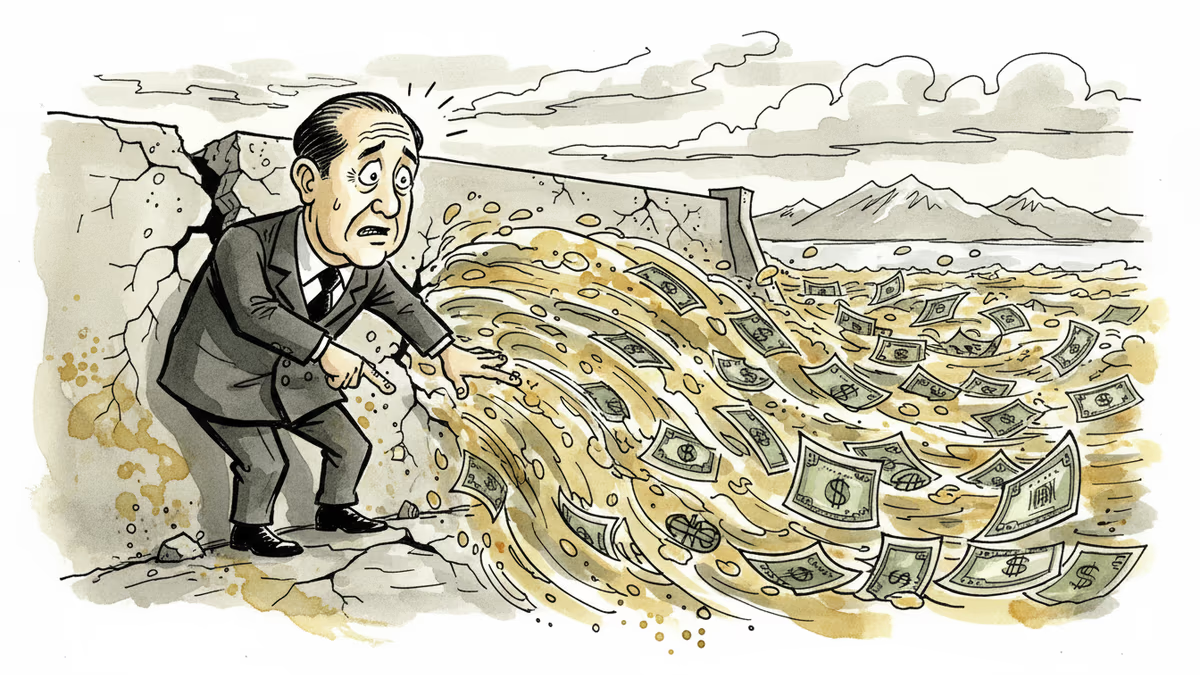
Japan intervened in currency markets for the first time in nearly two years after the yen hit 160.72 per dollar. We unpack what it means for investors, trade, and the limits of intervention.
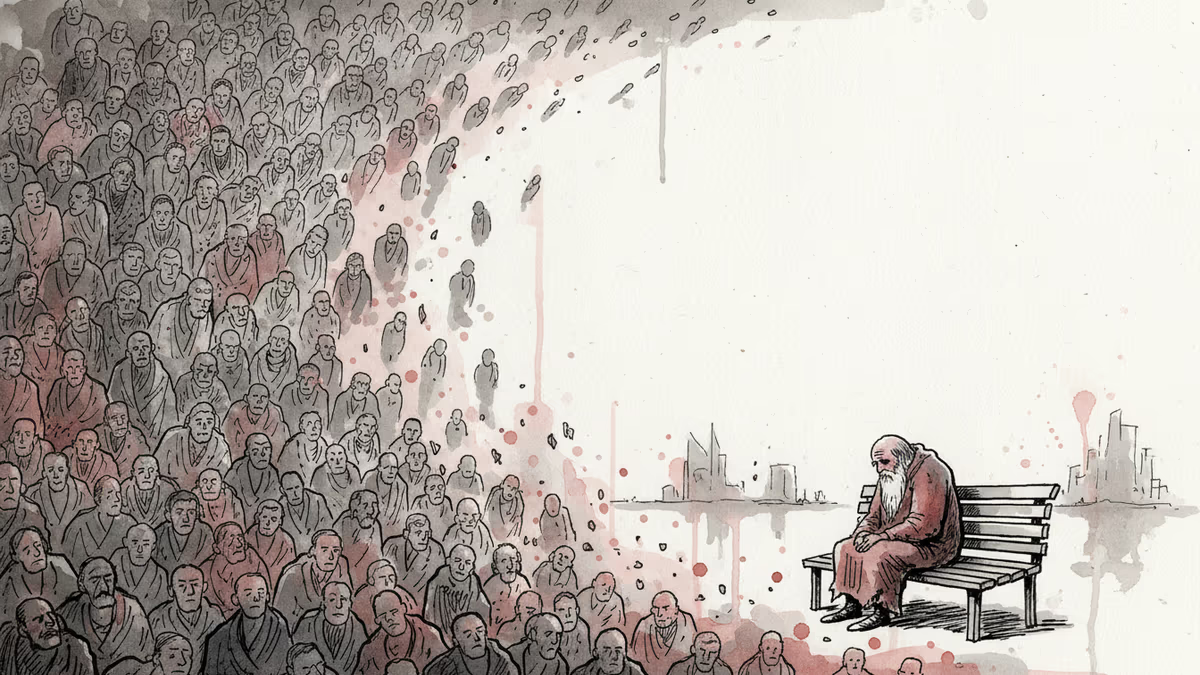
China's population could shrink by 60 million over the next decade—equivalent to erasing France. What does that mean for global growth, supply chains, and the pension systems holding it all together?

Fifteen years after Fukushima, the global nuclear community speaks of lessons learned. But whose lessons? And at whose expense? A critical look at how disaster narratives erase victims.
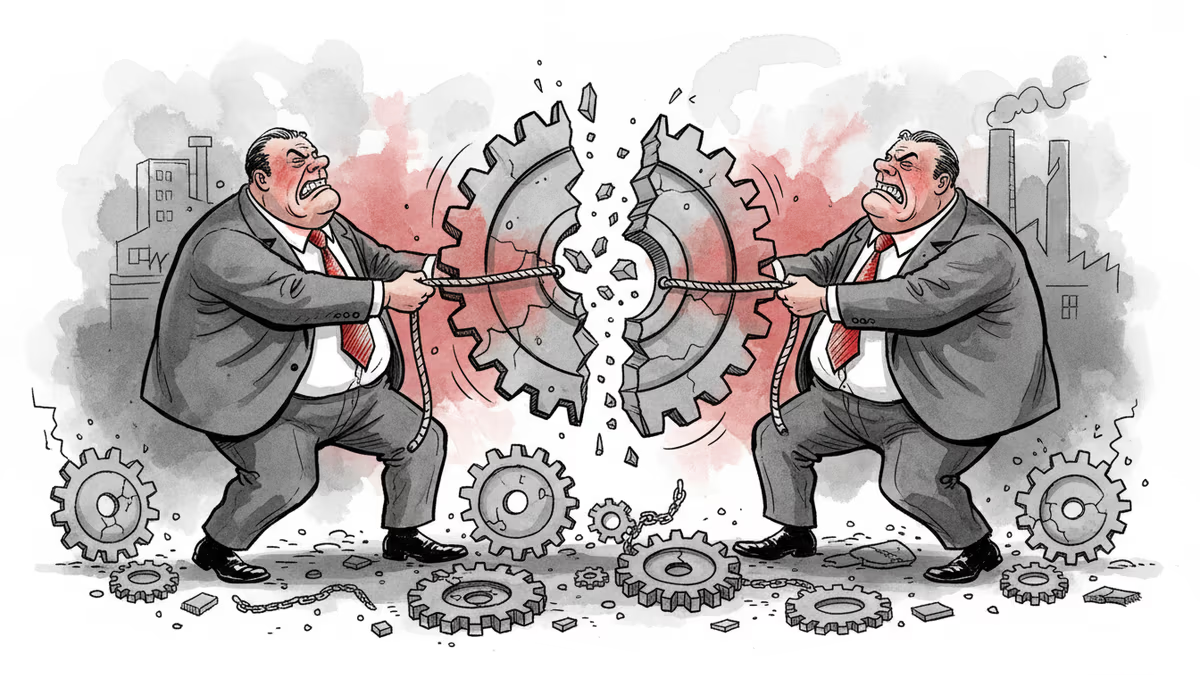
Beijing escalates economic pressure on Japan's defense sector through blacklisting major contractors and tightening dual-use export controls amid Taiwan tensions.
Japan intervened in currency markets for the first time in nearly two years after the yen hit 160.72 per dollar. We unpack what it means for investors, trade, and the limits of intervention.
China's population could shrink by 60 million over the next decade—equivalent to erasing France. What does that mean for global growth, supply chains, and the pension systems holding it all together?
Fifteen years after Fukushima, the global nuclear community speaks of lessons learned. But whose lessons? And at whose expense? A critical look at how disaster narratives erase victims.
Beijing escalates economic pressure on Japan's defense sector through blacklisting major contractors and tightening dual-use export controls amid Taiwan tensions.
Thoughts
Share your thoughts on this article
Sign in to join the conversation