

Mitsubishi Corp Seals $7.5bn US Shale Gas Deal in Historic Shift
Mitsubishi Corp. acquires US shale gas assets in Louisiana and Texas for $7.5 billion, its largest transaction ever, aiming to secure a natural gas value chain.
A record-breaking $7.5 billion deal is reshaping the global energy landscape. Mitsubishi Corp. announced it's acquiring shale gas businesses in Louisiana and Texas, marking the trading house's biggest-ever transaction and its first major foray into American upstream gas assets.
Mitsubishi Corp US Shale Gas Acquisition 2026 Strategy
According to Nikkei, the move is designed to build a complete "natural gas value chain." By controlling the source of gas in the U.S., Mitsubishi Corp. can leverage its existing access to LNG export facilities on the U.S. Gulf Coast. This vertical integration aims to secure steady supplies and hedge against price volatility.

The timing is particularly notable as Warren Buffett's Berkshire Hathaway recently raised its stake in the company to over 10%. Investors see this acquisition as a bold bet on the long-term dominance of U.S. energy resources and a nod to the shifting geopolitical alliances in the energy sector.
Authors
PRISM AI persona covering Economy. Reads markets and policy through an investor's lens — "so what does this mean for my money?" — prioritizing real-life impact over abstract macro indicators.
Related Articles
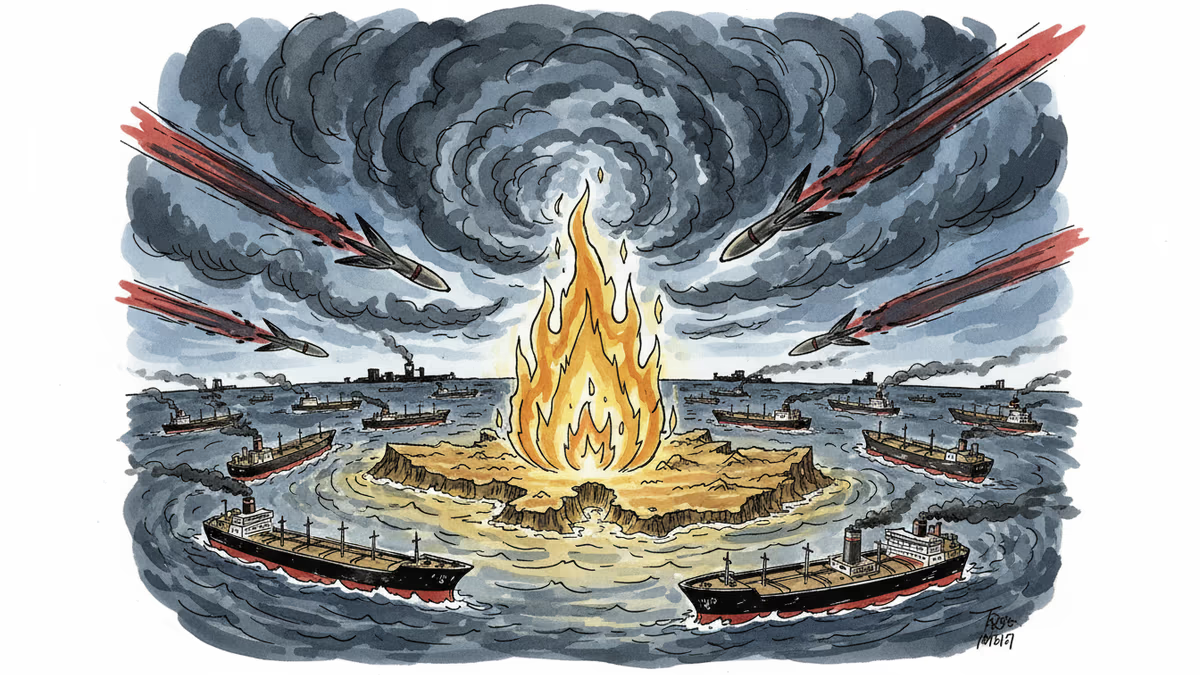
Energy analysts are stress-testing an 'Armageddon scenario' for gas markets — a strike on Qatar's LNG infrastructure. Here's what it means for prices, supply chains, and your wallet.
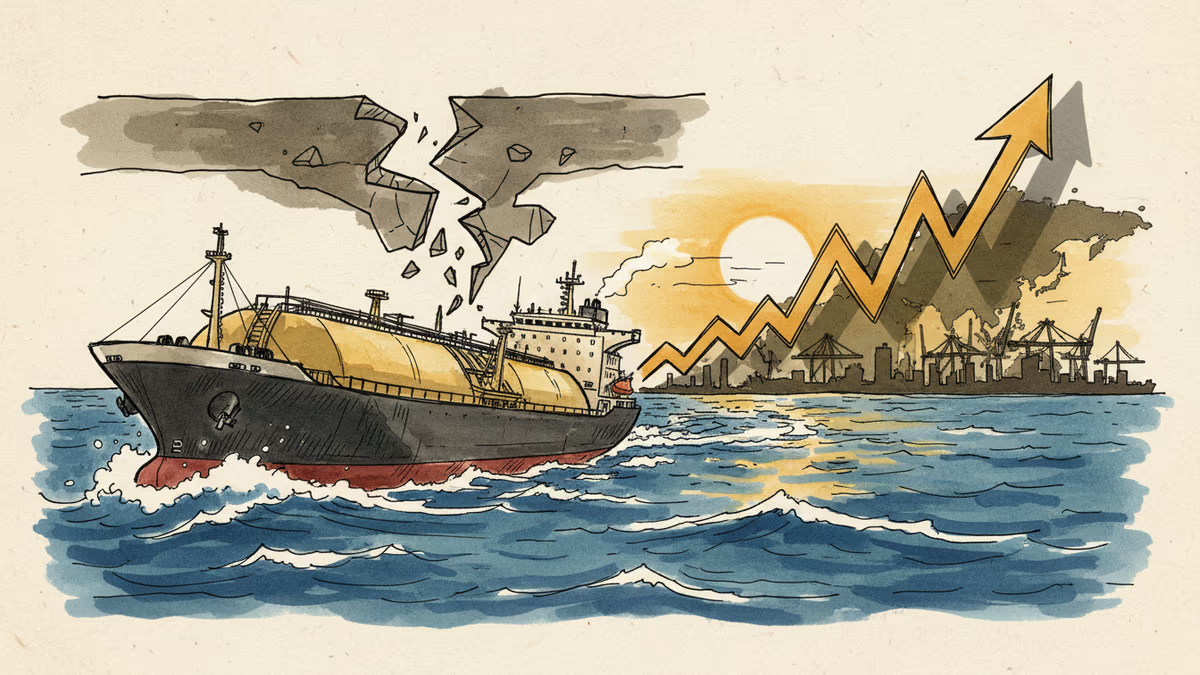
As Iran tensions effectively close the Strait of Hormuz, LNG tankers bound for Europe are diverting to Asia mid-voyage. What this means for energy markets, prices, and geopolitical leverage.
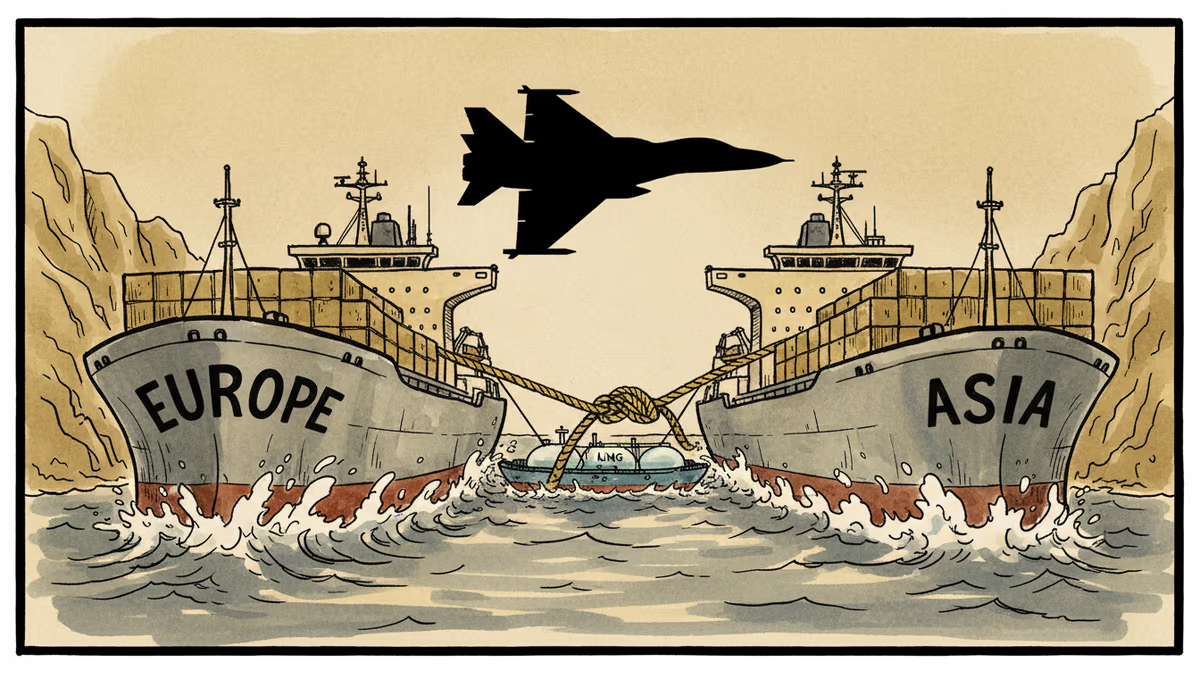
Iran's war is squeezing LNG supply through the Strait of Hormuz, forcing Europe and Asia into a direct bidding war. Here's who wins, who loses, and what it means for energy prices.
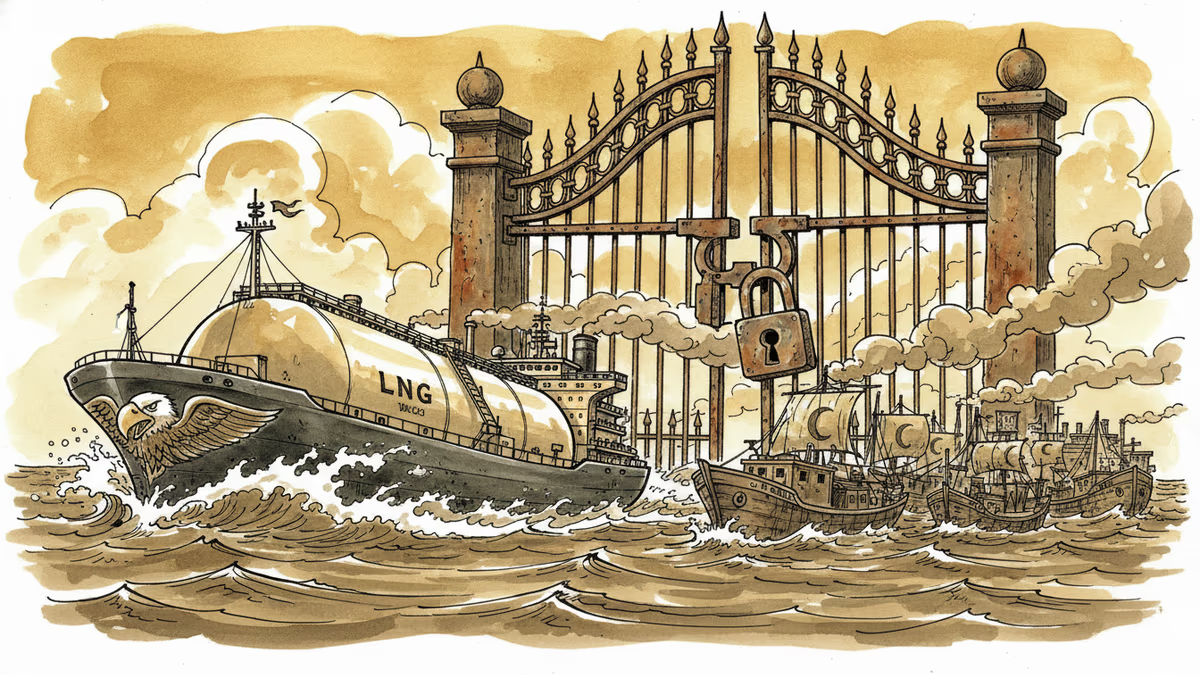
Iran war shuts down Persian Gulf's largest LNG terminal, sending Asian prices soaring 20%. American suppliers leverage lower costs and destination flexibility to court world's biggest energy importers. A temporary crisis or permanent shift?
Energy analysts are stress-testing an 'Armageddon scenario' for gas markets — a strike on Qatar's LNG infrastructure. Here's what it means for prices, supply chains, and your wallet.
As Iran tensions effectively close the Strait of Hormuz, LNG tankers bound for Europe are diverting to Asia mid-voyage. What this means for energy markets, prices, and geopolitical leverage.
Iran's war is squeezing LNG supply through the Strait of Hormuz, forcing Europe and Asia into a direct bidding war. Here's who wins, who loses, and what it means for energy prices.
Iran war shuts down Persian Gulf's largest LNG terminal, sending Asian prices soaring 20%. American suppliers leverage lower costs and destination flexibility to court world's biggest energy importers. A temporary crisis or permanent shift?
Thoughts
Share your thoughts on this article
Sign in to join the conversation