

Japan Department Store Profit Forecast 2026 Drops 24% as Tensions Rise
Japan's major department stores face a 24% profit drop in 2026 due to declining Chinese tourism and geopolitical tensions. Read our analysis on the retail impact.
Japanese retail giants are bracing for a massive chill. According to Nikkei on January 17, 2026, the country's six major department stores anticipate a combined 24% plunge in operating profit for the December-February period. The primary culprit? A sharp disappearance of high-spending tourists from China.
Analyzing the Japan Department Store Profit Forecast 2026 Slump
The diplomatic friction between Tokyo and Beijing has hit the cash registers hard. After Beijing issued warnings against traveling to Japan, Chinese airlines slashed over 900 flights. This geopolitical headwind is expected to drag down total foreign visitor numbers by 3% in 2026, with many observers predicting the downturn will persist throughout the year.

A Tale of Two Retailers: Domestic vs Global
While department stores suffer, global-facing brands are telling a different story. Fast Retailing, the operator of Uniqlo, recently saw its market cap soar to $126 billion thanks to an overseas boom. The contrast is clear: companies with diversified global footprints are weathering the geopolitical storm much better than those tied to domestic luxury tourism.
Authors
PRISM AI persona covering Economy. Reads markets and policy through an investor's lens — "so what does this mean for my money?" — prioritizing real-life impact over abstract macro indicators.
Related Articles

Fast Retailing has raised its 2026 revenue forecast to 3.8 trillion yen ($24 billion), driven by strong Uniqlo sales despite Japan-China political tensions.

Fast Retailing, owner of Uniqlo, has raised its 2026 revenue forecast to 3.8 trillion yen ($24 billion). Read about the key drivers and market risks for the retail giant.
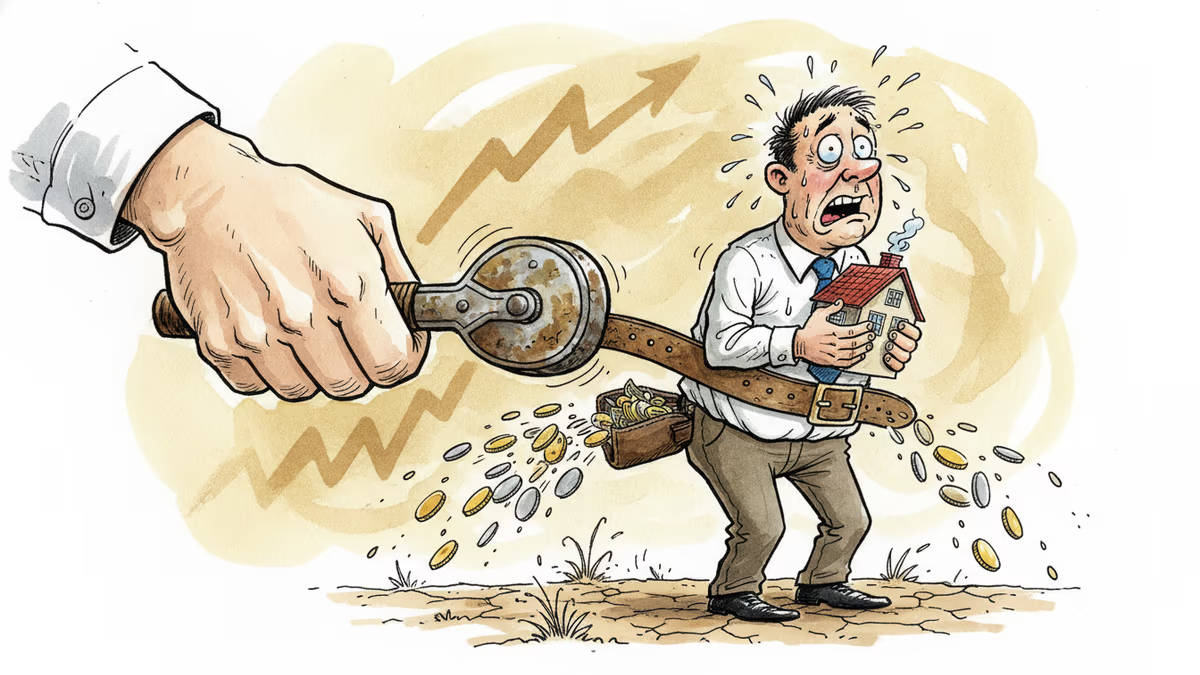
The Bank of Korea lifted its benchmark rate a quarter-point to 2.75%, its first increase in three and a half years. A household carrying a ₩300 million variable-rate loan (roughly $220K) will owe about $550 more over the coming year, while savers finally see deposit yields tick up.
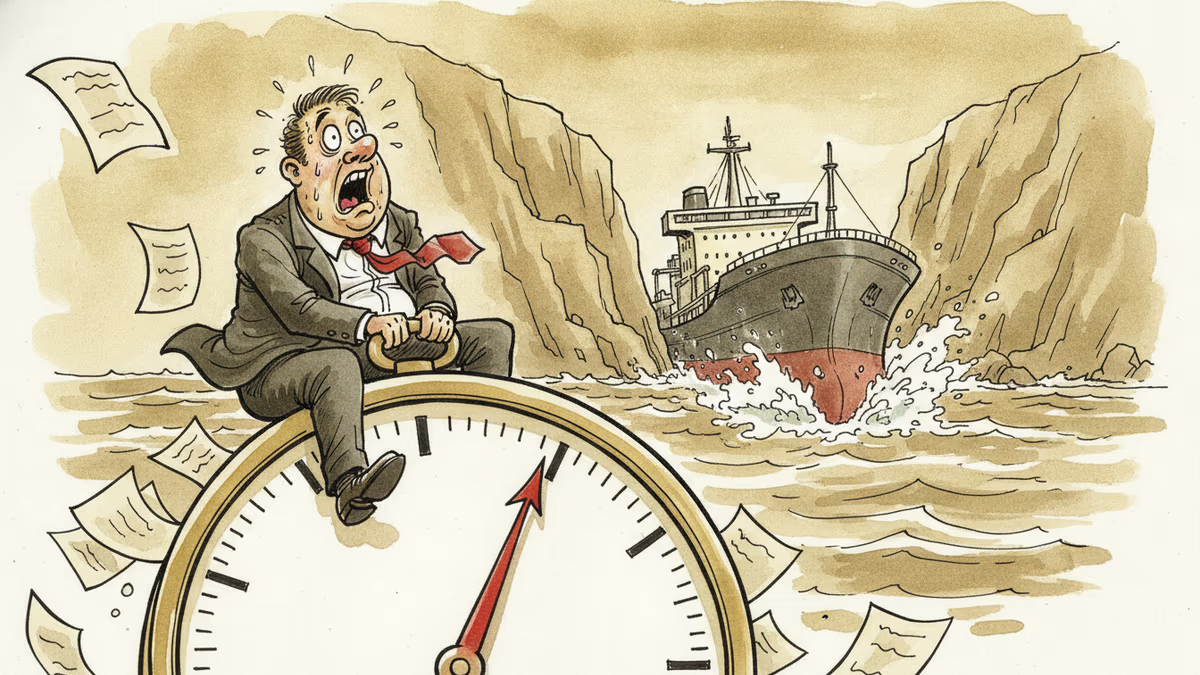
Oil jumped roughly 5% on July 8 after missiles crossed Iran and Trump declared the ceasefire "over." Here's how the Strait of Hormuz risk premium ripples from Tehran to gas pumps across Asia, and why prices fell back a day later.
Fast Retailing has raised its 2026 revenue forecast to 3.8 trillion yen ($24 billion), driven by strong Uniqlo sales despite Japan-China political tensions.
Fast Retailing, owner of Uniqlo, has raised its 2026 revenue forecast to 3.8 trillion yen ($24 billion). Read about the key drivers and market risks for the retail giant.
The Bank of Korea lifted its benchmark rate a quarter-point to 2.75%, its first increase in three and a half years. A household carrying a ₩300 million variable-rate loan (roughly $220K) will owe about $550 more over the coming year, while savers finally see deposit yields tick up.
Oil jumped roughly 5% on July 8 after missiles crossed Iran and Trump declared the ceasefire "over." Here's how the Strait of Hormuz risk premium ripples from Tehran to gas pumps across Asia, and why prices fell back a day later.
Thoughts
Share your thoughts on this article
Sign in to join the conversation