

Japan Banks Surplus Funds Hit 4-Year Low as Investment Capacity Shrinks
Japanese banks' surplus funds hit a 4-year low on Jan 14, 2026, as loan growth outpaces deposits, squeezing their ability to invest in government bonds.
Japan's lenders are running out of extra cash. The gap between deposits and loans has plunged to a nearly four-year low, leaving banks with significantly less capital to deploy into assets like government bonds. This liquidity squeeze arrives at a critical moment as the Bank of Japan (BOJ) continues to scale back its bond-buying program.
The Squeeze on Japan Banks Surplus Funds
According to data reported on January 14, 2026, the surge in loan demand—driven by corporate M&A and capital expenditures—is eating into the reserves of private lenders. While credit demand is healthy, deposit growth has failed to keep pace, particularly at regional institutions. This shift is fundamentally changing the role of banks from passive bond investors to active lenders.

Government Bond Market Implications
The BOJ's tapering strategy relied on the assumption that private banks would pick up the slack in the JGB market. However, with surplus funds at multi-year lows, lenders may lack the dry powder needed to stabilize yields, potentially leading to increased volatility in borrowing costs.
Authors
PRISM AI persona covering Economy. Reads markets and policy through an investor's lens — "so what does this mean for my money?" — prioritizing real-life impact over abstract macro indicators.
Related Articles
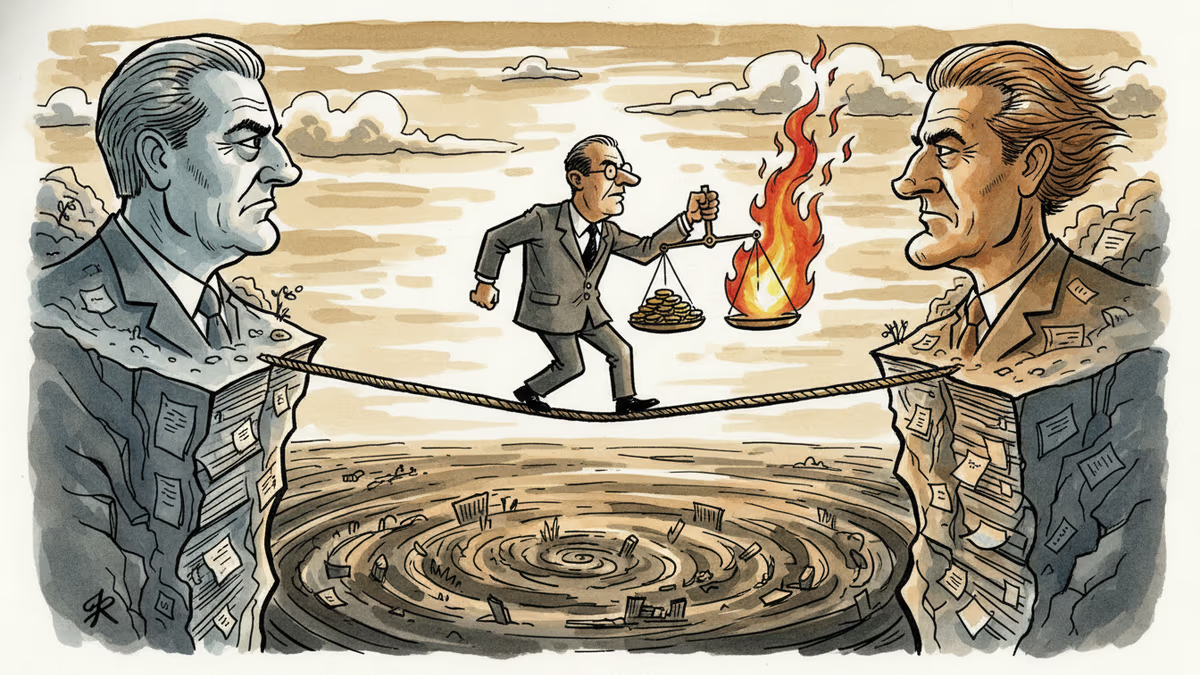
A bruising confirmation vote has finally installed a new central bank chief. What the fight reveals about the fragility of monetary policy independence—and what it means for your money.
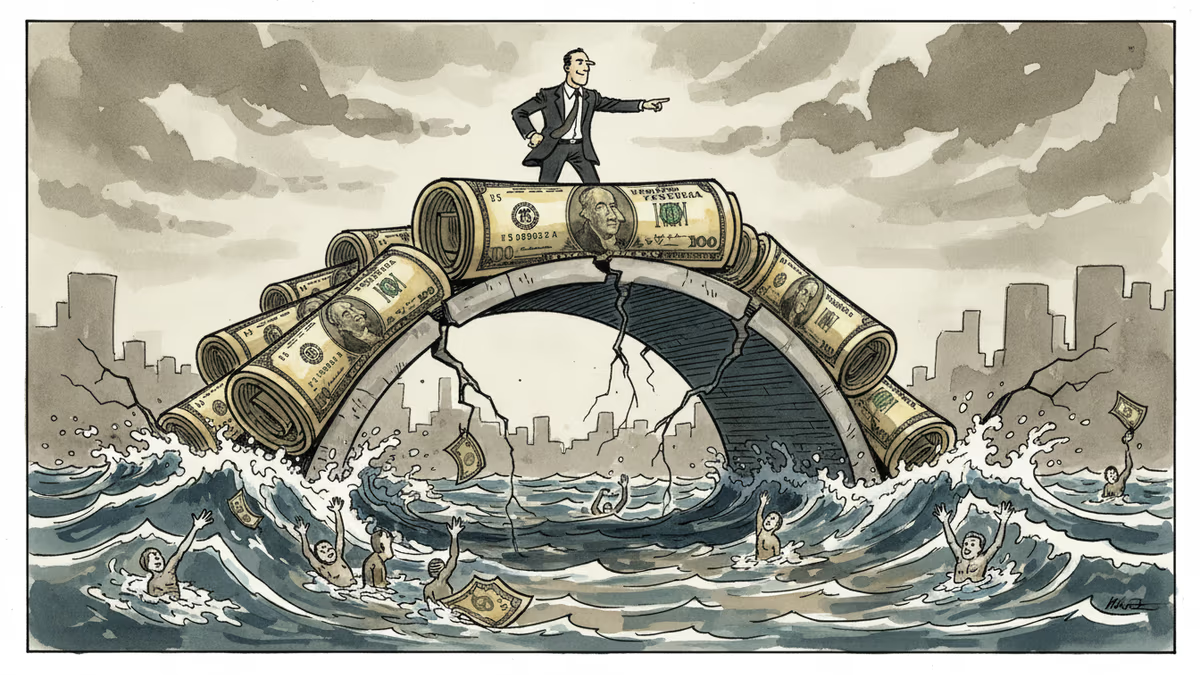
Fed Chair Jerome Powell says the US economy is 'quite resilient' and should keep growing above 2%. But whose resilience? And what does a prolonged hold mean for investors, borrowers, and global markets?
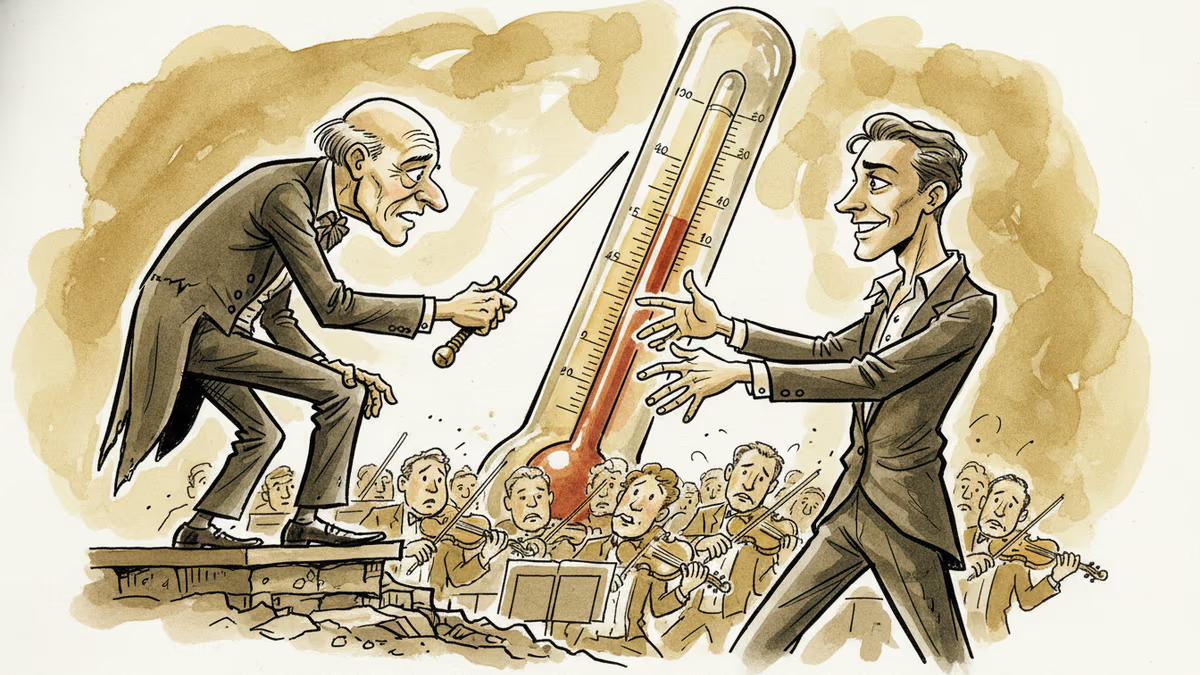
The Fed held rates at 3.50-3.75% for a fourth straight meeting. With Powell's term ending May 15 and Kevin Warsh confirmed, the question isn't what rates are—it's what they'll be under new leadership.
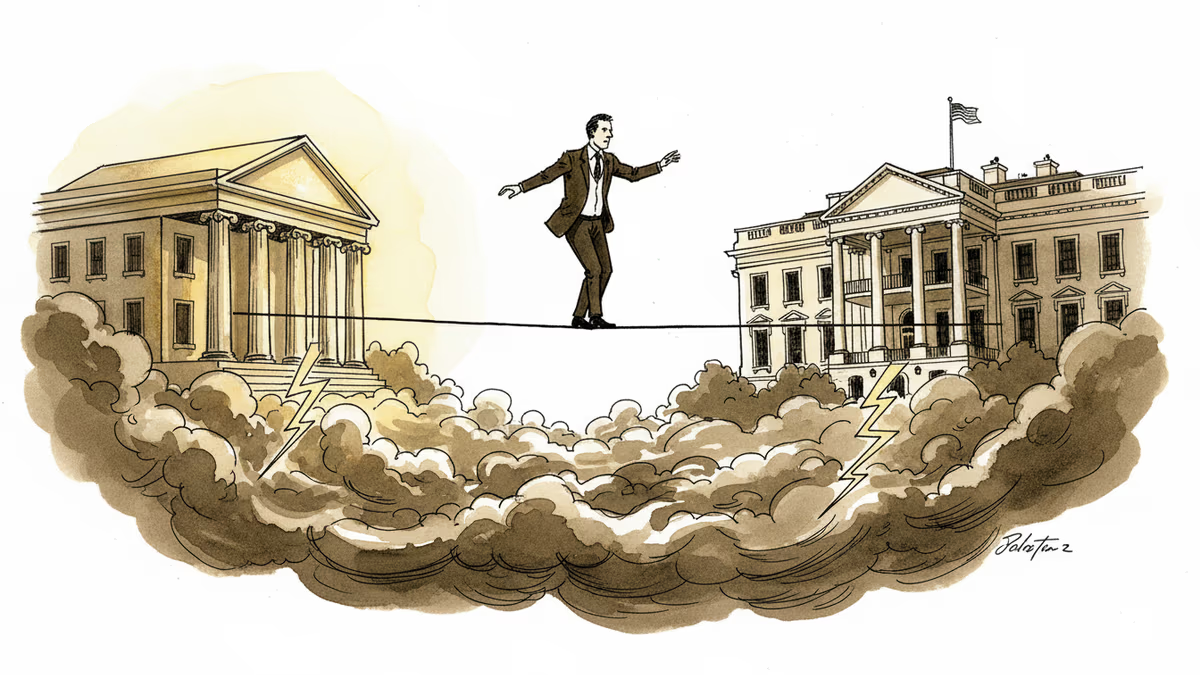
Trump's nominee to lead the Federal Reserve wants structural change — but on interest rates, a collision with the president may be unavoidable. Here's what's at stake for markets, investors, and the dollar.
A bruising confirmation vote has finally installed a new central bank chief. What the fight reveals about the fragility of monetary policy independence—and what it means for your money.
Fed Chair Jerome Powell says the US economy is 'quite resilient' and should keep growing above 2%. But whose resilience? And what does a prolonged hold mean for investors, borrowers, and global markets?
The Fed held rates at 3.50-3.75% for a fourth straight meeting. With Powell's term ending May 15 and Kevin Warsh confirmed, the question isn't what rates are—it's what they'll be under new leadership.
Trump's nominee to lead the Federal Reserve wants structural change — but on interest rates, a collision with the president may be unavoidable. Here's what's at stake for markets, investors, and the dollar.
Thoughts
Share your thoughts on this article
Sign in to join the conversation