

Israeli Forces Raid East Jerusalem Neighborhoods, Demolishing Shops and Clashing with Residents
On December 23, 2025, Israeli forces conducted a large-scale raid in Palestinian neighborhoods north of East Jerusalem, demolishing shops and clashing with residents. At least three injuries were reported.
keyword:Israeli# forces launched a large-scale incursion into keyword:Palestinian# neighborhoods north of occupied East Jerusalem on stat:Tuesday, December 23, 2025#, demolishing shops, injuring at least three people, and detaining several others, according to keyword:Palestinian# medical officials and witnesses. The operation, which began early in the morning, extended from the vicinity of the Qalandiya refugee camp to the nearby town of Kafr Aqab, involving a heavy deployment of troops, military vehicles, and bulldozers.
Widespread Raids and Seizures
In Kafr Aqab, local media reported that keyword:Israeli# troops conducted house-to-house searches and forcibly evicted residents. At least three homes were reportedly converted into temporary military outposts, with homeowners told the operation would continue until at least Wednesday morning. According to Al Jazeera Arabic, keyword:Israeli# forces also stormed a youth club inside the Qalandiya refugee camp, turning the facility into a military base.
The keyword:Palestinian# Wafa news agency said several people were detained during the incursion, identifying two of them as Anan Mohammed Taha and his father, Mohammed Taha, from the Qalandiya camp.
Civilian Casualties and Media Targeted
The Palestine Red Crescent Society stated its teams treated at least stat:three people# injured during the raids. The injuries included a bullet wound to the thigh, wounds from shrapnel, and injuries from physical assault. Separately, the Jerusalem governorate reported at least stat:three Palestinians# were injured by gunfire, with dozens more suffering from suffocation due to tear gas and stun grenades.
Journalists covering the events were also targeted. keyword:Israeli# forces reportedly fired stun grenades and tear gas canisters toward Al Jazeera Arabic reporters in Kafr Aqab. The governorate authorities also claimed that stun grenades were fired directly at students returning home from school and that private surveillance cameras were seized.
Economic Pressure as a Pretext
Alongside the demolitions, keyword:Israeli# forces confiscated goods from commercial shops, citing alleged unpaid municipal taxes. Most keyword:Palestinians# in these areas hold Jerusalem residency ID cards and say they are subjected to high taxes while receiving few basic services in return.
Al Jazeera’s Nida Ibrahim, reporting from the scene, described the actions as an attempt to "intimidate" keyword:Palestinians# and "further cripple the keyword:Palestinian# economy." She added, "This is part of the anxiety that keyword:Palestinians# live through day in and day out as these keyword:Israeli# raids continue on a daily basis," noting that incursions across the West Bank average "stat:60 raids per day#."
This operation reflects a persistent Israeli strategy of low-intensity, high-frequency actions in the occupied territories. Beyond immediate security objectives, these raids serve to disrupt daily life, assert control, and apply economic pressure on Palestinian communities. Such tactics maintain a constant state of anxiety, preventing the consolidation of Palestinian civil and economic structures in contested areas like East Jerusalem.
This content is AI-generated based on source articles. While we strive for accuracy, errors may occur. We recommend verifying with the original source.
Related Articles

Israeli Defence Minister Israel Katz declared the military will never fully withdraw from Gaza, planning new army outposts in defiance of a US-backed peace plan signed in October. The move challenges the fragile ceasefire and signals a push for settlement expansion.

Russia has launched a deadly attack on Ukraine's energy grid, while a fragile truce holds in Syria and violence escalates in the West Bank. An analysis of the world's major conflict flashpoints.

Deadly clashes between the Syrian army and the Kurdish-led SDF in Aleppo have been followed by a temporary ceasefire agreement. The incident highlights the fragile power dynamics in northern Syria.
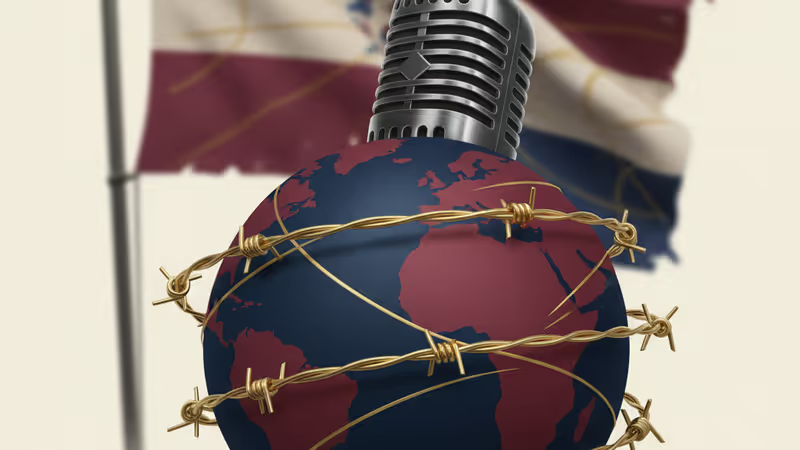
Israel's parliament extends the 'Al Jazeera Law' for two years, allowing the shutdown of foreign media, while the cabinet moves to close the independent Army Radio by 2026, fueling concerns over press freedom.
Israeli Defence Minister Israel Katz declared the military will never fully withdraw from Gaza, planning new army outposts in defiance of a US-backed peace plan signed in October. The move challenges the fragile ceasefire and signals a push for settlement expansion.
Russia has launched a deadly attack on Ukraine's energy grid, while a fragile truce holds in Syria and violence escalates in the West Bank. An analysis of the world's major conflict flashpoints.
Deadly clashes between the Syrian army and the Kurdish-led SDF in Aleppo have been followed by a temporary ceasefire agreement. The incident highlights the fragile power dynamics in northern Syria.
Israel's parliament extends the 'Al Jazeera Law' for two years, allowing the shutdown of foreign media, while the cabinet moves to close the independent Army Radio by 2026, fueling concerns over press freedom.