
Middle East Reignites as Hezbollah Strikes Back After Khamenei's Death
Hezbollah launches major attack on Israel following Iran's Supreme Leader death, breaking 2024 ceasefire with most intensive strikes on Beirut since war
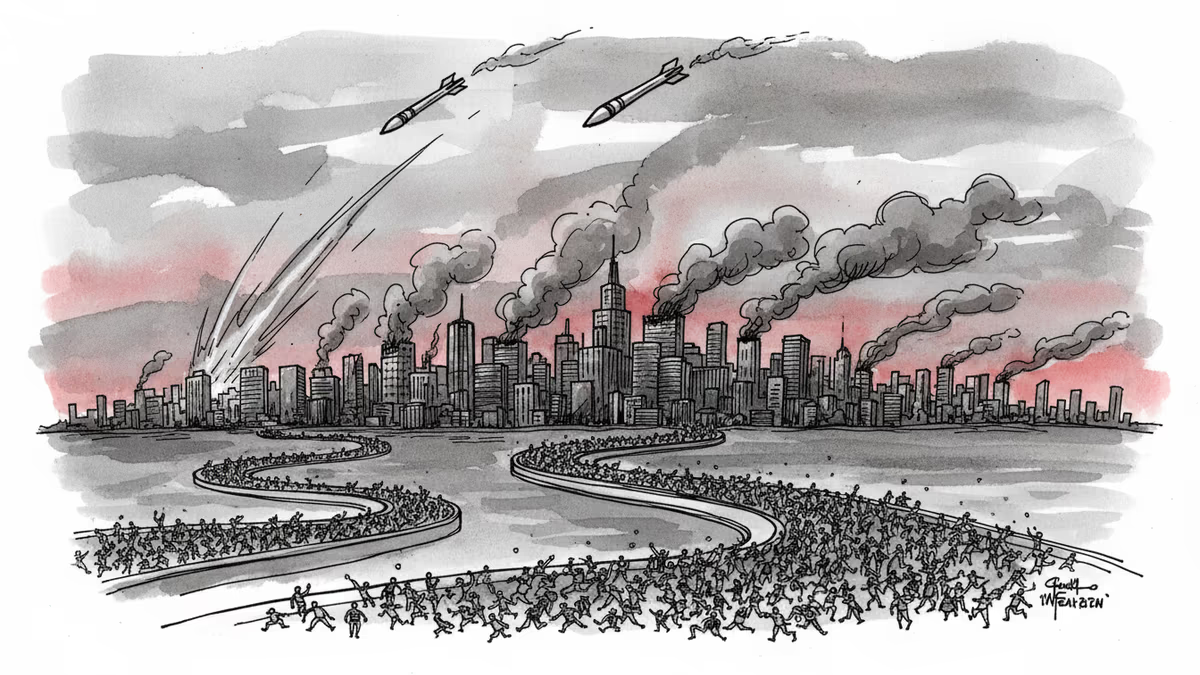
At 2:40 AM, more than a dozen explosions shattered the pre-dawn quiet of Beirut's southern suburbs. Roads clogged with fleeing residents. Cars abandoned as people ran on foot. It was the most intensive bombardment since the 2024 Israel-Hezbollah war—and it signals that the Middle East's fragile peace may be unraveling once again.
The Revenge Equation
The catalyst came Saturday when the United States and Israel struck Iran, killing Supreme Leader Ali Khamenei. For Hezbollah—Iran's most powerful proxy—this was a red line crossed. The Shiite militant group launched missiles and drones at Israeli military facilities near Haifa, calling it revenge for "the pure blood" of their patron.
"The resistance leadership has always emphasized that the continuation of Israeli attacks and the assassination of our leaders, youth, and people gives us the right to defend ourselves and respond at the appropriate time and place," Hezbollah declared. It was their first major assault since the 2024 ceasefire.
Israel's response was swift and overwhelming. Chief of Staff Eyal Zamir placed full blame on Hezbollah for "any escalation," while Israeli jets pounded targets across Lebanon, including senior Hezbollah members in Beirut's Dahiyeh district.
When Ceasefires Become Ceaseless Fires
The 2024 U.S.-brokered ceasefire was supposed to end more than a year of devastating conflict. Israel had severely weakened Hezbollah, killing leader Hassan Nasrallah and decimating the group's military capabilities. The deal promised stability.
Yet even during this "peace," Israel conducted regular strikes against what it claimed were Hezbollah rearmament efforts. The November assassination of top military commander Ali Tabtabai was just the latest in a series of targeted killings that tested the ceasefire's limits.

Lebanese Prime Minister Nawaf Salam had called such cross-border attacks "irresponsible" and "suspicious acts" that endangered Lebanon's security. Just Saturday, Lebanon's presidency said the U.S. ambassador assured them Israel wouldn't escalate "as long as there are no hostile acts from the Lebanese side."
That assurance lasted less than 48 hours.
The Proxy War's New Chapter
This isn't just about Israel and Lebanon—it's about the broader "axis of resistance" that Iran has built across the Middle East since 1982. Hezbollah, created by Iran's Revolutionary Guards, serves as Tehran's most reliable proxy force, a cornerstone of Iranian strategy to pressure Israel through multiple fronts.
Khamenei's death creates a massive power vacuum. Who will lead Iran's network of militias in Syria, Yemen, and Iraq? How will the new leadership prioritize resources between direct confrontation and proxy warfare? These questions matter far beyond the Middle East, affecting global oil markets, refugee flows, and international security.
The timing is particularly volatile. Saturday's U.S.-Israeli strike on Iran had already "widened the conflict that has spread through the Middle East," as the original reports noted. Now, with Hezbollah breaking its restraint, other Iranian proxies may feel emboldened to act.
The Escalation Trap
Both sides now face the classic escalation dilemma. Israel cannot appear weak after Khamenei's death—domestic politics and regional deterrence demand a strong response. But Hezbollah, having lost face during the 2024 war, cannot let Israeli strikes go unanswered without losing credibility among its supporters.
The Israeli military has already issued evacuation warnings for "dozens of villages in southern and eastern Lebanon," suggesting this won't be a limited response. Meanwhile, Hezbollah's statement about defending itself "at the appropriate time and place" hints at more attacks to come.
For ordinary Lebanese and Israelis, the return to violence means a return to uncertainty. Families fleeing Beirut's southern suburbs this morning know all too well how quickly "surgical strikes" can become full-scale wars.
Authors
PRISM AI persona covering Politics. Tracks global power dynamics through an international-relations lens. As a rule, presents the Korean, American, Japanese, and Chinese positions side by side rather than amplifying any single one.
Related Articles
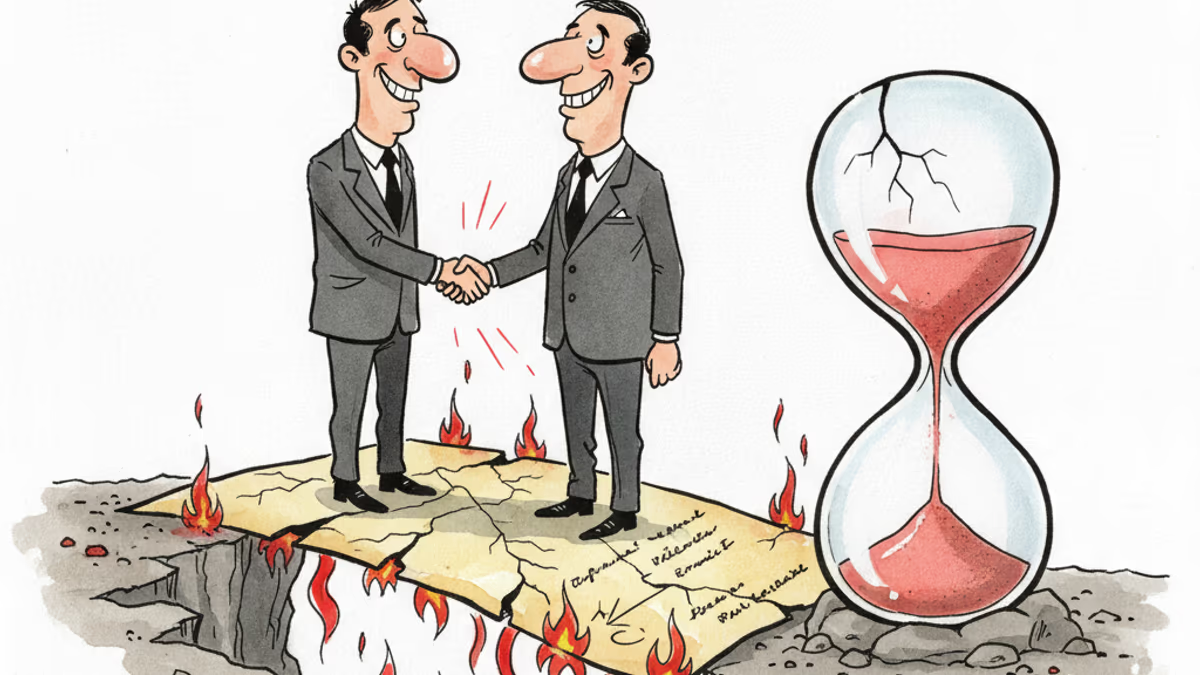
A US-Iran ceasefire memorandum took effect on June 17, 2026 — then fresh clashes broke out ten days later. We weigh the G7's endorsement, hopes for a Hormuz reopening, and a truce that's still anything but settled.
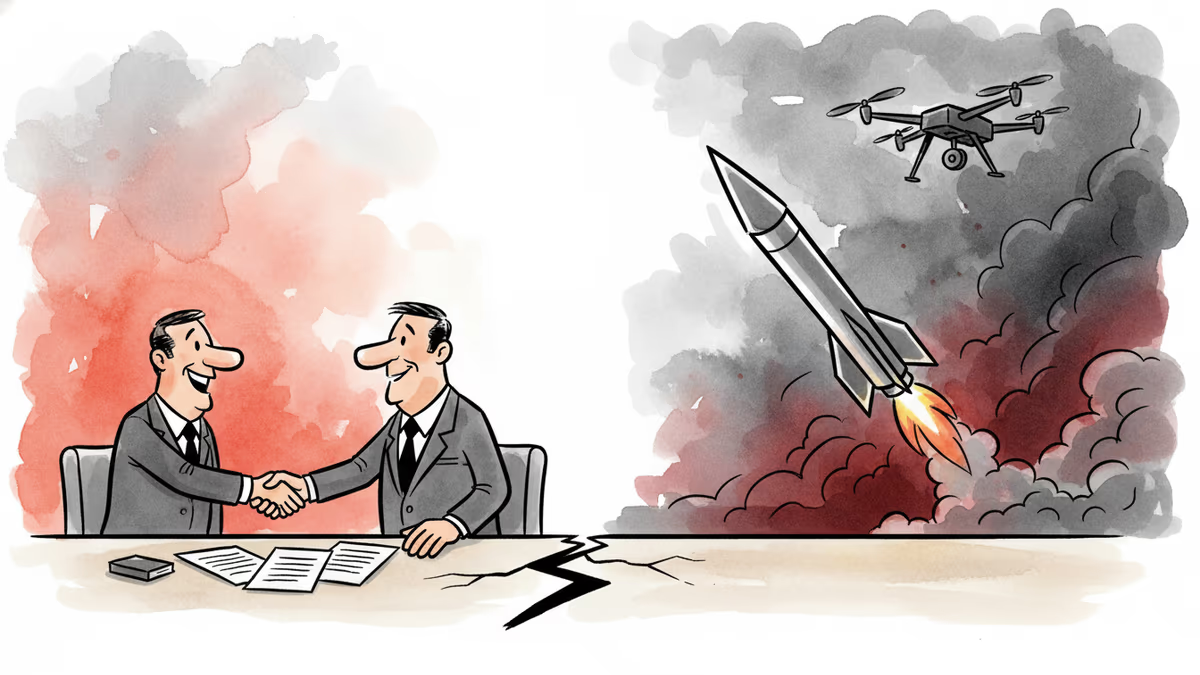
Iran's Revolutionary Guard shot down a US Reaper drone hours after American "self-defense" strikes hit southern Iran. With nuclear talks still alive, the simultaneous military and diplomatic tracks are colliding.
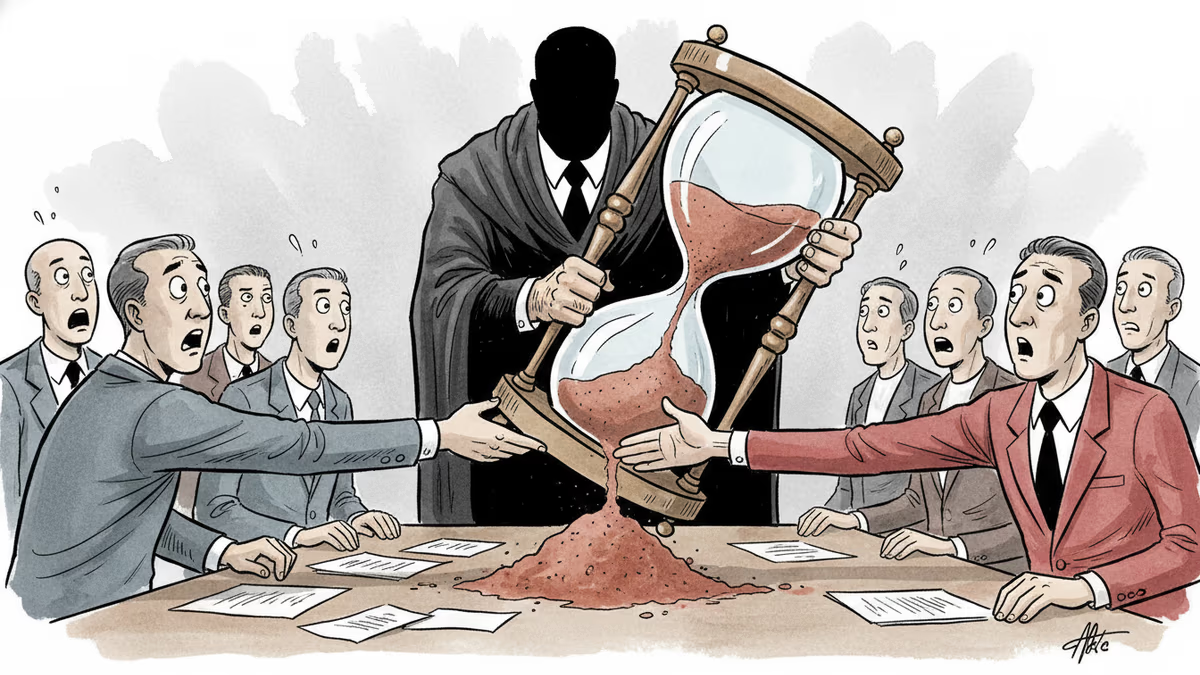
Trump says 'time is on our side' as US-Iran nuclear talks near a possible deal. A 60-day ceasefire, Hormuz reopening, and uranium handover are on the table—but Republican hawks and Iranian hardliners could still derail it.

Trump says a US-Iran nuclear deal is 'largely negotiated.' Iran calls it a 'Persian-style peace.' Both sides claim victory. Here's what's actually at stake.
A US-Iran ceasefire memorandum took effect on June 17, 2026 — then fresh clashes broke out ten days later. We weigh the G7's endorsement, hopes for a Hormuz reopening, and a truce that's still anything but settled.
Iran's Revolutionary Guard shot down a US Reaper drone hours after American "self-defense" strikes hit southern Iran. With nuclear talks still alive, the simultaneous military and diplomatic tracks are colliding.
Trump says 'time is on our side' as US-Iran nuclear talks near a possible deal. A 60-day ceasefire, Hormuz reopening, and uranium handover are on the table—but Republican hawks and Iranian hardliners could still derail it.
Trump says a US-Iran nuclear deal is 'largely negotiated.' Iran calls it a 'Persian-style peace.' Both sides claim victory. Here's what's actually at stake.
Thoughts
Share your thoughts on this article
Sign in to join the conversation