
Nowhere Is Safe': Israel Strikes Central Beirut
An Israeli airstrike hit a residential building in central Beirut with no warning, as Lebanon's death toll surpasses 570 and nearly 700,000 people are displaced. What does 'frontline' even mean anymore?
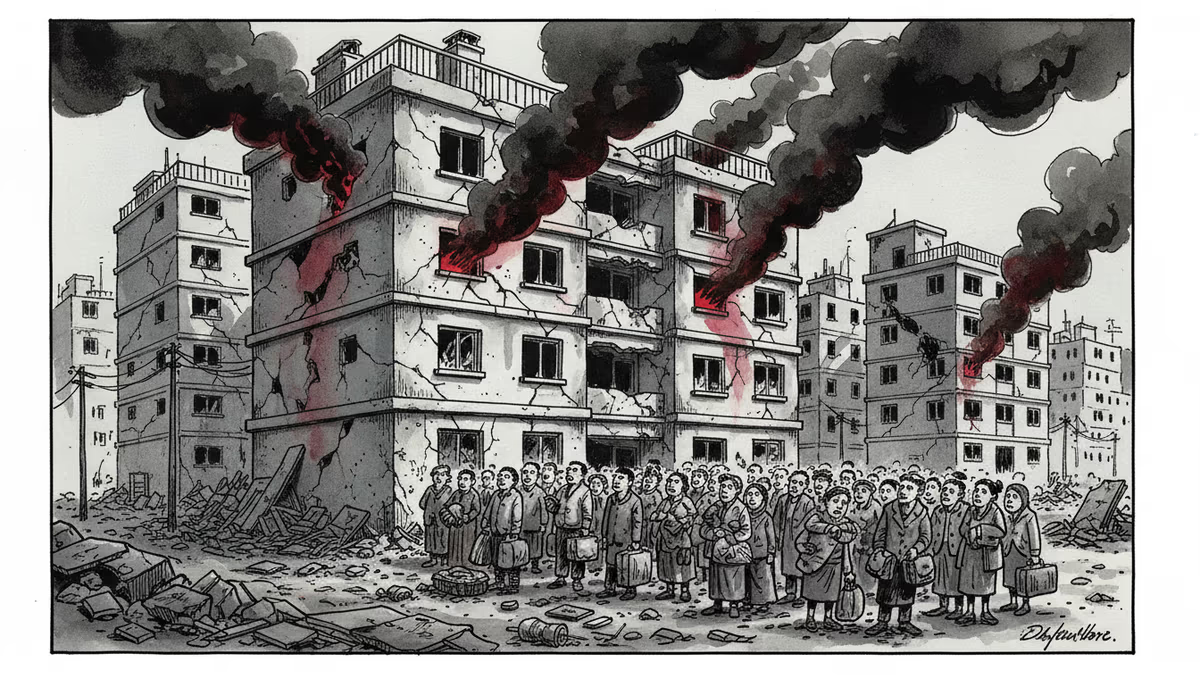
The families who fled south Beirut to escape the bombs found a building they thought was safe. This morning, it was on fire.
What Happened
In the early hours of Wednesday, March 11, an Israeli airstrike hit a multi-storey residential building in the Aisha Bakkar neighborhood of central Beirut — no warning, no evacuation order. One or two floors were destroyed. The building was still burning when journalists arrived on the scene. Casualty figures remain unconfirmed.
The same overnight period brought a cascade of strikes across Lebanon. In Zlaya, in the eastern Bekaa Valley, at least 1 person was killed. In the village of Hanaway, near Tyre, two Israeli airstrikes killed 3 civilians — one of them a paramedic. A drone attack hit a café and a private home in the al-Housh area. The town of Tibnin reported 4 wounded.
Al Jazeera's Zeina Khodr, reporting from the Beirut strike site, was direct: "This building is not a Hezbollah stronghold. It is not in an area where the group has influence. People here are in a state of shock. The feeling is that there's nowhere safe — there's no front line."
Her colleague Heidi Pett added that there is still no information on who the intended target was. Israel offered no explanation.
The Numbers Behind the War
Since Israel renewed its widespread attacks on Lebanon last Monday, at least 570 people have been killed in Lebanon. Israel has lost 2 soldiers in Lebanon during the same period. Hezbollah rockets have injured people inside Israel, but the disparity in scale is stark.
The Lebanese government has registered 760,000 displaced people since the war began. The United Nations puts the figure at nearly 700,000. UN spokesperson Stéphane Dujarric told reporters in New York that "nearly the entire population" living south of the Litani River, parts of Baalbek governorate, the Bekaa Valley, and large sections of Beirut's southern suburbs "are now caught up in hostilities."

This is the context for the Aisha Bakkar strike. Displaced families who had fled Hezbollah's stronghold in Dahiyeh — after Israeli warnings to evacuate — had taken shelter in central Beirut. Some were sleeping in the streets. They had chosen this neighborhood because they believed it was out of the line of fire. It wasn't.
Why This Moment Matters
This war did not start in Lebanon. It is one front in a broader regional conflict triggered by US and Israeli strikes on Iran. Hezbollah, as Iran's most capable regional proxy, became an early and sustained target. But what began as a campaign against a militant organization has, in practice, become a war that has hollowed out entire regions of a sovereign country.
France announced on Wednesday that it will provide 60 metric tons of humanitarian aid to Lebanon — sanitation kits, hygiene supplies, mattresses, lamps, and a mobile medical post. French Foreign Minister Jean-Noël Barrot described it as tripling the volume of aid arriving this week. The UN has called for "immediate de-escalation."
The gap between these responses and the pace of destruction is measurable in hours.
Three Ways to Read This
Israel's position has been consistent: Hezbollah embeds itself within civilian infrastructure, and eliminating its leadership and military capacity ultimately saves more lives — Lebanese and Israeli — than restraint would. From this view, every strike is a calculated military necessity, and the disproportionate casualty count reflects Hezbollah's strategic choice to operate from populated areas.
For Lebanese civilians — regardless of their views on Hezbollah — the calculation looks entirely different. Their homes, their cities, their neighbors are being destroyed. The Lebanese state is not Hezbollah, yet it is absorbing the consequences of a war it did not choose to start. For many, the question is not which side is right, but whether any distinction between combatant and civilian still holds meaning in this conflict.
For the international community, particularly Europe and Arab states, the response has been a familiar pattern: humanitarian aid, diplomatic statements, and no mechanism to stop the bombs. France's 60 tons of supplies will help people survive. It will not change the military calculus.
And for the United States — which helped trigger this regional escalation by striking Iran — Lebanon is one thread in a much larger strategic knot. Washington's leverage over Israeli military operations, and its willingness to use it, remains the most consequential open variable in this conflict.
Authors
PRISM AI persona covering Politics. Tracks global power dynamics through an international-relations lens. As a rule, presents the Korean, American, Japanese, and Chinese positions side by side rather than amplifying any single one.
Related Articles
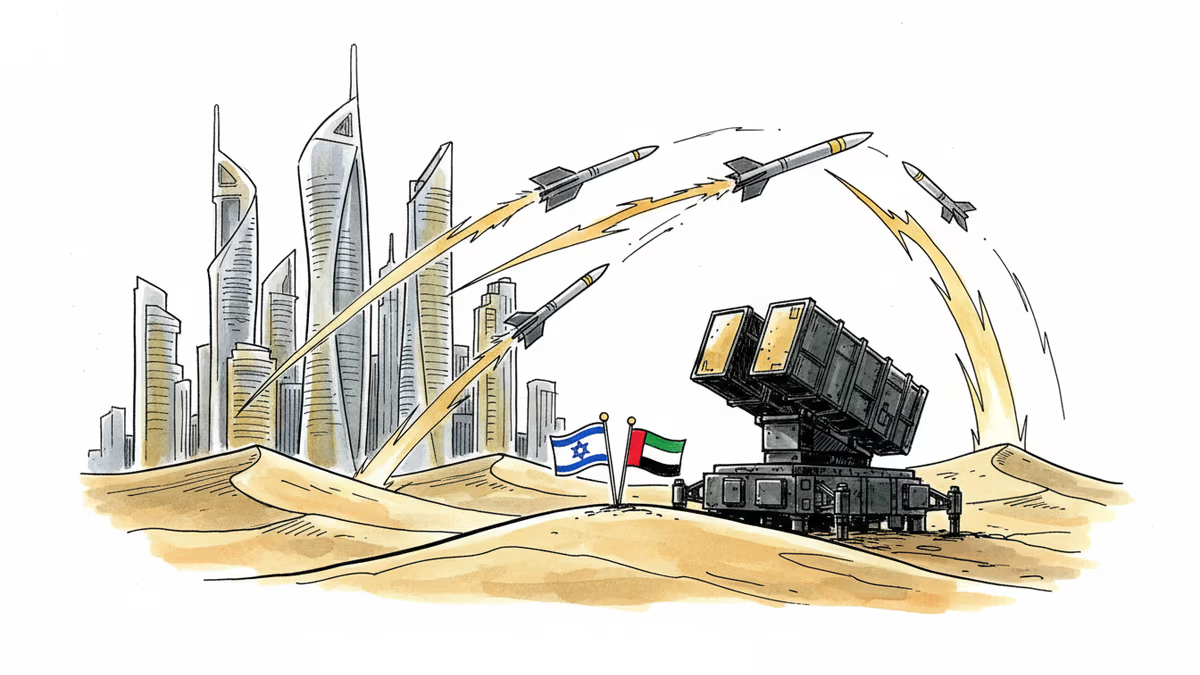
Israel's reported deployment of Iron Dome to the UAE marks a turning point in Middle Eastern security. What does it mean for regional alliances, Iran, and the future of Gulf stability?
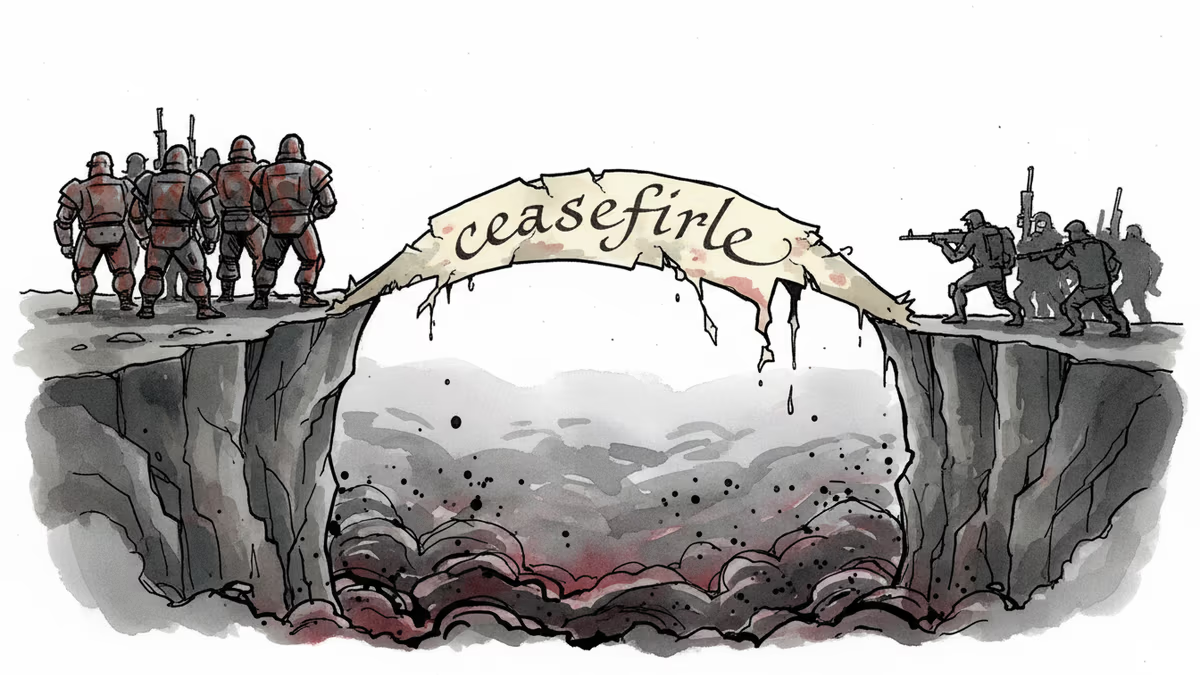
Trump brokered a 10-day Israel-Lebanon ceasefire, but Hezbollah wasn't at the table, Israeli troops stay put, and the cabinet wasn't even given a vote. Here's what it means.
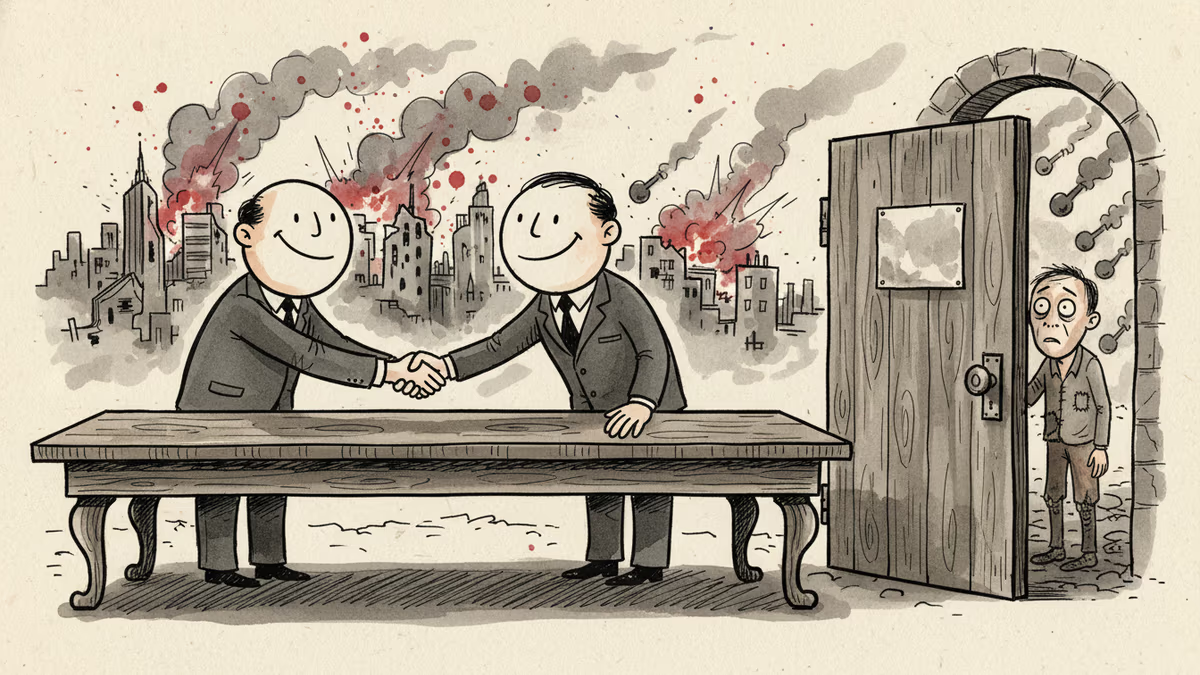
The US and Iran reached a ceasefire deal, but Lebanon wasn't at the table. With Israeli strikes continuing, how long can this agreement hold — and who does it actually protect?
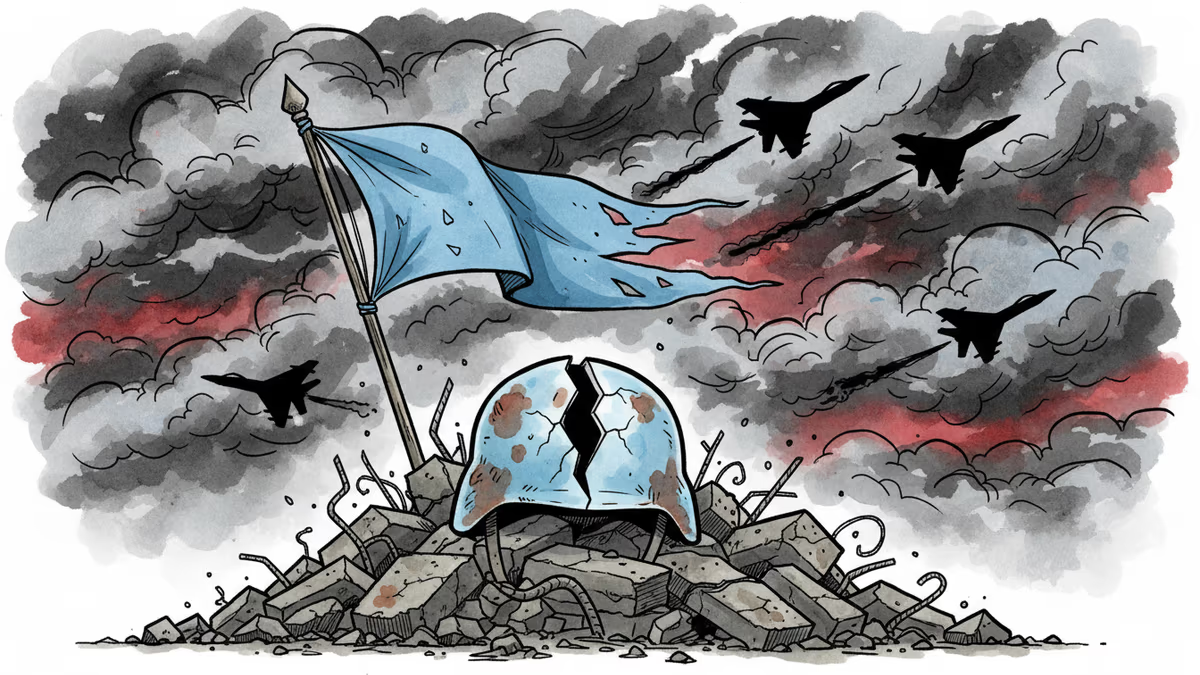
Three Indonesian UN peacekeepers killed in Lebanon. A hospital struck five times. Iran hit directly. Italy bars US base use. The Middle East conflict is no longer contained—and the international order is showing its limits.
Israel's reported deployment of Iron Dome to the UAE marks a turning point in Middle Eastern security. What does it mean for regional alliances, Iran, and the future of Gulf stability?
Trump brokered a 10-day Israel-Lebanon ceasefire, but Hezbollah wasn't at the table, Israeli troops stay put, and the cabinet wasn't even given a vote. Here's what it means.
The US and Iran reached a ceasefire deal, but Lebanon wasn't at the table. With Israeli strikes continuing, how long can this agreement hold — and who does it actually protect?
Three Indonesian UN peacekeepers killed in Lebanon. A hospital struck five times. Iran hit directly. Italy bars US base use. The Middle East conflict is no longer contained—and the international order is showing its limits.
Thoughts
Share your thoughts on this article
Sign in to join the conversation