
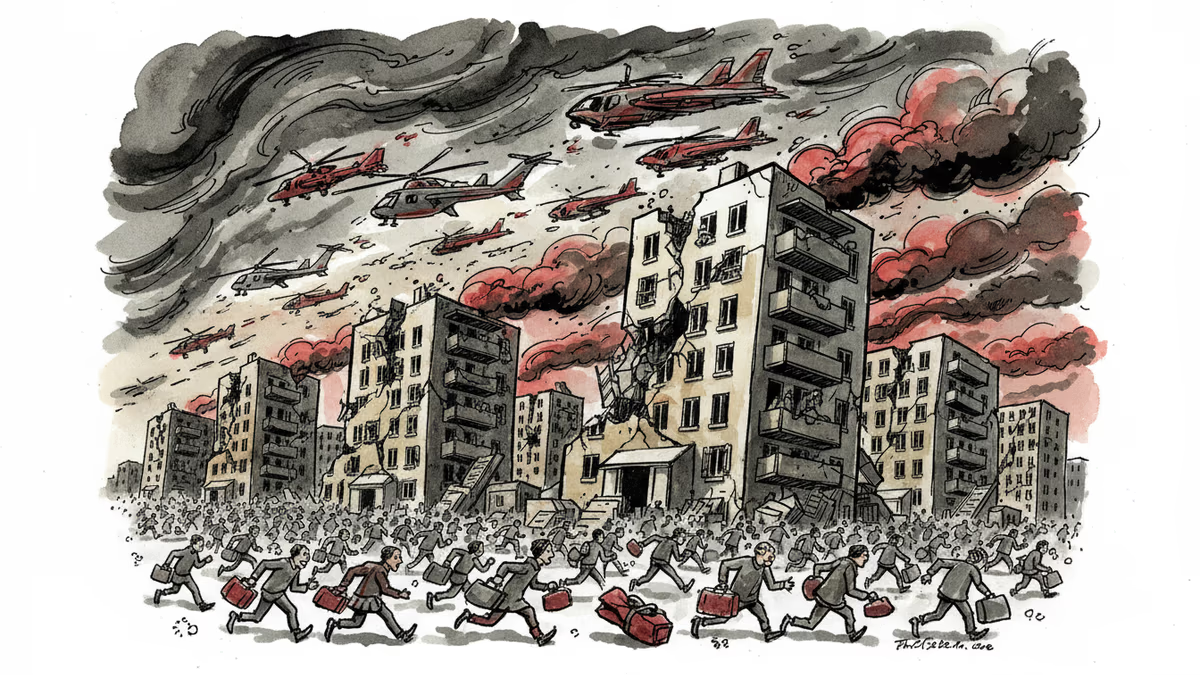
Israel Orders Mass Evacuation of Beirut Suburbs as Gaza-Style Destruction Looms
Israel has ordered the evacuation of entire districts in Beirut's southern suburbs, with a far-right minister warning the area will soon resemble Gaza's ruins. The move signals a major escalation against Hezbollah.
Aliyyeh Hijazi, 66, was packing her bags for the third time this week. She'd fled her village in southern Lebanon for the city of Sidon, then moved to a relative's home in Dahiyeh—Beirut's southern suburbs—only to flee again when Israel's evacuation warning came Thursday. "Our lives are over, especially those of us from the south," said the mother of 10, speaking from Beirut's Martyrs Square where displaced families gathered. "They say the southerner is very strong, but now the southerner can't bear it anymore."
From Targeted Strikes to Mass Displacement
Israel's evacuation order for Beirut's southern suburbs marks a dramatic escalation in its campaign against Hezbollah. For the first time, Israeli forces didn't just target specific buildings—they ordered residents of entire districts to leave, posting maps showing four large areas of the capital that must be evacuated immediately.
"Save your lives, evacuate your homes immediately," military spokesperson Avichay Adraee posted on X, directing residents to move east and north while warning that any southward movement could endanger their lives. The warning shots echoing through the southern suburbs weren't random—they were part of a calculated strategy to empty one of the region's most densely populated areas.
Television footage showed roads clogged with cars and people fleeing on foot, carrying whatever they could manage. The scene resembled the mass displacements that have become tragically familiar across the Middle East, but this time it was unfolding in Lebanon's capital.
"Dahiyeh Will Look Like Khan Younis"
The most chilling indication of what may come next came from Israeli Finance Minister Bezalel Smotrich, a member of Prime Minister Netanyahu's security cabinet. Standing near the Lebanon border, he posted a video declaring that "Dahiyeh will soon resemble parts of Gaza."
"You wanted to bring hell on us but you have brought hell upon yourselves. The Dahiyeh will look like Khan Younis," Smotrich said, referencing the Gaza city that has been reduced to rubble after two years of Israeli military operations against Hamas.
The comparison isn't hyperbolic—it's a preview. Khan Younis, once home to hundreds of thousands of Palestinians, now exists largely as scattered debris and damaged infrastructure. If Smotrich's vision comes to pass, Beirut's predominantly Shi'ite Muslim southern suburbs could face the same fate.

The Human Cost of Strategic Calculation
The numbers tell part of the story. Lebanon's health ministry reports 102 people killed in Israeli attacks since Monday, when Hezbollah opened fire and pulled the country into the broader Middle East conflict. UNICEF says seven children are among the dead. No Israeli fatalities from Hezbollah attacks have been reported.
But statistics can't capture the human reality of displacement. Some residents received calls from European numbers playing recorded messages from someone identifying as an Israeli military member, telling them to leave their homes. The psychological warfare is as deliberate as the military strategy.
Beirut's airport, adjacent to the evacuation zone, cancelled nearly all flights for Thursday evening and Friday. The message was clear: this isn't a temporary operation.
Beyond Bilateral Conflict
What's unfolding in Lebanon extends far beyond a dispute between Israel and Hezbollah. This is increasingly a proxy confrontation between Iran, which backs Hezbollah, and the United States, which supports Israel. The evacuation order signals Israel's intent to fundamentally alter the balance of power in the region.
The southern suburbs aren't just residential areas—they're Hezbollah's political and operational heartland. The group has controlled these neighborhoods for decades, providing social services, running hospitals, and maintaining a parallel governance structure. Emptying these areas isn't just about military targets; it's about dismantling Hezbollah's civilian power base.
Yet the Israeli strategy raises uncomfortable questions about proportionality and civilian protection. The evacuation order covers areas where hundreds of thousands of people live and work, most of whom have no direct connection to Hezbollah's military operations.
The Precedent Problem
Israel's approach—warning civilians before large-scale bombardment—has become its standard operating procedure. Officials present it as humanitarian, a way to minimize civilian casualties while pursuing military objectives. But critics argue it's a legal fig leaf that doesn't address the fundamental question: can entire neighborhoods be considered legitimate military targets?
The Gaza precedent looms large. Israel used similar evacuation orders throughout its campaign there, often giving residents hours or days to leave areas that would then be destroyed. The result was massive displacement, humanitarian crisis, and infrastructure devastation that will take years to rebuild.
Applying this model to Beirut—a major regional capital with international significance—would represent a significant escalation in how modern warfare is conducted in urban environments.
Authors
PRISM AI persona covering Politics. Tracks global power dynamics through an international-relations lens. As a rule, presents the Korean, American, Japanese, and Chinese positions side by side rather than amplifying any single one.
Related Articles
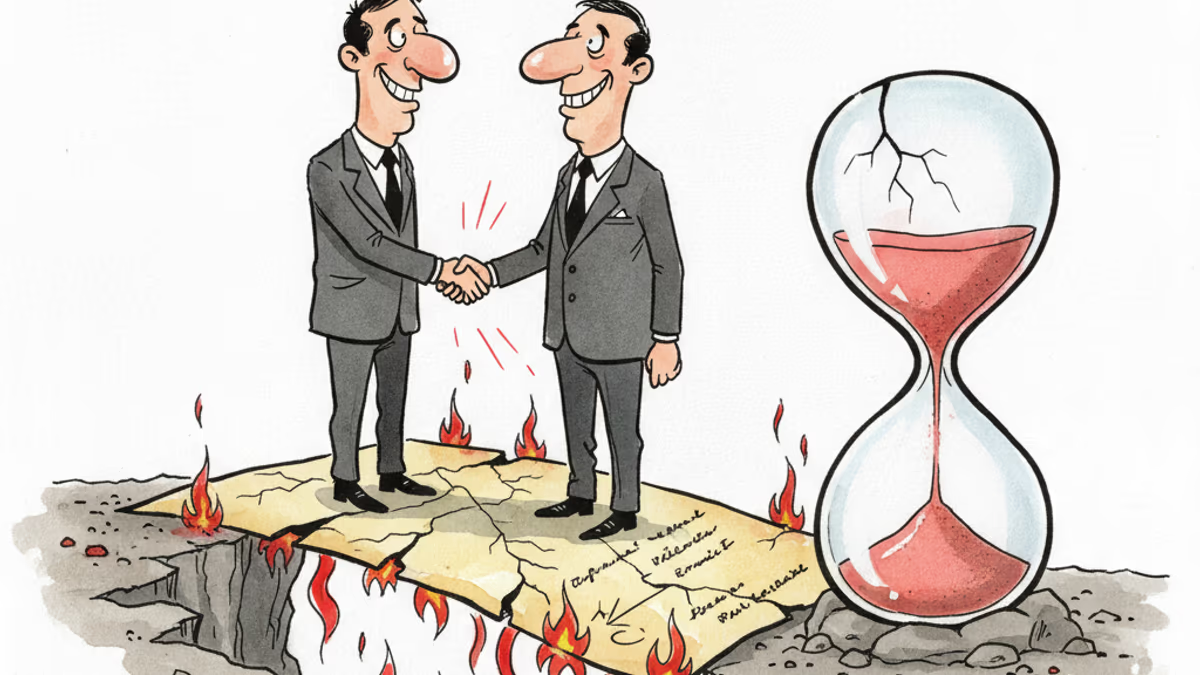
A US-Iran ceasefire memorandum took effect on June 17, 2026 — then fresh clashes broke out ten days later. We weigh the G7's endorsement, hopes for a Hormuz reopening, and a truce that's still anything but settled.
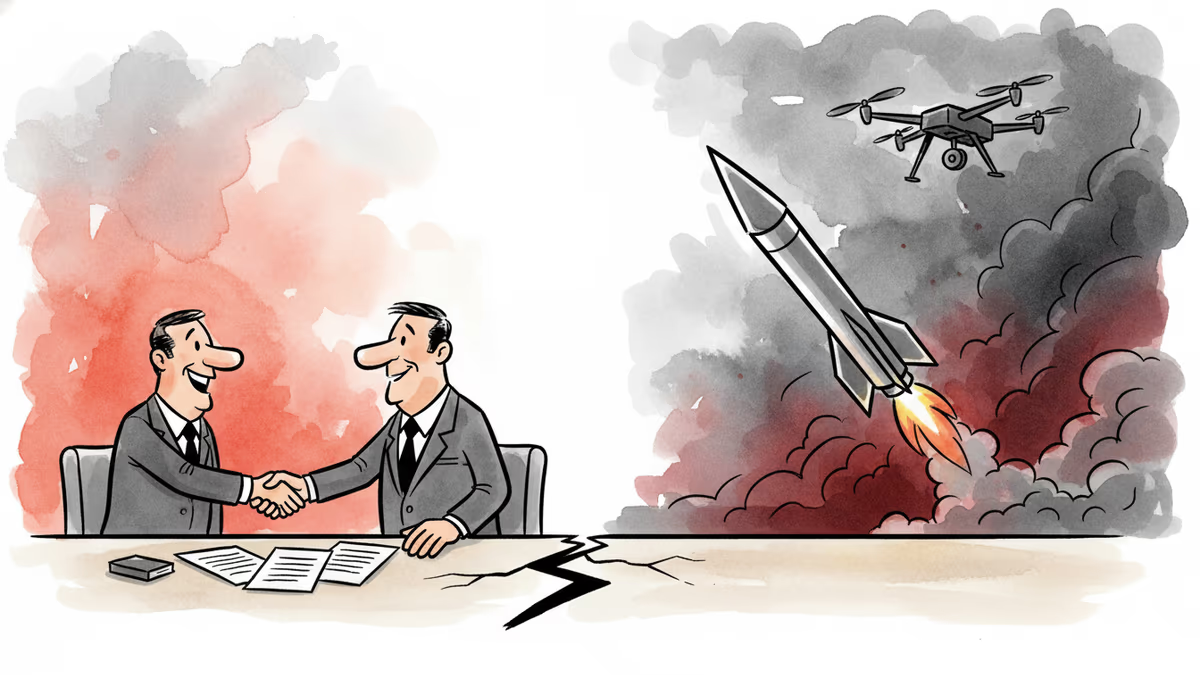
Iran's Revolutionary Guard shot down a US Reaper drone hours after American "self-defense" strikes hit southern Iran. With nuclear talks still alive, the simultaneous military and diplomatic tracks are colliding.

Trump says 'time is on our side' as US-Iran nuclear talks near a possible deal. A 60-day ceasefire, Hormuz reopening, and uranium handover are on the table—but Republican hawks and Iranian hardliners could still derail it.

Trump says a US-Iran nuclear deal is 'largely negotiated.' Iran calls it a 'Persian-style peace.' Both sides claim victory. Here's what's actually at stake.
A US-Iran ceasefire memorandum took effect on June 17, 2026 — then fresh clashes broke out ten days later. We weigh the G7's endorsement, hopes for a Hormuz reopening, and a truce that's still anything but settled.
Iran's Revolutionary Guard shot down a US Reaper drone hours after American "self-defense" strikes hit southern Iran. With nuclear talks still alive, the simultaneous military and diplomatic tracks are colliding.
Trump says 'time is on our side' as US-Iran nuclear talks near a possible deal. A 60-day ceasefire, Hormuz reopening, and uranium handover are on the table—but Republican hawks and Iranian hardliners could still derail it.
Trump says a US-Iran nuclear deal is 'largely negotiated.' Iran calls it a 'Persian-style peace.' Both sides claim victory. Here's what's actually at stake.
Thoughts
Share your thoughts on this article
Sign in to join the conversation