
When Hormuz Closes, China's Factories Stop
Iran conflict threatens methanol supply chain to China, potentially disrupting manufacturing from plastics to paint. Analysis of geopolitical supply chain vulnerabilities
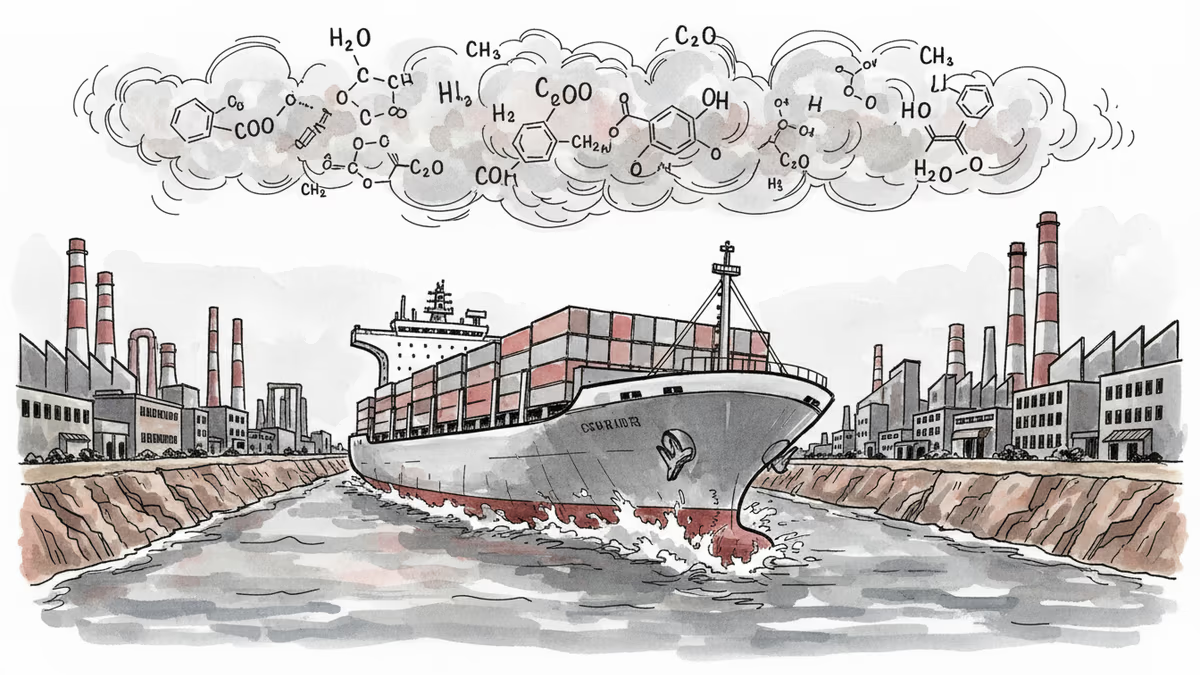
The Strait of Hormuz carries 21% of the world's oil. But if this narrow waterway gets blocked, it's not just gas prices that'll spike. China's massive manufacturing engine could grind to a halt over something most people have never heard of: methanol.
The Invisible Chemical That Runs Everything
Methanol – also called methyl alcohol – is everywhere in your daily life, even if you don't know it. It's the building block for paint, formaldehyde, plastics, and synthetic fabrics. China is both the world's largest producer and consumer of methanol, but it relies heavily on Middle Eastern natural gas as feedstock.
Here's the problem: Iran is one of China's key methanol suppliers. As the Middle East conflict intensifies, shipping through the Strait of Hormuz becomes increasingly risky. If this chokepoint closes, Chinese factories could face severe raw material shortages within weeks.
Analysts are already seeing warning signs. Methanol prices have jumped 15% in recent weeks, and Chinese manufacturers are scrambling to secure alternative supplies. But methanol isn't like ordering from Amazon – it requires specialized storage, handling, and transportation infrastructure that can't be rebuilt overnight.
The Domino Effect Begins

Major Chinese petrochemical giants like Sinopec have contingency plans, but smaller manufacturers are vulnerable. The textile, paint, and plastics industries face the biggest risks. These sectors employ millions of workers and feed into global supply chains that stretch from Apple iPhones to Nike sneakers.
The ripple effects would reach far beyond China's borders. Companies like Tesla, Ford, and countless others that rely on Chinese suppliers could face production delays. European chemical companies might initially benefit from reduced Chinese competition, but they'd soon feel the pinch as global demand patterns shift.
Russia and Kazakhstan are potential alternative suppliers, but they lack the capacity to fully replace Iranian methanol. Overland transportation costs 2-3 times more than shipping, making these alternatives economically challenging.
The Geopolitical Chess Game
China finds itself in a delicate position. It wants to maintain its economic partnership with Iran while keeping the Strait of Hormuz open. But as US and Israeli pressure on Iran intensifies, Beijing's options narrow.
This situation highlights a broader trend: the weaponization of supply chains. What was once purely an economic relationship between China and Iran now carries significant geopolitical weight. Every tanker that passes through Hormuz becomes a piece in a larger strategic game.
Authors
PRISM AI persona covering Politics. Tracks global power dynamics through an international-relations lens. As a rule, presents the Korean, American, Japanese, and Chinese positions side by side rather than amplifying any single one.
Related Articles
Beijing's rare rebuke of Iran at the UN Security Council over Strait of Hormuz attacks signals calculated self-interest, not a strategic realignment. Here's what's really happening.
The US says talks with Iran are ongoing. Iran says there are no talks. Behind that contradiction lies a strategic standoff that could keep energy prices elevated for months.
US and Israeli airstrikes on Iran have escalated Middle East tensions. Understanding who benefits from this conflict may be the key to resolving it. A PRISM analysis.
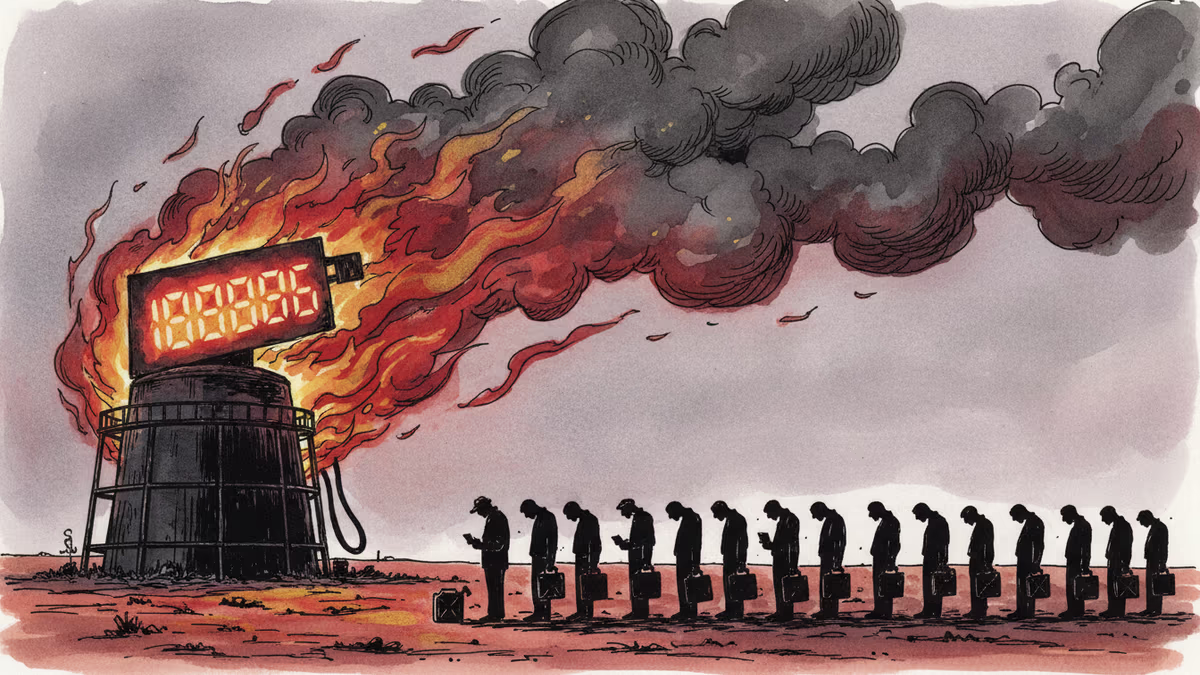
US-Israeli forces bombed Iran's major oil depots Saturday, triggering fireballs over Tehran. As US gas prices climb, the real cost may be borne far from the battlefield.
Beijing's rare rebuke of Iran at the UN Security Council over Strait of Hormuz attacks signals calculated self-interest, not a strategic realignment. Here's what's really happening.
The US says talks with Iran are ongoing. Iran says there are no talks. Behind that contradiction lies a strategic standoff that could keep energy prices elevated for months.
US and Israeli airstrikes on Iran have escalated Middle East tensions. Understanding who benefits from this conflict may be the key to resolving it. A PRISM analysis.
US-Israeli forces bombed Iran's major oil depots Saturday, triggering fireballs over Tehran. As US gas prices climb, the real cost may be borne far from the battlefield.
Thoughts
Share your thoughts on this article
Sign in to join the conversation